Consulting
Service
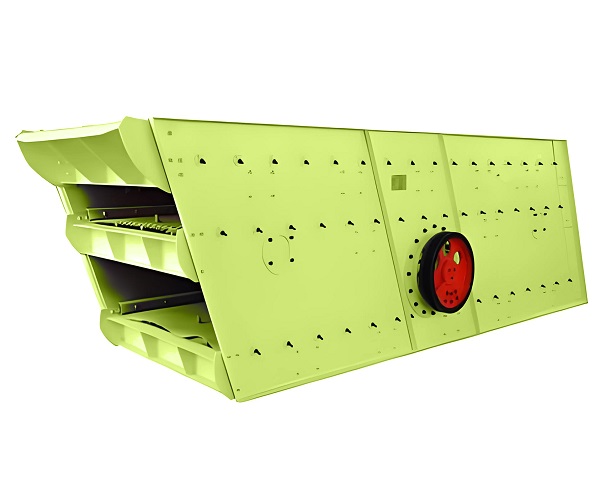
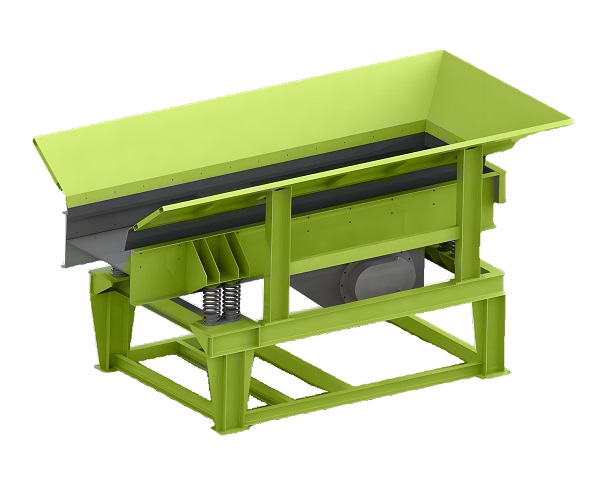
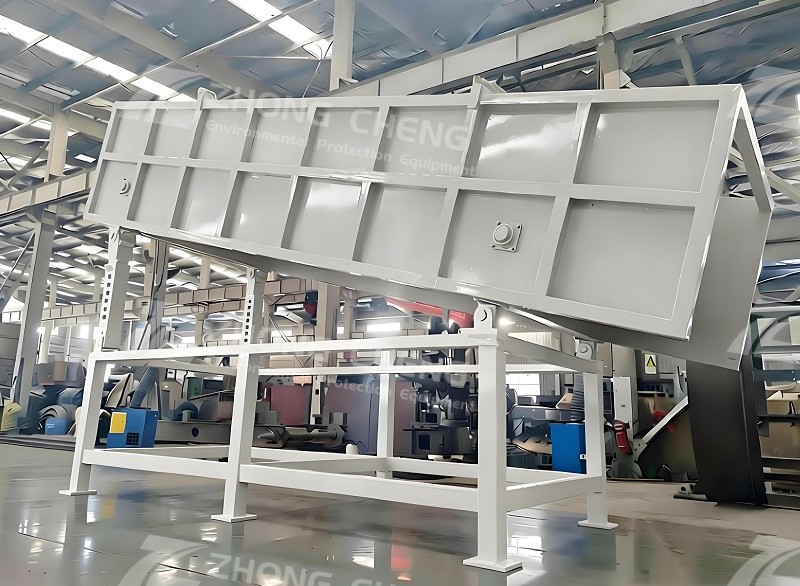
In the waste treatment and disposal system, screening is a crucial preliminary step in achieving waste reduction, resource utilization, and harmless disposal. Its core objective is to separate complex mixed waste with uneven particle sizes according to particle size or material characteristics, providing homogenized materials for subsequent incineration, landfill, and recycling processes. Zhongcheng's Ballistic Screen, with its unique bouncing vibration screening principle, demonstrates significant advantages in the field of mixed waste screening, effectively addressing challenges such as complex waste composition, high impurity content, and strong viscosity. This article will comprehensively analyze the specific mechanism and implementation process of Zhongcheng's Ballistic Screen for waste screening, from the core screening principle, the adaptability of the core structure to waste screening, the complete screening process, and the key factors affecting screening efficiency and optimization measures.
A. Core Principle of Zhongcheng Ballistic Screen for Waste Screening
The screening principle of the Zhongcheng Ballistic Screen differs from traditional linear Ballistic Screens or circular Ballistic Screens. Its core principle is a composite motion mode of "forced bouncing + graded screening," utilizing the differences in interaction forces between the material and the screen surface, as well as the physical properties of the material itself, to achieve efficient separation of waste with different particle sizes. Specifically, this principle can be broken down into three key dimensions:
a. Driving force transmission of asymmetric bouncing vibration. The Zhongcheng Ballistic Screen generates asymmetric periodic vibration through an exciter. This vibration is not simply up-and-down or back-and-forth vibration, but rather an organic combination of vertical vibration and horizontal propulsion, causing the screen surface to produce a composite motion trajectory of "upward bouncing - forward pushing." When the vibration energy is transmitted to the screen surface, the mixed waste on the screen surface gains kinetic energy along with the screen surface, being thrown upwards in the vertical direction (bouncing process), and gradually moving towards the discharge end in the horizontal direction. This bouncing motion creates strong collision and separation effects between waste materials and between the materials and the screen surface, breaking down the adhesion and clumping of viscous materials on the screen surface, creating conditions for subsequent screening and grading.
b. Matching and separation of particle size differences and screen mesh size. The screen surface, as the core load-bearing component of the screening process, is equipped with screens of different mesh sizes according to the preset particle size classification requirements (usually, the mesh size gradually increases from the feed end to the discharge end, achieving multi-stage screening). As the mixed waste bounces along the screen surface, waste particles smaller than the current screen mesh size will fall through the mesh under gravity, becoming the undersize product of that level; while waste particles larger than the mesh size cannot pass through the mesh and continue to move forward along the screen surface, entering the next screen area for further screening. Through this "step-by-step screening" method, precise classification of waste of different particle sizes is finally achieved.
c. Auxiliary separation effect of material physical characteristics. In addition to particle size differences, mixed waste also has differences in physical characteristics such as density, shape, and viscosity. The bouncing vibration mode of the Zhongcheng Ballistic Screen can also utilize these differences to enhance the screening effect. For example, lighter waste with lower density (such as plastic film and paper) is thrown higher and has a longer trajectory during the bouncing process, making it less likely to clog the screen; while heavier waste with higher density (such as bricks and metals) is thrown lower and has closer contact with the screen surface, and if the particle size meets the requirements, it can quickly pass through the screen for separation. At the same time, the collision generated by the bouncing motion can break up loose clumps in the waste, exposing and separating the small-sized particles wrapped inside, further improving screening efficiency.
B. Adaptability Design of Zhongcheng Ballistic Screen Core Structure to Waste Screening
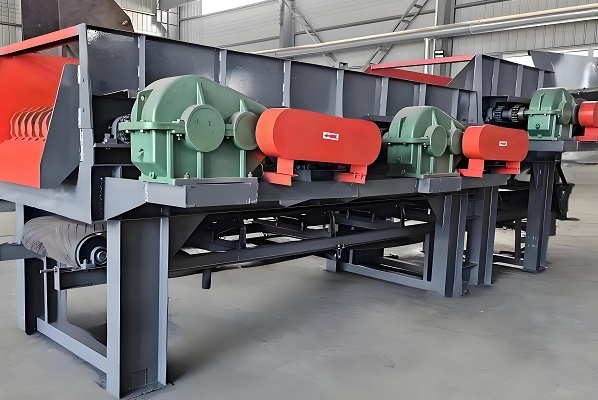
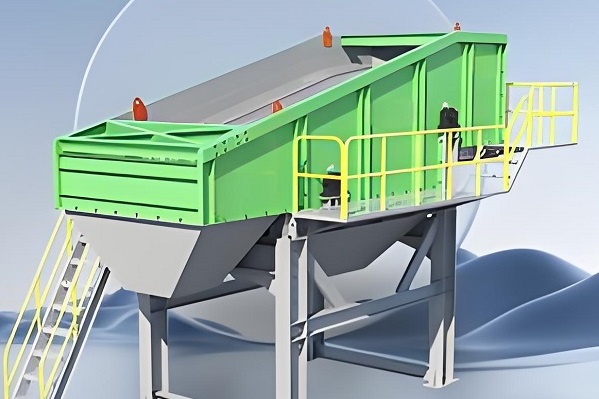
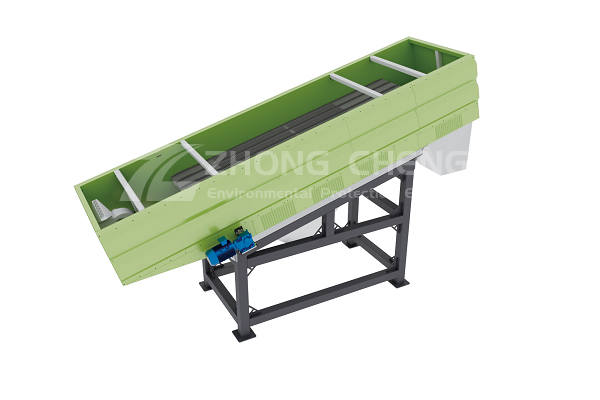
The structural design of the Zhongcheng Ballistic Screen fully considers the complexity of waste materials. Through targeted optimization of core components, it ensures the stable and efficient screening process. Its core structure includes the screen body, vibrator, screen mesh, spring support, feeding and discharging devices, etc. The adaptability design of each component to waste screening is as follows:
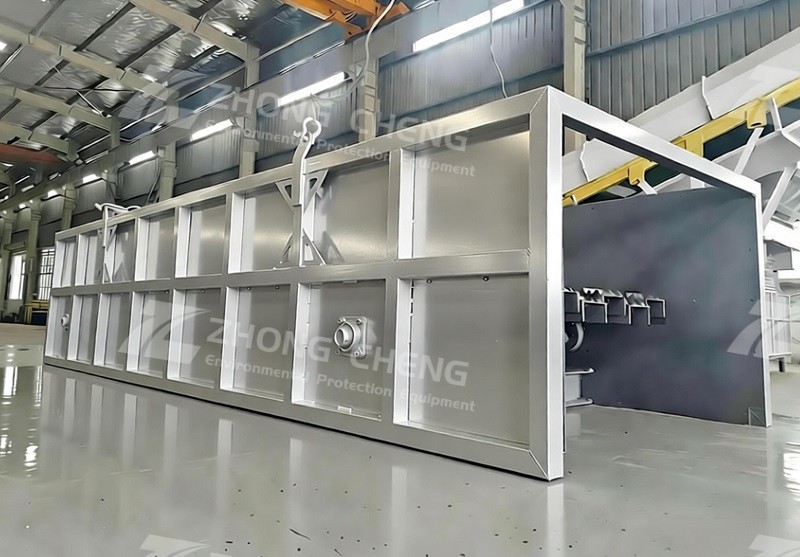
a. Screen body and screen mesh: Adapted to the complex composition of waste
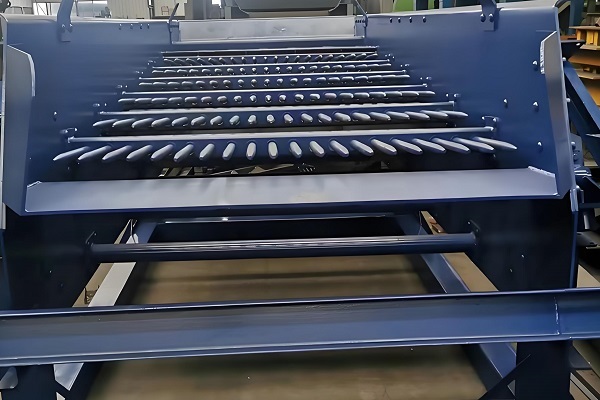
The screen body adopts a high-strength steel structure design, possessing good impact resistance and stability, and can withstand the impact load of mixed waste (including heavy impurities such as bricks and metals). The screening surface typically employs a modular design, allowing for quick replacement of screens with different mesh sizes to accommodate various screening needs, from fine screening (particle size ≤10mm) to coarse screening (particle size ≥100mm). To address the problem of sticky materials (such as food waste and sludge) clogging the screen holes, some screens feature anti-clogging designs, such as adding a wear-resistant coating to the screen surface, incorporating elastic cleaning devices, or using slotted screens instead of circular holes to reduce adhesion and clogging of sticky materials. Furthermore, the installation angle of the screen body can be adjusted according to the fluidity of the waste (usually 15°-30°), ensuring an appropriate material flow rate on the screen surface, preventing insufficient screening due to excessive speed and preventing material accumulation due to insufficient speed.
b. Vibrator: Provides vibration parameters adapted to waste screening
The vibrator is the core component that generates the bouncing vibration. Zhongcheng Ballistic Screens typically use a double eccentric block vibrator, which allows for flexible adjustment of vibration frequency and amplitude by adjusting the angle of the eccentric blocks. The vibrator's vibration parameters are specially adapted to the characteristics of the waste material: for waste with high impurity content and heavy components, the amplitude (usually 5-15mm) and vibration frequency (usually 15-30Hz) can be increased to enhance the bouncing force and ensure effective separation of heavy materials from the screen surface; for sticky and easily agglomerating waste, high-frequency vibration can break up agglomerations and reduce screen clogging. In addition, the vibrator's installation position is optimized to ensure uniform transmission of vibration energy to the entire screen surface, avoiding uneven screening caused by weak local vibrations on the screen surface.
c. Spring Support: Ensures screening stability
The spring support, as a shock-absorbing component, not only absorbs the impact force generated by the screen body vibration, reducing the impact on the equipment foundation and surrounding environment, but also ensures the stability of the screen body vibration. During waste screening, the impact load of the material can cause instantaneous vibration fluctuations in the screen body. The spring support buffers these fluctuations through its elastic deformation, ensuring a stable vibration trajectory of the screen surface and preventing a decrease in screening accuracy due to unstable vibration. In addition, the height of the spring supports is adjustable, facilitating the adjustment of the screen body's installation angle to accommodate waste materials with different flow characteristics.
d. Feeding and Discharging Devices: Adapted to the continuous conveying needs of waste materials
The feeding device adopts a buffer design, with a feeding hopper and guide plates to reduce the impact speed of mixed waste entering the screen surface, preventing material accumulation at the feeding end of the screen. At the same time, the guide plates distribute the material evenly across the width of the screen surface, maximizing the effective utilization area of the screen and avoiding insufficient screening caused by localized material buildup. The discharge device has multiple discharge ports according to the screening grade, collecting screened products of different particle sizes and the final oversized product. Each discharge port is equipped with a conveying device (such as a belt conveyor) to achieve continuous transfer of screened materials, adapting to the large-scale, continuous production needs of waste treatment.
C. The Complete Process of Waste Screening with the Zhongcheng Ballistic Screen
Based on the actual working conditions of waste treatment, the complete process of waste screening with the Zhongcheng Ballistic Screen can be divided into three core stages: pre-treatment, classification screening, and product collection. The specific operations and objectives of each stage are as follows:
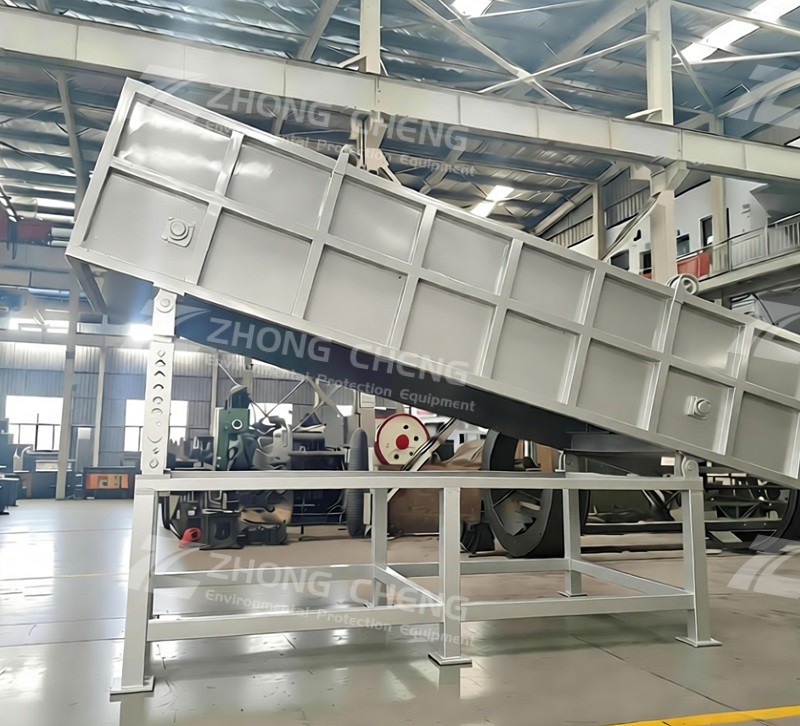
a. Pre-treatment Stage
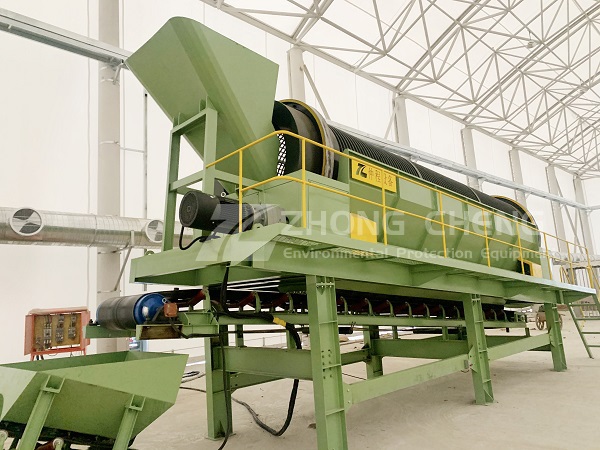
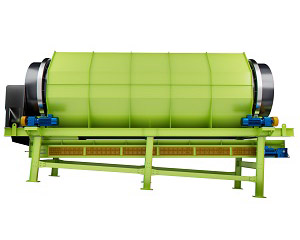
Before entering the Zhongcheng Ballistic Screen, mixed waste (such as municipal solid waste and construction waste) needs simple pre-treatment. The main purpose is to remove oversized impurities (such as large furniture, discarded appliances, and pipes longer than 1m) and sharp impurities (such as large steel bars and glass fragments) that may affect the screening process. This prevents such impurities from damaging the screen mesh, jamming the equipment, or affecting screening efficiency. Pre-treatment usually involves manual sorting or pre-screening with a trommel screen. After separating the oversized impurities, the remaining material is transported to the feeding hopper of the Zhongcheng Ballistic Screen via a belt conveyor. The guide plates in the feeding hopper distribute the material evenly across the width of the screen surface, ensuring that the material enters the screen surface with a uniform thickness, laying the foundation for subsequent classification screening. b. Graded Screening Stage
When the material enters the screen surface, the vibrator starts to generate a preset bouncing vibration. The material undergoes a compound motion of "bouncing upwards and moving forward" along the screen surface, simultaneously completing graded screening:
First-stage screening (fine screening section): A screen with a smaller mesh size (e.g., 10-20mm) is installed at the feed end of the screen surface. During the bouncing motion in this area, fine particles smaller than the mesh size (e.g., fine sand, food waste fragments, small plastic particles) fall through the screen holes and enter the first-stage undersize product collection channel. This product can be subsequently used for composting (food waste fragments) or incineration (plastic particles).
Second-stage screening (medium screening section): After the first-stage screening, the remaining larger particles continue to move forward along the screen surface and enter the medium-mesh screen area (e.g., 50-80mm mesh size). In this area, materials with particle sizes between the fine screen mesh size and the medium screen mesh size (e.g., medium-sized brick and stone particles, plastic blocks, paper clumps) fall through the screen holes, becoming the second-stage undersize product. These products can be used as primary raw materials for recycled construction aggregate (brick and stone particles) or for recycling (plastic blocks, paper clumps).
Third-stage screening (coarse screening section): Materials passing through the medium screening section enter the coarse-mesh screen area at the discharge end of the screen surface (e.g., 100-150mm mesh size). Materials with particle sizes between the medium screen mesh size and the coarse screen mesh size fall through the screen holes, becoming the third-stage undersize product; while the oversize product with particle sizes larger than the coarse screen mesh size (e.g., large bricks and stones, metal components, large plastic pieces) continues to move to the end of the screen surface and is transported to the oversize product collection channel. During the entire multi-stage screening process, the bouncing vibration of the screen surface not only achieves particle size classification but also breaks down some loose clumps of waste (such as clumped food waste and sticky plastic films) through collisions between the material and the screen surface, and between the materials themselves. This separates and screens out the smaller particles wrapped inside, while also reducing the adhesion of viscous materials to the screen holes, ensuring the continuous and stable operation of the screening process.
c. Product Collection and Transfer Stage
The undersize and oversize products from different screening stages enter the collection channels through their respective discharge ports. Each discharge port is connected to a belt conveyor, which transports the products to subsequent processing stages: the undersize product from the fine screening section (such as food waste fragments) is transported to the composting system; the undersize product from the medium screening section (such as brick and stone particles) is transported to the construction waste recycled aggregate processing system; the undersize product from the coarse screening section is transported to the incineration system; and the oversize product (such as large impurities) is transported to a landfill or a further sorting system to separate recyclable components (such as metal components) before disposal. The entire collection and transfer process is continuous, seamlessly connecting with subsequent stages of waste treatment and ensuring the needs of large-scale production.
D. Key Factors Affecting the Screening Effect of the Zhongcheng Ballistic Screen and Optimization Measures
In the actual waste screening process, the screening effect of the Zhongcheng Ballistic Screen (the main evaluation indicators include screening efficiency, classification accuracy, and processing capacity) is affected by various factors. Targeted optimization measures are needed to ensure that the screening effect meets the design requirements.
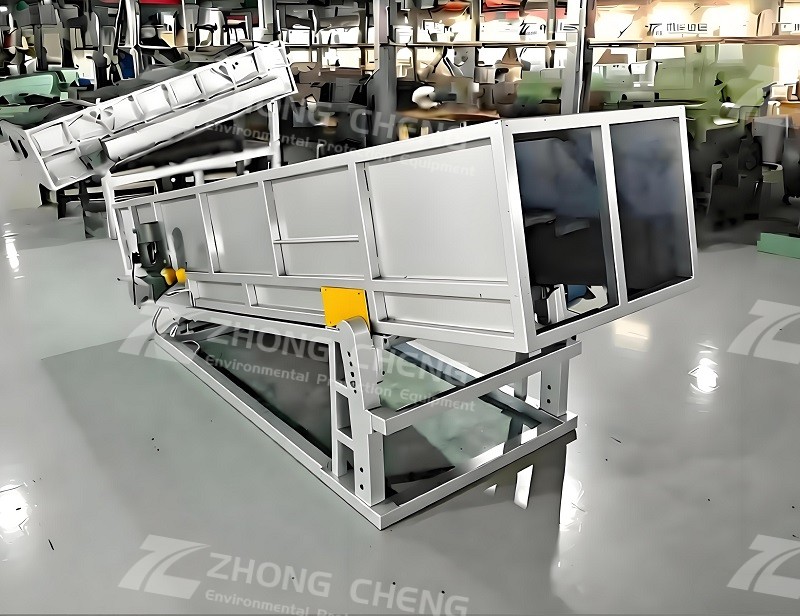
a. Key Influencing Factors
1. Material Characteristics: The particle size distribution, moisture content, and viscosity of mixed waste are core factors affecting the screening effect. If the waste has a high moisture content (e.g., a large proportion of food waste), viscous materials are prone to adhering to the screen surface, causing screen hole blockage and reducing screening efficiency; if there are too many large impurities in the waste, they will occupy the effective area of the screen surface, affecting the uniform distribution of materials; if the waste particles are irregularly shaped (such as long plastic strips or flat pieces of paper), they are prone to getting stuck in the screen holes, also affecting the screening process. 2. Equipment Parameters: The installation angle of the screen surface, vibration frequency, and amplitude directly affect the movement speed and bouncing force of the material on the screen surface. If the screen angle is too large, the material moves too fast, and the contact time with the screen surface is insufficient, resulting in insufficient screening; if the angle is too small, the material is prone to accumulation, and the processing capacity decreases. If the vibration frequency or amplitude is too small, it cannot effectively break up material clumps and viscous adhesion, and the screen holes are easily blocked; if it is too large, it will cause the material to be thrown too high, increasing energy consumption, and potentially damaging equipment components.
3. Operating Parameters: The stability and uniformity of the feed rate significantly affect the screening effect. If the feed rate is too high, the thickness of the material on the screen surface exceeds the design value, and small-sized particles cannot fully contact the screen holes, resulting in a decrease in screening efficiency; if the feed rate is too low, the equipment processing capacity is insufficient, and economic benefits are reduced. In addition, the degree of wear of the screen mesh also affects the screening accuracy. If the screen mesh is damaged or deformed, it will lead to a decrease in classification accuracy.
b. Targeted Optimization Measures
1. Optimize Feed Pre-treatment: Based on the material characteristics, strengthen the pre-treatment process before feeding. For waste with high moisture content, add drying or dewatering steps in the pre-treatment stage to reduce the moisture content; for waste with excessive large impurities, use two-stage pre-screening (first manual sorting, then drum screen pre-screening) to ensure that the particle size of the material entering the screen surface meets the design requirements; for highly viscous waste, add a small amount of desiccant (such as fine sand) during feeding to reduce the adhesion of viscous materials.
2. Adjust Equipment Parameters: According to the actual characteristics of the waste material, flexibly adjust the screen surface installation angle and vibrator parameters. For waste with high moisture content and high viscosity, appropriately increase the vibration frequency and amplitude, and adjust the screen surface angle to 25°-30° to accelerate the material movement speed and reduce accumulation; for waste with a relatively uniform particle size distribution, the vibration frequency and amplitude can be appropriately reduced to reduce energy consumption while ensuring screening accuracy. In addition, regularly check the screen mesh condition and replace damaged or deformed screen meshes in a timely manner to ensure classification accuracy. 3. Stable Operating Parameters: The feeding rate is regulated through an automated control system to ensure uniform and stable feeding, maintaining the material thickness on the screen surface within the design range (usually 2-3 times the screen mesh size). Simultaneously, regular maintenance is performed on the equipment, including cleaning accumulated material from the screen surface, checking the lubrication status of the vibrator, and tightening all connecting parts, ensuring the equipment is in good working condition and guaranteeing the stability of the screening effect.
The Zhongcheng Ballistic Screen, through its unique bouncing vibration principle, combined with targeted structural design and scientific operating procedures, effectively addresses the challenges of screening mixed waste with complex composition, high viscosity, and high impurity content. Its core advantage lies in the "forced bouncing + graded screening" mode, achieving precise separation of waste of different particle sizes. Furthermore, by optimizing material pretreatment, equipment parameters, and operating parameters, it further improves screening efficiency and grading accuracy. In the waste treatment and disposal system, the high-efficiency screening of the Zhongcheng Ballistic Screen provides high-quality, homogenized materials for subsequent resource utilization, incineration, and landfill processes, making it one of the key pieces of equipment for achieving the goals of "waste reduction, resource utilization, and harmless disposal."


Company: Zhengzhou ZhongCheng environmental protection equipment co., LTD

Company address: 36 xueyuan road, Zhengzhou City, Henan Province, China.

Whatsapp:+86-18738194110


Our Email

Our phone
 86-18738194110
 86-18738194110

Save Time! Get A Detailed Quotation Quickly.


 2024-11-01