Consulting
Service
In the municipal solid waste (MSW) treatment and disposal system, pretreatment is a crucial link in achieving waste reduction, resource utilization, and harmless disposal. Screening, as the core process of pretreatment, directly determines the efficiency of subsequent treatment units. Due to its efficient separation capabilities for materials with different physical characteristics, the ballistic screen has become one of the most widely used pieces of equipment in the field of municipal solid waste screening. By simulating the action of manual bouncing and screening, it utilizes the differences in material density, particle size, shape, and elasticity to achieve precise separation of recyclable materials, inert materials, and organic matter components in municipal solid waste. This article will detail the specific mechanisms and practical points of ballistic screen screening of municipal solid waste from the aspects of working principle, core structure, screening process, key influencing factors, and optimization strategies.

The core principle of ballistic screen screening of municipal solid waste is "differential bouncing and conveying separation." Municipal solid waste is complex in composition, containing various components such as paper, plastics, textiles, food waste, bricks and stones, and glass. Different components exhibit significant differences in their motion states when subjected to vibration and impact. The ballistic screen uses an eccentric shaft to drive the screen body to perform periodic reciprocating bouncing motion, causing the materials on the screen surface to be thrown and bounced. During this process, inert materials with higher density, higher hardness, and irregular shapes (such as bricks, stones, and glass fragments) have greater inertia and lower elasticity, resulting in shorter trajectories during bouncing. They tend to stay close to the screen surface and are conveyed forward along the inclined direction of the screen, eventually being discharged from the coarse material outlet at the front of the screen body; while lighter materials with lower density, lower hardness, and certain elasticity (such as paper, plastic film, and textiles) will obtain greater projection height and horizontal displacement during bouncing. After leaving the screen surface, they are collected by side airflow or scrapers and enter the light material channel; in addition, smaller particles (such as fine sand and food waste fragments) will fall through the screen mesh into the fine material collection system, thus achieving three-stage or multi-stage separation of municipal solid waste.
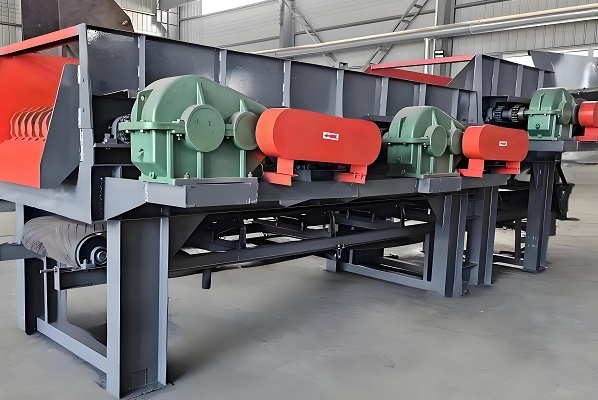
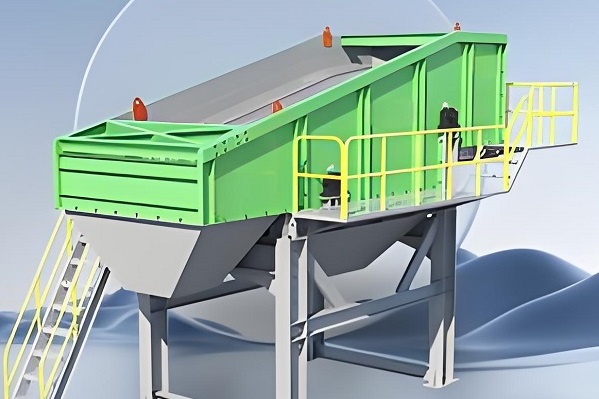
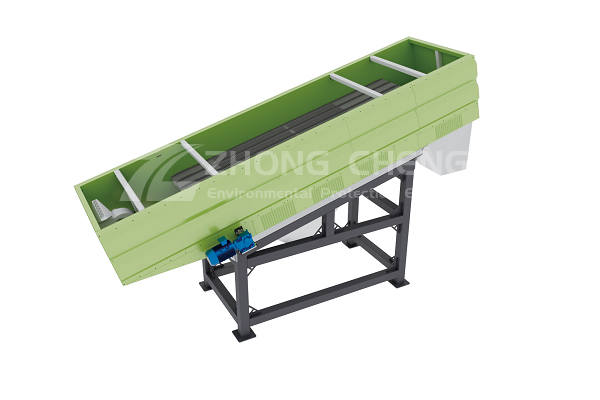
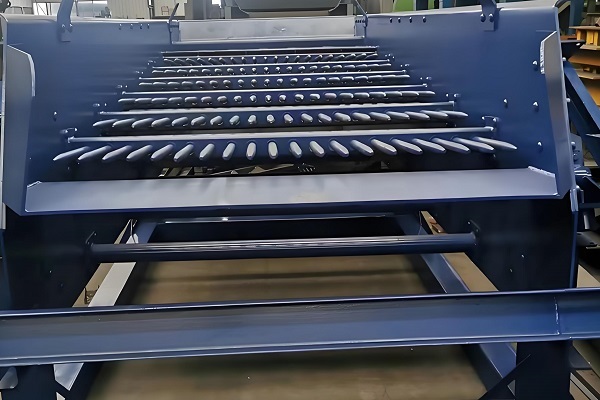
The core structural design of the ballistic screen is the basis for ensuring screening effectiveness, mainly consisting of the screen body, eccentric drive device, screen mesh, frame, material guide plates, and collection devices. The screen body is the core area for material movement and separation, usually adopting an inclined design. The inclination angle can be adjusted according to the material characteristics, generally between 15° and 30°. An excessively large angle can lead to excessively fast material transport and insufficient screening, while an excessively small angle can cause material accumulation, affecting processing efficiency. The eccentric drive device consists of a motor, a reducer, and an eccentric shaft. Its core function is to provide periodic bouncing power to the screen body. By adjusting the eccentricity and motor speed, the amplitude and frequency of the screen body's bouncing motion can be changed to suit different components of municipal solid waste. The screen mesh, as a key separation component, usually uses perforated plates or woven mesh. The mesh size can be customized according to screening requirements, with common mesh sizes ranging from 10-80mm, used to separate materials of different particle sizes. The screen surface is usually treated with anti-slip and wear-resistant coatings to extend its service life. Material guide plates and collection devices are used to guide different components of the material into the corresponding collection channels, preventing material mixing and ensuring separation accuracy.
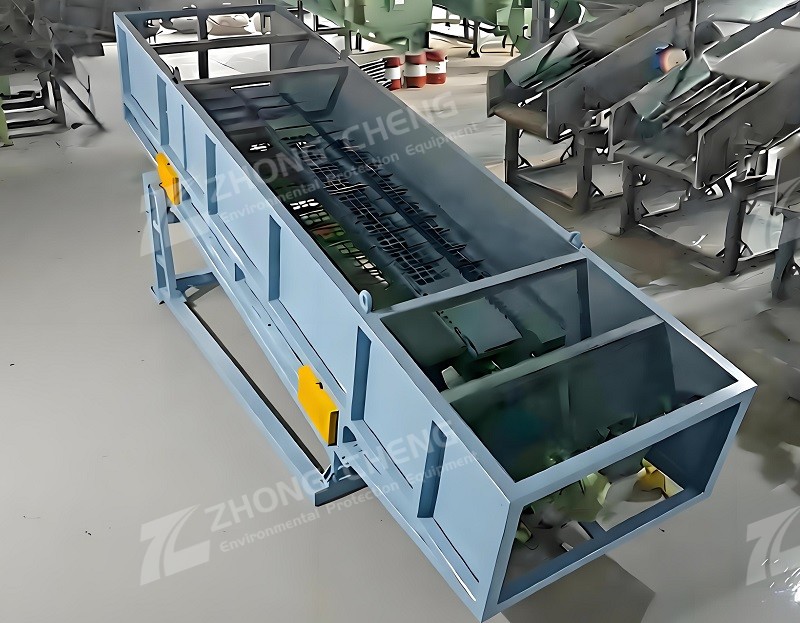
The complete process of screening municipal solid waste with a ballistic screen can be divided into four stages: feed pretreatment, screening and separation, material collection, and equipment cleaning. These stages are closely linked, forming a closed-loop processing system. The first stage is feed pretreatment. Municipal solid waste is transported to the inlet of the ballistic screen by a conveyor belt and undergoes a simple pretreatment process to remove oversized debris (such as large furniture, discarded appliances, and extra-long pipes) to prevent these materials from clogging the screen or damaging the equipment. At the same time, a material distributor is used to evenly distribute the material at the feed end of the screen body, ensuring uniform force distribution on the screen surface and preventing localized material accumulation from affecting the screening effect. The particle size of the pretreated material is generally controlled to be below 300mm to ensure smooth subsequent screening.
The second stage is the core screening and separation process. When the material enters the inclined screen surface, the motor drives the eccentric shaft through the reducer, causing the screen body to perform high-frequency reciprocating bouncing motion. At this stage, the materials undergo vigorous tossing and collision on the screen surface, and components with different physical characteristics begin to exhibit differentiated movement states: inert heavy materials (bricks, stones, etc.), due to their poor elasticity and high inertia, can only bounce short distances on the screen surface. Then, under the action of gravity and the screen body's inclination angle, they slide forward along the screen surface and are finally discharged from the heavy material outlet at the front of the screen body. These materials can subsequently be used for brick making or landfill disposal; lightweight elastic materials (plastics, paper, etc.) are thrown higher during the bouncing process and are simultaneously assisted by the airflow device installed on the side of the screen body (some ballistic screens are equipped with a negative pressure suction system), and are adsorbed by the airflow into the lightweight material collection channel, where they can be subsequently crushed, sorted, and recycled; fine materials with a particle size smaller than the screen mesh size (kitchen waste fragments, fine sand, etc.) fall through the screen holes during the bouncing process and enter the fine material collection hopper. These materials are rich in organic matter and can be subsequently used for composting or anaerobic fermentation treatment. During the screening process, operators can observe the movement state of the materials and adjust the screen body's inclination angle, bouncing frequency, and airflow intensity in real time to ensure optimal separation results.

The third stage is material collection and subsequent processing. The heavy, light, and fine materials separated after screening are respectively transported through corresponding conveying channels to subsequent processing units: heavy inert materials are sent to the brick making workshop after crushing, or directly transported to the landfill; lightweight materials enter the manual sorting table for further separation of recyclable materials such as plastics, paper, and fabrics, while non-recyclable lightweight waste is sent to the incineration plant; the organic matter in the fine materials is processed into organic fertilizer after crushing and fermentation, and inert fine materials such as fine sand are used for road subgrade or landfill. Through this differentiated treatment, the resource recovery and reduction of municipal solid waste are achieved, significantly reducing the pressure on subsequent landfill or incineration.
The fourth stage is equipment cleaning and maintenance. After the screening operation is completed, the ballistic screen needs to be cleaned promptly to prevent the screen mesh from being blocked by fine materials, and to remove any remaining debris on the screen surface. Regularly inspect the screen for wear and tear, and replace it promptly if damaged; check the lubrication oil level of the eccentric drive mechanism to ensure smooth operation; and clean residual materials from the collection channel to prevent material accumulation, mold growth, and odor. Proper cleaning and maintenance not only ensure stable equipment operation but also extend equipment lifespan and reduce operating costs.
The effectiveness of the ballistic screen in sorting municipal solid waste is affected by various factors, mainly including material characteristics, equipment parameters, and operating conditions. Regarding material characteristics, the moisture content, component ratio, and particle size distribution of the material significantly affect the screening effect. When the moisture content of municipal solid waste is too high, fine materials tend to stick to the screen surface, causing screen clogging. Simultaneously, lightweight materials will increase in weight due to water absorption, affecting the bouncing separation effect. Therefore, the moisture content of the feed is generally required to be controlled between 30% and 50%. If the proportion of kitchen waste in the material is too high, it will increase the risk of sticking, while a high proportion of inert materials will exacerbate screen wear. Regarding equipment parameters, the screen body inclination angle, bouncing frequency, and screen mesh size are key influencing factors and need to be adjusted according to the characteristics of the feed material: for materials with high moisture content and strong adhesion, the inclination angle and bouncing frequency can be appropriately increased to accelerate material transport and prevent accumulation; for materials with large particle size differences, a multi-layer screen design can be used to achieve multi-stage screening. Regarding operating conditions, the stability of the feeding speed is crucial. If the feeding speed is too fast, the material load on the screen surface will be too large, leading to insufficient screening and serious material mixing; if the feeding speed is too slow, it will reduce the equipment's processing efficiency. Therefore, a feeding adjustment device is needed to ensure that the feeding amount remains stable within the equipment's rated processing range.
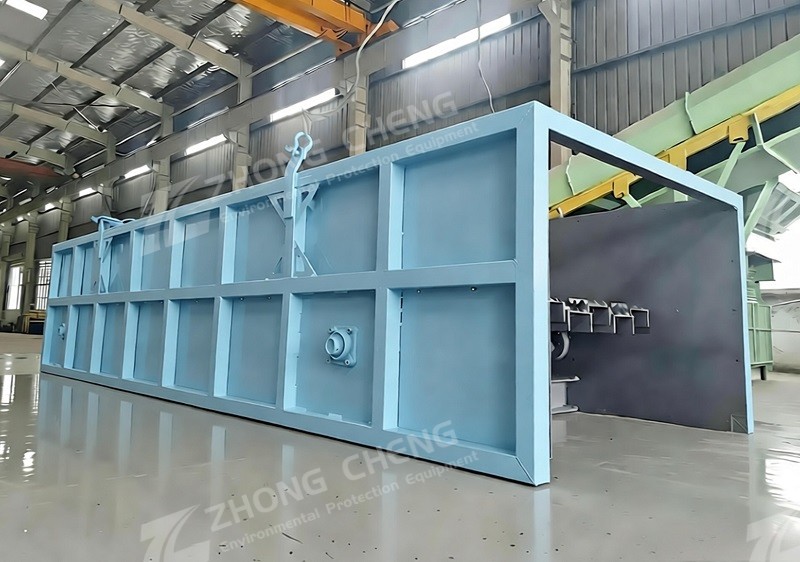
To further improve the efficiency and accuracy of the ballistic screen in sorting municipal solid waste, a series of optimization strategies can be adopted. In terms of equipment improvement, an intelligent control system can be used to monitor the screen surface material thickness, moisture content, and separation effect in real time through sensors, automatically adjusting the screen body inclination angle, bouncing frequency, and feeding speed to achieve intelligent operation; simultaneously, the screen structure can be improved by using self-cleaning screens (such as screens with vibration cleaning devices) to reduce screen clogging. In terms of process optimization, a hot air drying device can be added before the ballistic screen to reduce the moisture content of the material and prevent agglomeration. After screening, manual sorting or intelligent sorting equipment (such as photoelectric sorting machines) can be added to further purify recyclable materials and improve resource utilization efficiency. In terms of operation and management, a comprehensive equipment maintenance system should be established, with regular inspection and maintenance of the equipment; operator training should be strengthened to improve their ability to adjust equipment parameters and troubleshoot problems, ensuring stable and efficient operation.
The ballistic screen, through its core principle of "differential bouncing and conveying separation," combined with a reasonable structural design and process flow, can effectively achieve the graded separation of heavy inert materials, light recyclable materials, and fine organic matter in municipal solid waste, making it a key piece of equipment in the pre-treatment stage of municipal solid waste. In practical applications, the influence of material characteristics, equipment parameters, and operating conditions must be fully considered. Targeted optimization strategies should be implemented to improve the screening effect, while strengthening equipment maintenance and process management to ensure stable and efficient operation. With the advancement of waste classification policies and the increasing demand for resource utilization, the ballistic screen will play an even more important role in the field of municipal solid waste treatment, providing strong support for achieving the goals of waste reduction, resource utilization, and harmless disposal of municipal solid waste.


Company: Zhengzhou ZhongCheng environmental protection equipment co., LTD

Company address: 36 xueyuan road, Zhengzhou City, Henan Province, China.

Whatsapp:+86-18738194110


Our Email

Our phone
 86-18738194110
 86-18738194110

Save Time! Get A Detailed Quotation Quickly.


 2024-11-01