Consulting
Service
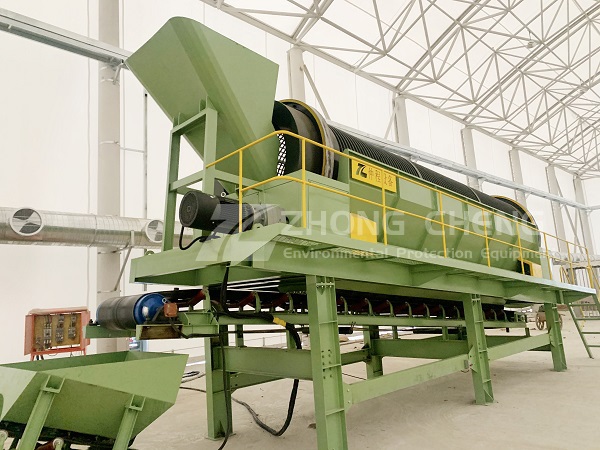
In modern industrial production, screening and classification are crucial steps that determine subsequent production efficiency and product quality. trommel screens, as equipment specifically designed for screening and classifying solid particulate materials, have become indispensable core equipment in various industries such as mining, construction, metallurgy, and food processing, thanks to their stable structure, simple operation, and strong adaptability. They achieve precise processing of various materials through the rotational movement of the drum, combined with different screen mesh designs, providing a solid guarantee for the efficient operation of industrial production.
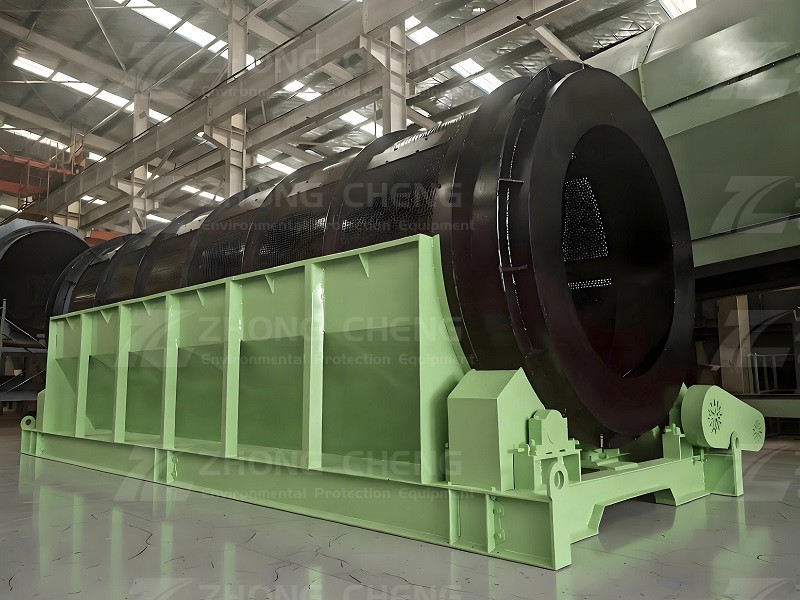
The core value of trommel screens lies in their diversified functions, which can meet the specific material handling needs of different industries. From basic screening and grading to complex impurity removal and recycling, each function has been repeatedly verified through industrial practice, becoming an important support for improving the stability of production processes.
The screening function is the most basic and core use of trommel screens, widely applied in the particle size control of various granular materials. In the sand and gravel production industry, natural sand and gravel often contain various particle sizes ranging from fine powder to coarse gravel. Through the trommel screening of the drum, sand materials meeting the requirements can be screened out according to different standards for construction sand. For example, concrete pouring sand requires strict control of particle size distribution. trommel screens can separate out coarse particles that do not meet the requirements by adjusting the screen mesh size (ranging from 0.5 mm to 50 mm), ensuring a reasonable grading of the sand. In the coal industry, raw coal mined contains a large number of coal blocks of different sizes. trommel screens can screen them into different specifications such as lump coal and fine coal, which are used in different scenarios such as industrial boilers and power plants. It is worth noting that the adjustable rotation speed of the trommel screen further improves screening accuracy. For materials with strong viscosity (such as wet clay mixed sand), appropriately reducing the rotation speed can prevent material from clogging the screen holes, ensuring the continuous and stable screening process.
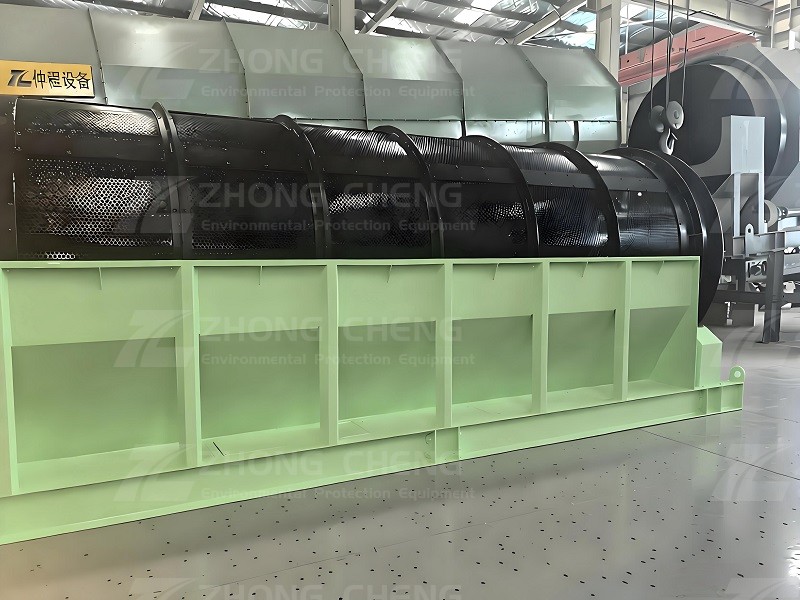
The impurity removal function is a core application of trommel screens in industries with extremely high requirements for product purity, such as food, pharmaceuticals, and chemicals, directly related to product quality and safety. In the food processing industry, grains (such as wheat and corn) often contain impurities such as straw, stones, and soil after harvesting. trommel screens use screens with specific mesh sizes to separate the grain particles from impurities. The inclined design of the drum body allows impurities to be discharged from one end, ensuring the cleanliness of the grain. In the pharmaceutical industry, after crushing traditional Chinese medicine materials, residual dregs and foreign matter need to be removed. trommel screens use stainless steel mesh to avoid metal contamination, and through precise screening, remove impurities to ensure that the purity of the medicinal powder meets pharmaceutical standards. In the chemical industry, impurities such as plastic waste and metal fragments may be mixed into plastic granules during production, seriously affecting the quality of subsequent products. The impurity removal function of the trommel screen can effectively separate these impurities, ensuring that the purity of the plastic granules meets the processing requirements of injection molding, extrusion, and other processes.
The grading function is key to the fine processing of materials by trommel screens. By dividing the same material into multiple grades according to particle size, it provides differentiated raw materials for subsequent production. In the mining industry, iron ore needs to be divided into different particle size grades after crushing, for use in different production processes such as sintering and pelletizing. trommel screens can divide iron ore into 2-5 particle size grades at once through a multi-layer screen design, significantly improving grading efficiency. In the building materials industry, crushed stone, as an important aggregate for concrete, needs to be divided into different specifications according to strength requirements. trommel screens can accurately grade crushed stone into common specifications such as 5-10 mm, 10-20 mm, and 20-30 mm, meeting the proportioning requirements of concrete with different strength grades. In the foundry industry, the particle size grade of foundry sand directly affects the surface quality of castings. trommel screens can divide foundry sand into coarse sand, medium sand, and fine sand, used for the base of large castings and the molding of precision castings, improving the pass rate of casting products.
The conveying function is an important extension of the trommel screen in special working conditions, especially suitable for scenarios where conventional conveying equipment is difficult to use. In some underground mining operations, materials need to be transported from inclined tunnels or vertical shafts. Conventional belt conveyors are limited by their angle constraints, making this difficult. However, trommel screens, utilizing their inclined installation, can simultaneously screen and transport materials from lower to higher elevations, achieving integrated screening and conveying. At construction sites, sand and gravel often need to be transported from the ground to elevated mixing equipment. trommel screens, by adjusting the inclination angle (usually between 5° and 15°), and with the rotation of the drum, can directly transport the screened sand and gravel to the designated location, reducing the investment in conveying equipment and simplifying the production process. Furthermore, in bulk cargo handling at ports, trommel screens can perform screening and conveying simultaneously during material unloading, improving the efficiency of bulk cargo handling.
Dewatering is an important application of trommel screens in wet material processing. It reduces the moisture content of materials through physical means, facilitating subsequent storage and processing. In the sand and gravel washing industry, washed sand and gravel have high moisture content, and direct stacking can lead to caking, affecting subsequent use. trommel screens, by adjusting the rotation speed and inclination angle, allow wet sand and gravel to fully contact the air during drum rotation, while gravity drains the water, reducing the moisture content from over 20% to below 10%, meeting storage and transportation requirements. In sludge treatment in the environmental protection field, trommel screens can further screen and dewater dewatered sludge cakes, removing free water from the sludge, reducing its volume, and lowering the cost of subsequent incineration or landfill. In the coal industry, washed fine coal has a high moisture content. Dewatering with a trommel screen can reduce the transportation cost of fine coal and prevent weight loss due to moisture loss during transportation.
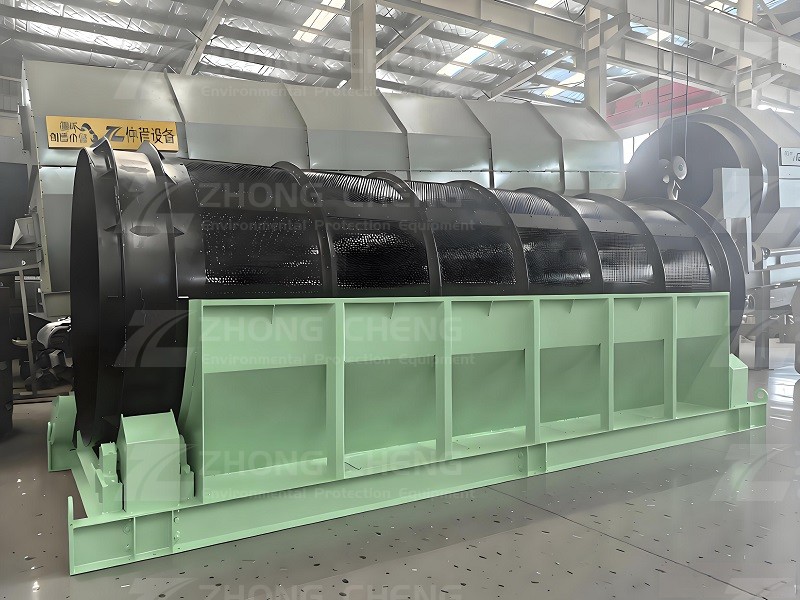
The recycling function demonstrates the important role of trommel screens in resource recycling, enabling the secondary utilization of resources through the screening and classification of waste and by-products. At construction demolition sites, the resulting construction waste contains a large amount of recyclable materials such as rebar and concrete blocks. trommel screens can separate these materials; the concrete blocks can be crushed and used as recycled aggregate for road bases, while the rebar can be recycled and reused. In the metallurgical industry, steel slag produced during steelmaking contains a certain amount of iron. trommel screens can screen out the iron particles from the steel slag, allowing them to be remelted, thus improving resource utilization. In the plastics processing industry, plastic scraps and waste generated during production can be crushed and then screened and classified by trommel screens. Depending on the particle size, they can be used in different recycling processes, reducing resource waste.
The application range of trommel screens covers almost all industries that require the processing of solid particulate materials. Their strong adaptability allows them to handle various materials with different properties and complex production conditions. In the mining industry, whether it's metal ores such as iron ore, copper ore, and gold ore, or non-metallic ores such as limestone and granite, trommel screens can achieve efficient screening and classification. In the metal ore mining process, trommel screens are used for the initial screening of raw ore, removing large waste rocks and improving the efficiency of subsequent crushing equipment; in the mineral processing process, trommel screens are used for the classification of products after flotation or magnetic separation, ensuring that the concentrate particle size meets the requirements.
The building materials industry is one of the most widely used fields for trommel screens. In sand and gravel production lines, trommel screens are core screening equipment, indispensable for everything from the purification of natural sand to the classification of artificial sand; in cement production, trommel screens are used for the screening of cement raw materials, removing impurities and ensuring the uniformity of the raw materials; in concrete mixing plants, trommel screens are used for the pre-screening of sand and gravel aggregates, ensuring that the aggregate gradation meets the concrete mix requirements, improving the strength and durability of the concrete.
In the metallurgical industry, the application of trommel screens runs throughout the entire smelting process. In the ironmaking industry, trommel screens are used for screening sintered ore, sending qualified sintered ore into the blast furnace while separating powdered return ore for re-sintering; in the steelmaking industry, trommel screens are used for steel slag treatment, separating iron particles and waste slag from the steel slag; in the foundry industry, trommel screens are used for the regeneration of foundry sand, removing impurities and agglomerates from the sand, allowing the foundry sand to be reused and reducing production costs.
The chemical industry has strict requirements for material purity and particle size, and trommel screens, with their stable performance, have become ideal equipment for this industry. In plastic granule production, trommel screens are used for the classification of finished granules, ensuring uniform particle size to meet the requirements of subsequent processing techniques such as injection molding and film blowing; in the rubber industry, trommel screens are used for the screening of rubber granules, separating rubber granules of different particle sizes for use in the production of rubber products and road paving; in fertilizer production, trommel screens are used for the screening of finished fertilizers, removing agglomerated fertilizers and ensuring uniform particle size for easy application and absorption.
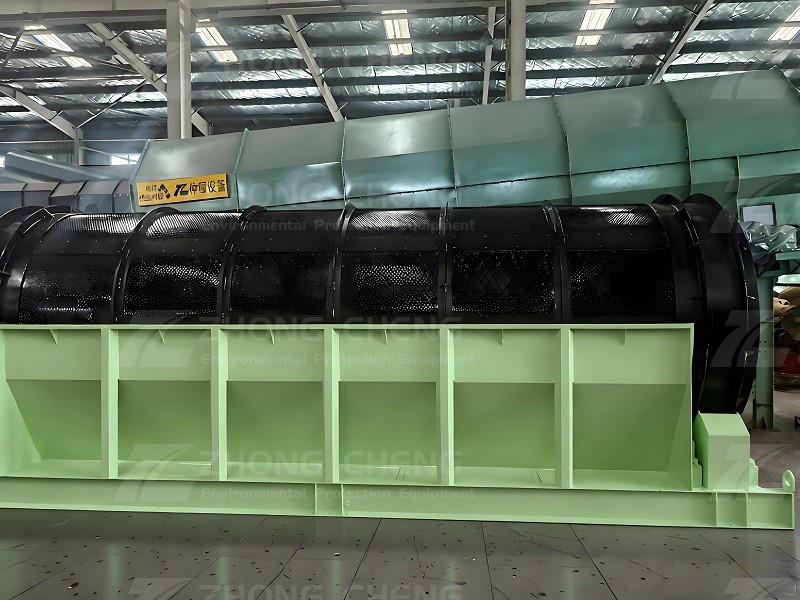
In the food industry, the application of trommel screens focuses on ensuring the cleanliness and safety of materials. In the grain processing industry, trommel screens are used for the impurity removal and classification of grains such as wheat, rice, and corn, removing impurities and broken grains to improve grain quality; in flour production, trommel screens are used for flour screening, separating flour of different fineness to meet the processing needs of different foods such as steamed buns, bread, and noodles; in starch production, trommel screens are used for starch purification, removing fibers and impurities from the starch to ensure its purity.
The environmental protection field is an emerging area for the application of trommel screens, where they play an important role in wastewater treatment and solid waste treatment. In wastewater treatment, trommel screens are used for solid-liquid separation after the screening process, removing large suspended solids from the wastewater and reducing the load on subsequent treatment equipment. In solid waste treatment, trommel screens are used for waste sorting, separating recyclable materials, organic matter, and inert waste from municipal solid waste, facilitating incineration, landfilling, and resource utilization. In sludge treatment, trommel screens are used for sludge dewatering and screening, reducing the water content of the sludge and facilitating subsequent processing.
Besides the main industries mentioned above, trommel screens have a wide range of applications in industries such as feed processing, papermaking, and ceramics. In the feed processing industry, trommel screens are used for impurity removal and grading of feed raw materials, ensuring uniform particle size and improving the palatability of the feed. In the papermaking industry, trommel screens are used for pulp screening, removing impurities and fiber bundles from the pulp to improve paper quality. In the ceramics industry, trommel screens are used for screening ceramic raw materials, removing coarse particles and impurities to ensure the uniformity of the ceramic body.
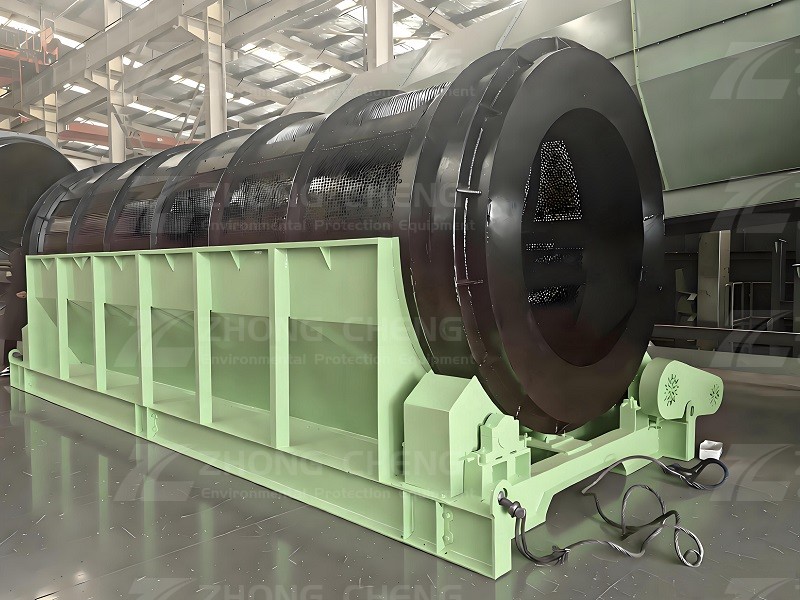
As a multi-functional material processing equipment, trommel screens have applications covering screening, impurity removal, grading, conveying, dewatering, and recycling, and are applicable to almost all industrial fields. They not only improve production efficiency and reduce production costs but also ensure product quality and promote resource recycling, playing an irreplaceable role in modern industrial production. With the continuous development of industrial technology, the structure and performance of trommel screens are constantly being optimized, and in the future, they will be better adapted to complex production conditions and higher material processing requirements. For enterprises, choosing the appropriate trommel screen equipment requires considering their production needs and material characteristics. It is recommended to consult professional equipment manufacturers to obtain customized solutions and maximize the value of the trommel screen.


Company: Zhengzhou ZhongCheng environmental protection equipment co., LTD

Company address: 36 xueyuan road, Zhengzhou City, Henan Province, China.

Whatsapp:+86-18738194110


Our Email

Our phone
 86-18738194110
 86-18738194110

Save Time! Get A Detailed Quotation Quickly.


 2024-11-01