Consulting
Service
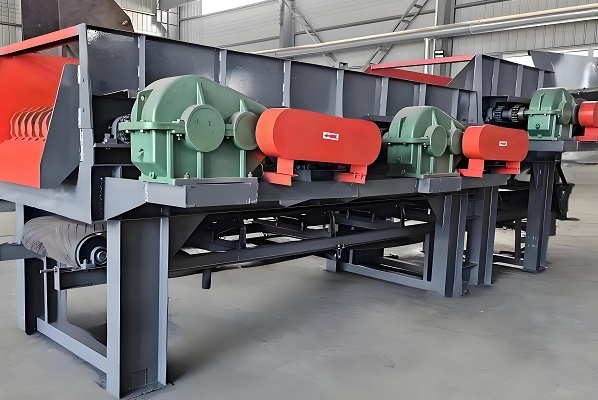
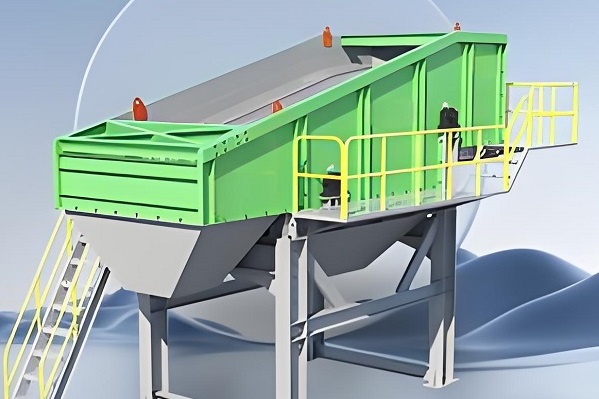
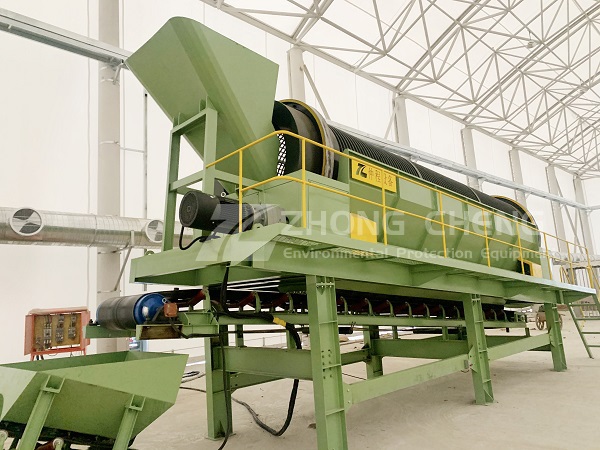
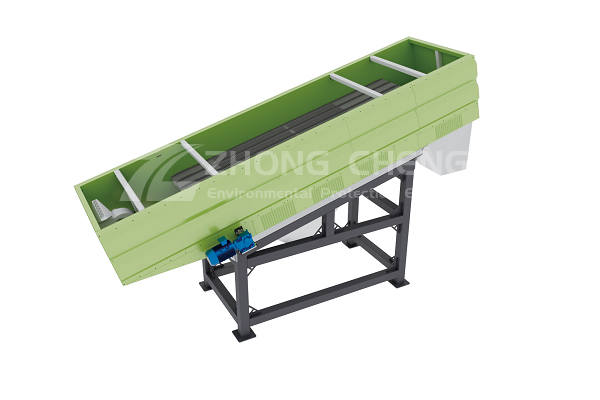
In the modern material processing industry system, screening equipment, as a key equipment for achieving material grading and impurity removal, directly affects the efficiency and product quality of subsequent production processes. As an efficient screening equipment that has undergone technological iteration and upgrading, the star disk screen breaks through the limitations of traditional screening equipment in complex material processing with its innovative star disk structure design and precise operation control capability. It is widely used in various fields such as household waste treatment, mining, construction waste recycling, and agricultural processing. Exploring the core role and unique characteristics of star disk screening in depth is of great practical significance for enterprises to make reasonable selections and improve production efficiency. This article will systematically explain the functional value and technological advantages of star disk screens from the perspective of industrial production needs, providing comprehensive reference for industry applications.
A. The core function of the star disc screen is to empower material processing in multiple fields
The role of the star disc screen revolves around the three core goals of "precise grading, efficient separation, and improved quality and efficiency". It has differentiated functional applications based on the material characteristics and processing needs of different industries, covering multiple stages of material processing, including the front, middle, and back stages, and has become a key node in the industrial production chain.
1. Household waste treatment: the core equipment for achieving reduction and resource utilization
In the domestic waste treatment system, the star disk screen plays a core role in "pre-treatment classification", providing accurate material basis for subsequent incineration power generation, landfill disposal, and resource recovery. The composition of urban household waste is complex, including kitchen waste, plastic, paper, metal, bricks, and other components. The star disc screen uses the orderly rotation of the star disk group to achieve efficient separation by utilizing the differences in particle size and density of different components. For inert materials such as bricks, stones, and waste furniture with larger particle sizes, the star screen separates them into sieved materials to avoid entering the subsequent incineration system and causing equipment wear or waste of landfill capacity; For biodegradable or combustible materials such as kitchen waste and paper with moderate particle size, they are allowed to enter the screened material through the gaps in the star disk, providing a stable source of heat value for incineration power generation; At the same time, the rotation of the star disk can effectively disperse the adhered garbage clumps, prevent clogging of the sieve holes, and ensure the continuous and stable processing flow. Against the backdrop of promoting garbage classification policies, the grading function of star disk screens has further improved the resource recycling efficiency of household waste, such as separating lightweight recyclable materials such as mixed plastic bottles and cans from other waste, creating conditions for subsequent recycling.
2. Mining and building materials industry: a grading tool to ensure the quality of raw materials
In mining and building materials production, star disk screen is mainly used for grading and screening of raw materials such as ore and sand. Its core function is to separate the crushed raw materials into different specifications of products according to the material particle size requirements, meeting the requirements for subsequent processing or direct application. In the field of metal mines, the crushed ore needs to be classified through a star screen, and the fine-grained ore that meets the grinding requirements is sent to the ball mill to avoid the entry of coarse-grained ore and excessive equipment load, while also preventing resource waste caused by excessive crushing of fine-grained ore; In non-metallic mines such as limestone and granite mining, star disk screening can classify raw materials into different particle sizes of crushed stones, which are used in different scenarios such as concrete aggregates and road construction. The undersized material with uniform particle size can be directly used as high-quality building materials, while the undersized material is returned to the crusher for secondary crushing. Compared with traditional vibrating screens, the star disk screen has more obvious advantages in processing mining materials with high moisture content. Its star disk structure is not easy to adhere to materials, which can effectively avoid screen hole blockage and ensure stable classification efficiency. It is especially suitable for mining scenes in rainy areas or wet mining.
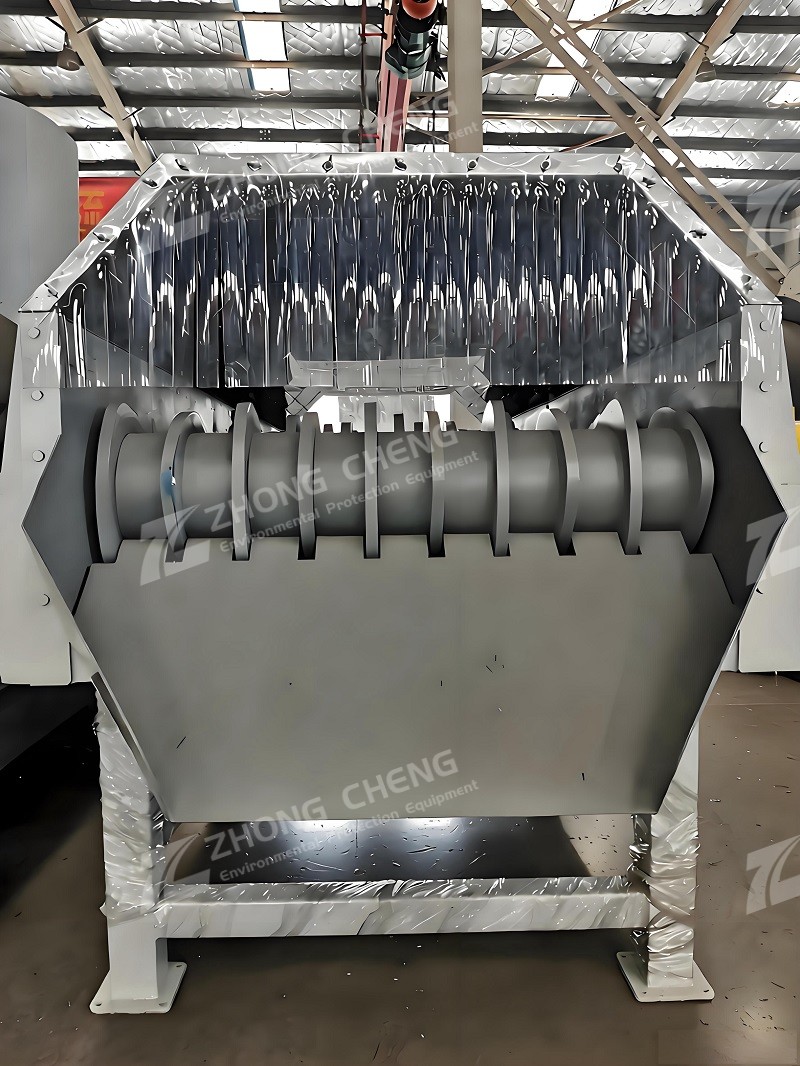
3. Construction waste recycling: a key link in promoting circular utilization
With the development of the construction waste resource utilization industry, the role of star disk screens has become increasingly prominent, mainly responsible for sorting and grading construction waste, achieving the transformation of "waste into treasure". The construction waste contains components such as concrete blocks, steel bars, bricks and tiles, and wood. The disc screen adjusts the disk spacing and speed to first separate impurities with larger particle sizes such as steel bars and large pieces of wood. Then, inert materials such as concrete blocks and bricks are classified into different specifications of recycled aggregates. Among them, fine-grained recycled aggregates can be used to make recycled mortar, permeable bricks and other building materials; Medium sized aggregates can be used for concrete mixing or road base laying; Coarse grained aggregates are returned to the crushing system for further processing. The precise grading function of the star disc screen not only improves the resource utilization rate of construction waste, but also reduces the impurity content in recycled aggregates, ensuring the quality of recycled products and promoting the development of the construction industry towards green recycling.
4. Agriculture and food processing: impurity removal equipment to improve product purity
In the fields of agriculture and food processing, star disk screens are mainly used for impurity removal and grading of materials such as grains, feed, fruits and vegetables. Their function is to remove impurities from materials and separate them according to particle size or dimension, meeting the needs of processing, storage, and sales. In grain processing, the star disc screen can separate impurities such as soil blocks, stones, weed seeds, etc. from wheat and rice to ensure grain purity. At the same time, it grades grains with different degrees of fullness, providing uniform raw materials for subsequent rice milling and grinding processes and improving the quality of finished products; In feed processing, the star disc screen can grade feed materials such as corn and soybean meal, remove moldy particles or foreign objects, and avoid affecting feed quality. At the same time, according to the needs of the breeding objects, the feed can be classified into products of different particle sizes for easy consumption by livestock and poultry at different growth stages; In the field of fruit and vegetable processing, star disk screening can be used for size grading of fruits and vegetables, such as separating apples, oranges, etc. according to diameter, providing standardized raw materials for subsequent packaging and processing, and enhancing the product's commercial value.
B. The unique feature of the star disc screen: the technological advantage of supporting efficient operation
The widespread application of star disk screens is due to their unique characteristics in structural design, operational performance, and applicability. These characteristics make them more adaptable and stable in complex working conditions compared to traditional screening equipment such as vibrating screens and drum screens, which can be summarized as follows.
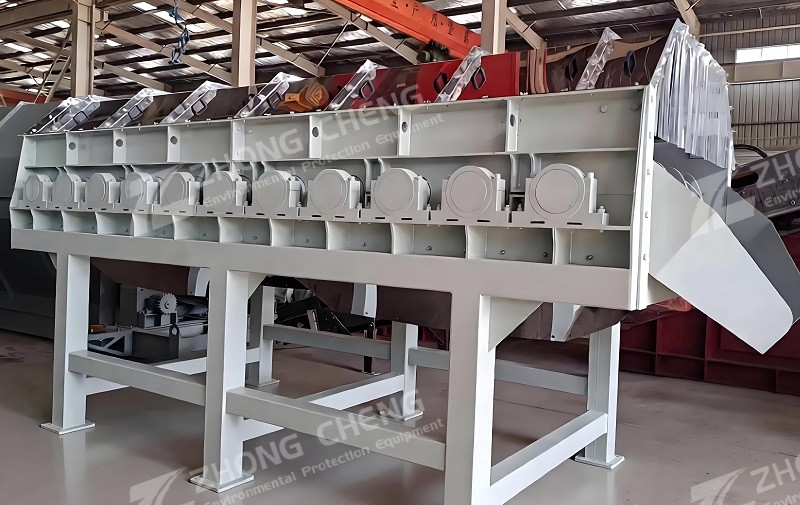
1. Innovative star disk structure: improving screening accuracy and anti blocking ability
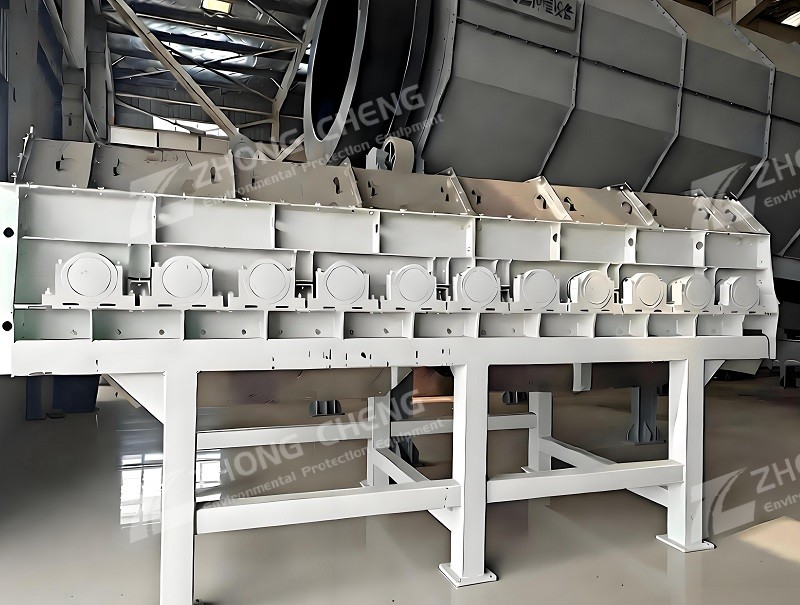
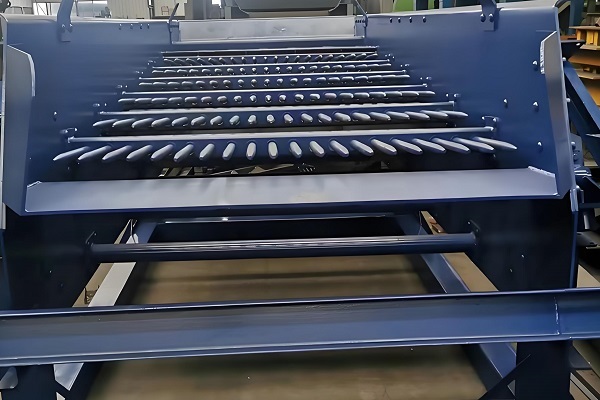
The most significant feature of the star disc screen is the use of a screening unit composed of multiple star disks connected in series. The star disks are usually made of high-strength polyurethane or rubber materials, with a radial tooth structure on the surface, and uniform screening gaps are formed between adjacent star disks. This structural design brings two core advantages: first, high screening accuracy. The toothed structure of the disk can form a stable clamping and conveying effect on the material, avoiding the material from sliding freely on the screen surface. At the same time, the uniform gap ensures that only materials that meet the particle size requirements can pass through, effectively reducing the content of fine particles in the material on the screen and the content of coarse particles in the material under the screen. The screening accuracy is improved by 10% -15% compared to traditional vibrating screens; Secondly, it has excellent anti blocking performance. During the rotation of the star disk, the tooth shaped structure will have a certain stirring and dispersing effect on the material. For materials with strong adhesion, such as kitchen waste, wet clay, etc., it can effectively destroy the material clumps and prevent them from blocking the screening gap. At the same time, the surface of the star disk material is smooth and the material is not easily adhered, further reducing the risk of blockage, allowing the equipment to maintain stable processing efficiency when handling high humidity and high viscosity materials.
2. Stable and reliable operation: reduce energy consumption and maintenance costs
The operating mechanism of the star disk screen adopts a "low-speed rotation, smooth conveying" method. Compared with the high-frequency vibration of traditional vibrating screens, its operation is more stable, bringing advantages such as low energy consumption, low noise, and low maintenance costs. In terms of energy consumption, the drive system of the star disk screen mainly provides the power required for material transportation and screening, without overcoming the inertia force generated by high-frequency vibration. Therefore, the energy consumption per unit processing capacity is reduced by 20% -30% compared to the vibrating screen, especially suitable for large-scale and continuous production scenarios. Long term operation can significantly reduce the energy cost of enterprises. In terms of noise control, the operating noise of the star screen mainly comes from the motor and reducer. Due to the absence of impact noise generated by high-frequency vibration, its operating noise can be controlled below 75 decibels, far lower than the 90 decibels of the vibrating screen, effectively improving the workshop working environment and meeting environmental and occupational health requirements. In terms of maintenance, the vulnerable components of the star disk screen are mainly the star disk, which is made of high-strength wear-resistant materials and has a service life of 1-2 years. The replacement process is simple and convenient; However, the vulnerable components such as the screen mesh and spring of traditional vibrating screens are frequently replaced, and the replacement process is complex. Therefore, the annual maintenance cost of the disk screen can be reduced by about 40%.
3. Flexible and convenient adjustment: adaptable to multiple working conditions
The star disc screen has strong adjustment flexibility, which can quickly adapt to the screening needs of different materials by adjusting parameters such as disk spacing and rotation speed, and improve the universality of the equipment. In terms of adjusting the spacing between star disks, the equipment adopts a modular design, and the spacing between star disk groups can be accurately adjusted according to the requirements of material particle size. The adjustment range is usually 5mm-100mm, which meets various needs from fine-grained classification to coarse-grained impurity removal. For example, in household waste treatment, adjusting the spacing to 20mm can separate inert materials from combustible materials, and adjusting it to 5mm can achieve the screening of fine-grained kitchen waste; In terms of speed regulation, the rotation speed of the disk is controlled by a variable frequency motor, with a speed range of 5r/min-30r/min. For materials that are prone to breakage such as glass and ceramics, the speed can be reduced to reduce material damage. For materials with strong adhesion, the speed can be increased to enhance the dispersing effect. In addition, the positions of the feed and discharge ports of the star disk screen can be adjusted according to the on-site layout, and the equipment installation method is flexible. It can operate independently as a single machine or form a production line with other equipment to adapt to different production scenarios.
4. High strength structural design: extending the service life of equipment
In response to the harsh working conditions in industrial production, the star disk screen adopts a high-strength structural design to ensure that the equipment has a long service life. In terms of the main structure, the equipment rack is made of Q235B steel welded together and annealed to eliminate welding stress. It can withstand material impact and long-term operating loads. The rack surface adopts sandblasting and electrostatic spraying processes, which have excellent rust and corrosion resistance and are suitable for humid and dusty working environments; In terms of transmission system, well-known brands of reducers and motors are used, which have high transmission efficiency and stable operation. At the same time, overload protection devices are equipped, which can automatically stop the equipment for protection in case of material jamming, overload and other situations, avoiding damage to the motor and reducer; In terms of connecting the star disk, high-strength bolts are used to ensure that the disk does not loosen during rotation, and the bolts are treated with anti-corrosion to extend their service life. Through practical application verification, the average service life of the star disk screen can reach 8-10 years under continuous operation conditions, which is much higher than the 5-6 years of traditional screening equipment, reducing equipment replacement costs for enterprises.

5. Outstanding environmental performance: meets the requirements of green production
In today's increasingly strict environmental requirements, the environmental performance of star disk screens has become one of its important features. On the one hand, there is no dust flying during the operation of the equipment. The closed design of the disk group can effectively prevent the diffusion of dust generated during the screening process of materials. At the same time, dust covers can be equipped at the inlet and outlet to further improve the dust collection effect and meet the workshop dust emission concentration standards; On the other hand, the star disk material is made of environmentally friendly polyurethane, which is odorless and pollution-free. When applied in fields related to people's livelihoods such as household waste disposal, it will not cause harm to the environment and human health. In addition, the efficient screening effect of the star disc screen can improve the resource utilization rate of materials and reduce the emission of waste. For example, in the treatment of construction waste, more than 80% of the waste can be converted into renewable resources, which is in line with the development concept of green production and circular economy.
The star disk screen has become an indispensable screening equipment in modern industrial production due to its precise classification and efficient separation in the fields of household waste treatment, mining building materials, and construction waste recycling, as well as its unique features such as innovative star disk structure, stable operation, and flexible adjustment. It not only improves the efficiency and quality of material processing, but also reduces the production and maintenance costs of enterprises, which meets the requirements of environmental protection and circular economy development. With the continuous advancement of industrial technology, the star disk screen will develop towards intelligence and large-scale in the future. For example, by introducing Internet of Things technology to achieve real-time monitoring and remote control of equipment operation status, and by optimizing structural design to increase the processing capacity of a single device, it can adapt to larger scale production needs. For enterprises, fully understanding the role and characteristics of star disk screens, and selecting and applying them reasonably based on their own production needs, will provide strong support for the efficient production and green development of enterprises.


Company: Zhengzhou ZhongCheng environmental protection equipment co., LTD

Company address: 36 xueyuan road, Zhengzhou City, Henan Province, China.

Whatsapp:+86-18738194110


Our Email

Our phone
 86-18738194110
 86-18738194110

Save Time! Get A Detailed Quotation Quickly.


 2024-11-01