Consulting
Service
With the ever-increasing demand for a better quality of life, waste management has become a crucial social issue affecting urban and rural environmental improvement and the enhancement of people's well-being. The large-scale generation of construction waste, renovation waste, aged landfill waste, and daily household waste not only occupies land resources but also easily leads to environmental pollution. Against this backdrop, the waste screening trommel screen has emerged as a highly efficient waste treatment equipment. Through precise screening and sorting, it achieves waste reduction, harmless treatment, and resource utilization, injecting strong momentum into urban and rural environmental governance and sustainable development. In recent years, the technological advancements of new-generation waste screening trommel screens have further improved waste treatment efficiency, making the goal of household waste resource utilization a reality and adding a green touch to urban and rural construction.
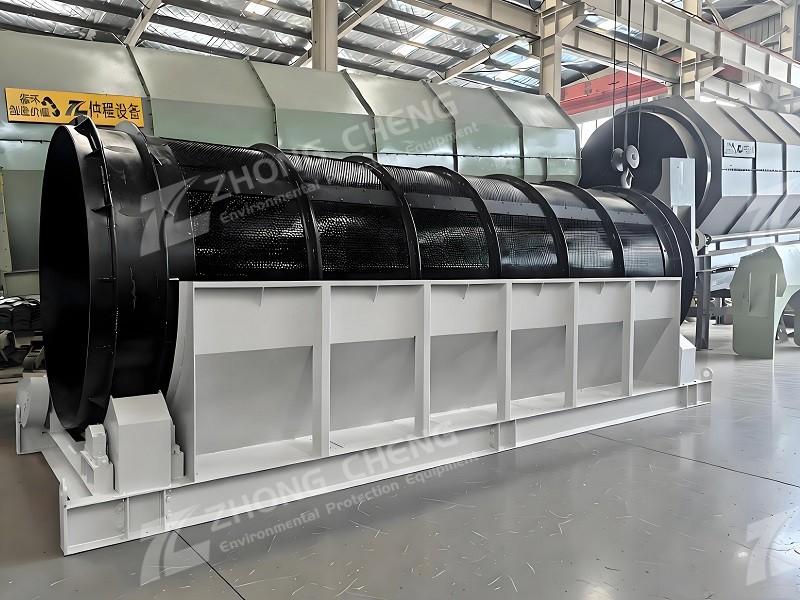
The waste screening trommel screen is a screening equipment specifically designed to handle the complex composition and diverse impurities of various types of waste. Its core function is to classify waste by particle size and composition through drum rotation and screen mesh screening, providing precise pre-treatment for subsequent recycling, incineration, or landfill disposal. Compared with ordinary screening equipment, it focuses more on addressing the stickiness and heterogeneity of waste. Whether it's construction waste containing a large amount of concrete blocks, renovation waste mixed with various construction debris, or aged waste with complex components after long-term landfilling, it can achieve efficient sorting, making it an indispensable key equipment in waste treatment production lines.
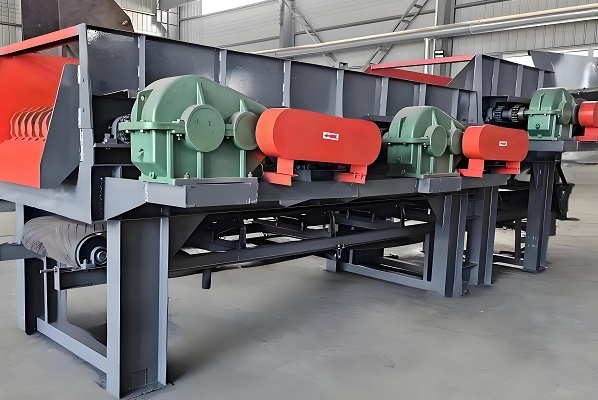
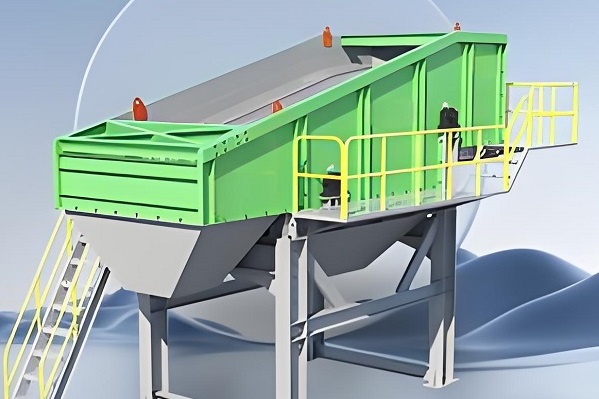
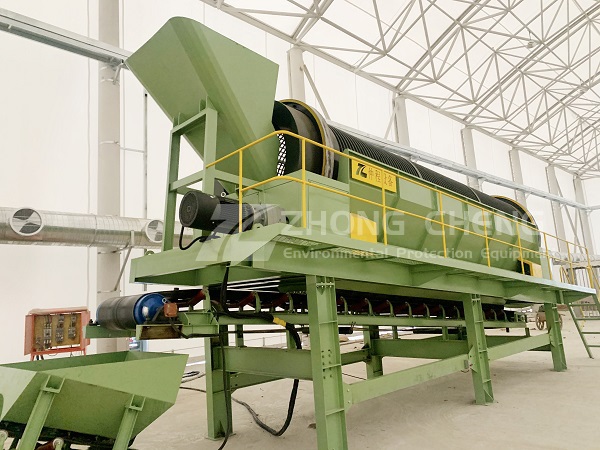
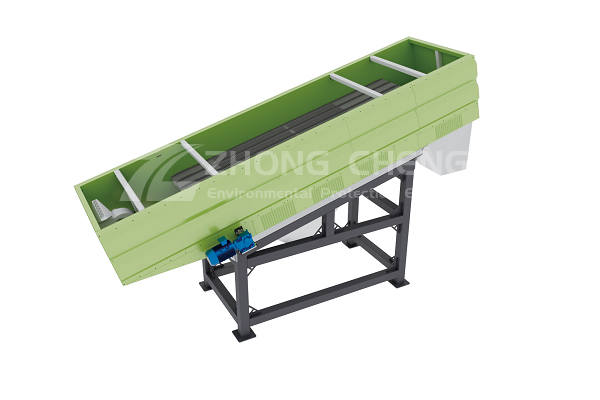
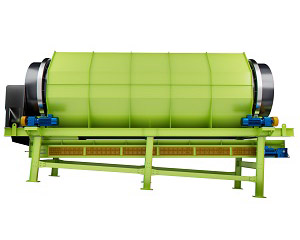
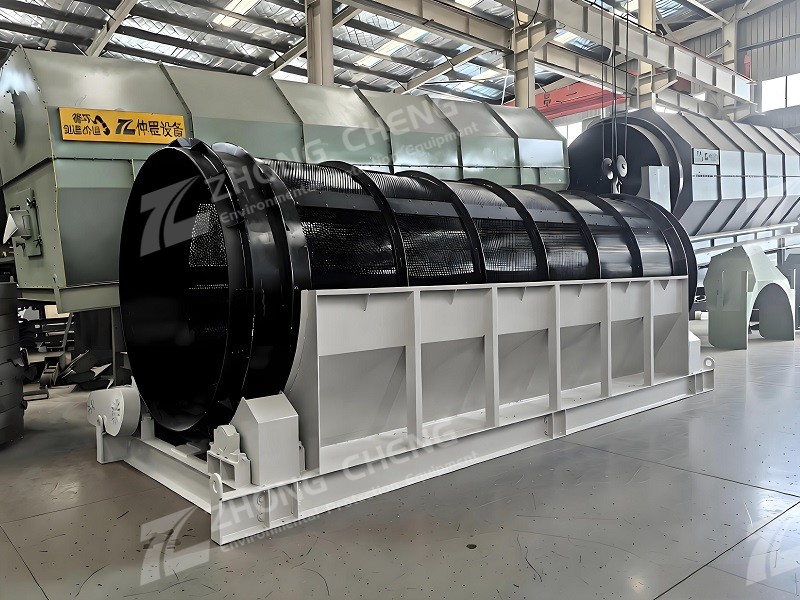
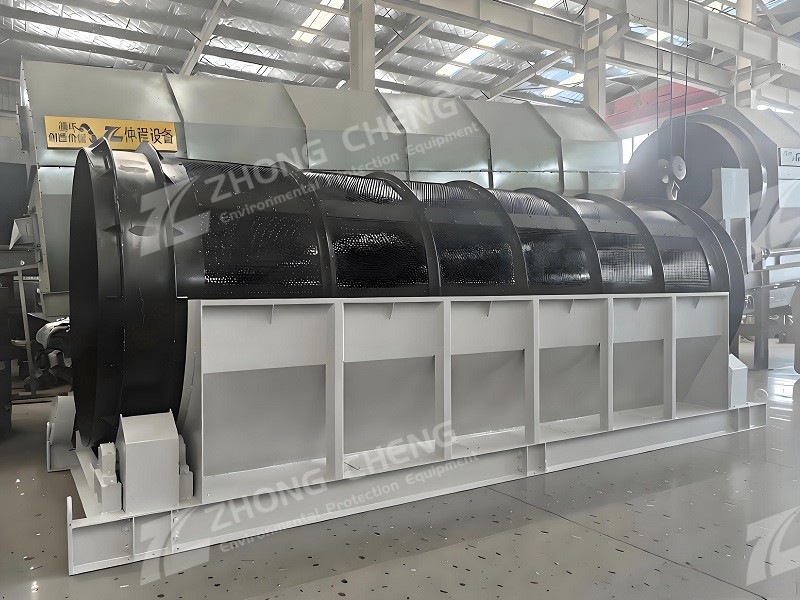
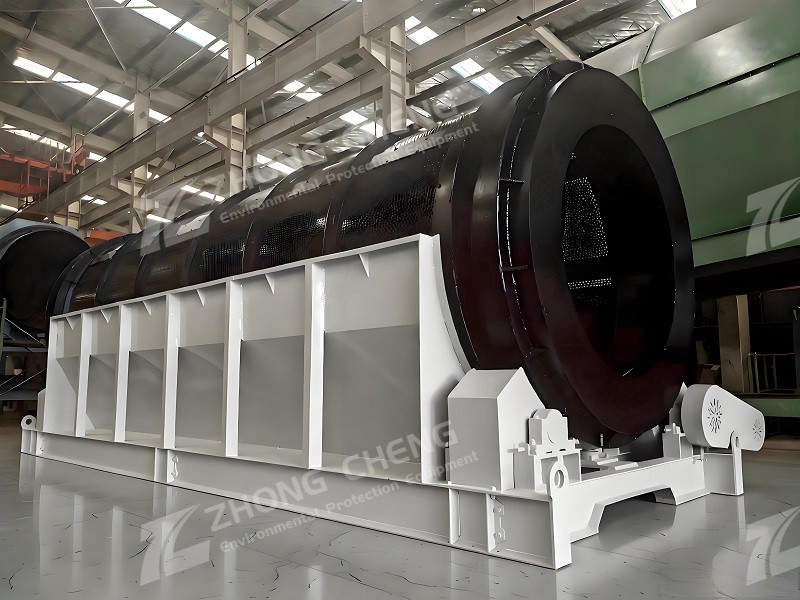
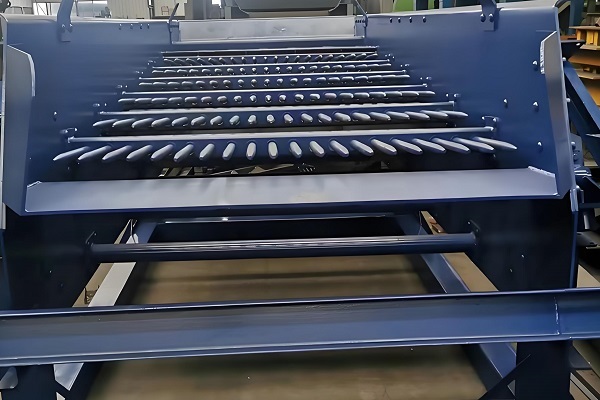
To fully utilize the function of the waste screening trommel screen, its basic structure and classification must first be understood. The structural design of the waste screening trommel screen revolves around the peculiarities of waste treatment, mainly consisting of core components such as the drum device, reducer, motor, internal screen cleaning device, bottom support, sealing cover, discharge port, and feeding port. These components work together to ensure the stable and efficient operation of the entire process from feeding to screening to discharge. The drum device is the core working unit, equipped with a screen mesh of specific specifications; the drive system consists of a motor and a reducer, providing stable power for drum rotation; the internal screen cleaning device prevents waste from sticking and clogging the screen holes; the sealing cover effectively isolates dust and noise generated during the screening process; and the bottom support provides stable support for the entire equipment. Based on their structure and application scenarios, rotary trommel screens for waste sorting can be divided into various types, including closed rotary trommel screens, open rotary trommel screens, hexagonal rotary trommel screens, and shaftless rotary trommel screens. Closed rotary trommel screens, equipped with a complete sealed cover, offer the best dust and noise reduction, making them suitable for environments with high environmental requirements, such as municipal solid waste treatment plants. Open rotary trommel screens facilitate equipment maintenance and material observation, making them suitable for the initial screening of large materials such as construction waste. Hexagonal rotary trommel screens, through the unique design of the hexagonal drum, enhance material tumbling and improve screening accuracy. Shaftless rotary trommel screens, by eliminating the central shaft, effectively prevent entanglement of ropes, fabrics, and other waste, demonstrating significant advantages in the treatment of aged waste. Furthermore, the screen frame structure design of the equipment is also diverse, allowing users to choose single-layer, multi-layer, or different mesh sizes according to waste treatment needs, providing more flexible options.
In practical waste treatment applications, rotary trommel screens play a crucial role throughout the entire process of various waste treatments. Their function and effectiveness vary depending on the type of waste, demonstrating strong functional adaptability.
In construction waste treatment, rotary trommel screens play a core role in "impurity removal, purification, and graded utilization." Construction waste contains a large amount of concrete blocks, crushed stone, rebar, and waste bricks. Direct landfilling not only wastes resources but also causes land pollution. The trommel screen, using a screen with a specific aperture, first separates the oversized materials such as rebar and large concrete blocks. The rebar can be directly recycled, while the large concrete blocks are sent to a crusher to be crushed into recycled aggregate. The undersized materials, including fine sand and crushed stone, can be graded according to particle size and used to produce recycled bricks, concrete sub-bases, and other building materials. For example, after adopting a closed rotary trommel screen, a construction waste treatment plant increased its resource utilization rate of construction waste from 40% to over 75%, with an annual output of hundreds of thousands of tons of recycled aggregate, effectively achieving the transformation of construction waste into valuable resources. Construction and demolition waste has a more complex composition, containing not only building materials such as sand and cement, but also various impurities such as plastics, wood, glass, and metals, requiring higher precision from screening equipment. In the treatment of this type of waste, rotary drum screens play a crucial role through a "multi-stage screening + impurity separation" model. The equipment typically uses a multi-layer screen design: the upper screen separates large pieces of wood and metal components, the middle screen screens out medium-sized cement blocks and tile fragments, and the lower screen separates fine powdery materials. Metal impurities can be further recovered through the equipment's magnetic separation device, combustible materials such as plastics and wood can be used for incineration and power generation, and the graded sand and gravel materials can be used as raw materials for recycled building materials. This refined screening process achieves a waste reduction rate of over 80%, significantly reducing landfill pressure.
Aged landfill waste is a "tough nut to crack" in waste treatment. This type of waste has been in an anaerobic environment in landfills for a long time, is complex in composition, and contains a large amount of viscous substances, as well as easily entangled materials such as plastic bags and fabrics, which are difficult for ordinary screening equipment to handle. Shaftless rotary drum vibrating screens demonstrate unique advantages in the treatment of this type of waste, with their core function being "bag breaking and component separation." The shaftless design avoids the problem of the central shaft of traditional equipment being easily entangled. Combined with the tumbling effect of the octagonal drum, it can effectively break open garbage bags, allowing the internal materials to be fully dispersed; the internal cleaning device can timely wash away viscous substances adhering to the screen, preventing screen clogging. Through screening, recyclable plastics and metals in aged waste are separated and recovered, organic materials are screened out for composting and fermentation, and inert materials are used for landfill cover soil, achieving resource utilization and reduction of aged waste, providing technical support for the ecological restoration of old landfills.
In municipal solid waste treatment, rotary drum screens are a key link in achieving "classified recycling and energy utilization." With the advancement of municipal solid waste classification policies, the role of rotary drum screens is becoming increasingly important. It can accurately separate food waste, recyclables, and other waste from mixed municipal solid waste: fine-mesh screens separate easily decomposable organic materials such as food waste, which can be converted into biogas or organic fertilizer after fermentation; medium-sized recyclables (such as plastic bottles and aluminum cans) are screened out and further recycled through manual or intelligent sorting; and large pieces of other waste are sent to incineration plants for power generation. A municipal solid waste treatment plant, by introducing a hexagonal trommel screen, increased the accuracy of waste classification to over 90%, improved the resource utilization rate of food waste by 30%, and increased waste incineration power generation by 15%, achieving a win-win situation in both environmental and economic benefits.
In addition to its specific functions for different types of waste, the waste screening trommel screen also plays a common role in the entire waste treatment system: "pre-treatment assurance and improved subsequent efficiency." Regardless of the type of waste, before entering subsequent processing stages (such as crushing, composting, and incineration), it needs to pass through a trommel screen to remove large impurities and perform particle size classification. This not only protects subsequent equipment from damage but also improves the efficiency and effectiveness of subsequent processing. For example, before waste incineration, removing large inert materials through a trommel screen can improve the combustion efficiency of the incinerator and reduce slag production; before composting, screening out fine-grained organic materials can shorten the composting fermentation cycle and improve the quality of organic fertilizer.
The unique application scenarios and functional requirements give waste screening trommel screens a series of significant characteristics that distinguish them from ordinary screening equipment. These characteristics are the core guarantee for their ability to efficiently handle complex waste treatment conditions.
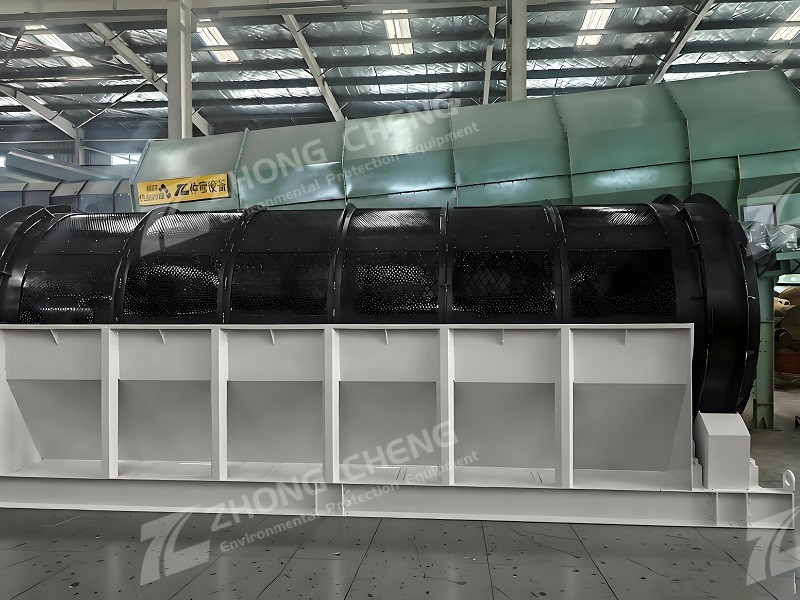
Outstanding environmental performance is one of the most core characteristics of waste screening trommel screens. The waste screening process easily generates a large amount of dust and noise, causing pollution to the surrounding environment. The waste screening trommel screen effectively solves this problem through its scientific structural design: the equipment's cylinder (drum) is usually set at an incline, and combined with a fully enclosed dust-proof sealing cover, the waste is screened within a sealed space, resulting in almost no dust leakage during the production process; at the same time, the equipment's drive system and rotating parts are noise-reduced, and coupled with the shock-absorbing design of the bottom support, the operating noise is significantly reduced, meeting the strict requirements of urban and rural environmental management for environmentally friendly equipment. In waste transfer stations near urban residential areas, the use of enclosed trommel screens can control the dust concentration in the working area to below 10 mg/m³ and the noise to below 70 decibels, effectively avoiding impact on the lives of surrounding residents.
Strong anti-clogging and anti-winding capabilities are key advantages of the waste screening trommel screen in adapting to complex waste conditions. The plastic films, fabrics, and sticky soil contained in waste can easily cause clogging of the screen holes and entanglement of components in ordinary screening equipment, affecting equipment operating efficiency. The waste screening trommel screen solves this problem through multiple design features: the shaftless type equipment eliminates the central shaft, fundamentally avoiding entanglement problems; the internal cleaning device uses high-pressure water flow or scrapers to clean the adhering materials on the screen in real time; the hexagonal or octagonal drum design enhances the tumbling and impact of materials, making it difficult for sticky materials to adhere. For example, when processing municipal solid waste containing a large amount of food waste, a trommel screen equipped with a cleaning device can operate continuously for more than 8 hours without clogging, reducing equipment downtime for cleaning by 90%.
High screening efficiency and accurate classification are the foundation for achieving waste resource utilization with the waste screening trommel screen. The core requirement of waste treatment is "to separate and classify accurately," and the trommel screen achieves this goal through optimized structural design. On the one hand, the inclined drum, combined with adjustable rotation speed, allows sufficient screening time for the waste inside the drum, while ensuring smooth material transport and preventing accumulation; on the other hand, diverse mesh structures and screen hole specifications can be precisely matched according to waste treatment needs. For example, large-aperture screens are used to separate large pieces of material when processing construction waste, while multi-layer fine-aperture screens are used for fine classification when processing municipal solid waste. Through practical application, it has been verified that high-quality waste screening trommel screens can achieve a screening efficiency of over 90%, with a classification accuracy error controlled within 5%, meeting the requirements for waste particle size and composition for various subsequent treatment processes.
Wide adaptability and high flexibility are key characteristics that enable waste screening trommel screens to handle various waste treatment needs. Whether it's construction waste, renovation waste, aged landfill waste, or household waste from different regions and with different compositions, efficient processing can be achieved by adjusting the parameters of the trommel screen. The flexibility of the equipment is mainly reflected in three aspects: firstly, the screen mesh can be quickly disassembled and replaced, allowing for adjustment of the mesh size according to the type of waste; secondly, the rotation speed and drum inclination angle can be flexibly adjusted to suit waste with different viscosities and particle sizes; and thirdly, there is a diverse range of equipment specifications, from mobile trommel screens for small waste transfer stations to fixed production lines for large waste treatment plants. This strong adaptability allows the trommel screen to be used not only in urban waste treatment but also to meet the needs of various scenarios such as centralized treatment of rural household waste and on-site treatment of construction waste from road construction.
Robust structure and convenient maintenance are important guarantees for reducing operating costs of waste screening trommel screens. Waste treatment conditions are harsh, and the equipment is susceptible to impact from large materials and corrosion from corrosive substances. Therefore, the key components of the trommel screen are made of high-strength materials: the drum usually uses wear-resistant steel plates or stainless steel, and the screen mesh uses high-strength alloy materials to ensure that the equipment can withstand the impact and wear of the waste; the bottom support frame is made of welded structural steel, providing sufficient rigidity and stability. At the same time, the equipment maintenance design is extremely convenient. The modular component design allows for quick disassembly and replacement of vulnerable parts such as motors and reducers, and the cleaning and maintenance of the screen mesh do not require complex tools, and can be completed by ordinary operators after simple training. Statistics show that the average trouble-free operating time of waste screening trommel screens can reach over 800 hours, and the annual maintenance cost is only about 60% of traditional screening equipment, significantly reducing the operating burden of waste treatment enterprises.
In the field of rural waste treatment, the characteristics and functions of waste screening trommel screens have been fully utilized, becoming important equipment for improving the rural living environment. Rural household waste has a complex composition, combining the characteristics of household waste and a small amount of agricultural waste, and the treatment sites are usually close to residential areas, requiring high environmental protection standards. Small, mobile rotary trommel screens, with their flexibility, convenience, and environmental friendliness, have become an ideal choice for rural waste management. These devices can be driven directly to waste collection points, where they perform on-site waste sorting: separated organic waste is used for composting in the fields, recyclable materials are collected and sold, and other waste is either landfilled in small quantities or transported to urban treatment plants. After a rural area introduced this type of equipment, the harmless treatment rate of waste increased from 30% to 95%, resulting in a dramatic improvement in the rural environment and a significant improvement in the quality of life for farmers.
With the deepening of the concept of waste resource utilization and the continuous tightening of environmental protection policies, the application prospects of rotary trommel screens are becoming increasingly broad. In the future, by combining intelligent technologies, rotary trommel screens will achieve more efficient operation: for example, using IoT sensors to monitor equipment operating status and screen clogging in real time, and using artificial intelligence algorithms to automatically adjust the rotation speed and cleaning frequency, achieving intelligent operation and maintenance of the equipment; at the same time, the equipment will focus more on energy saving and resource utilization efficiency, further reducing energy consumption through optimized structural design, and achieving precise separation of all components of waste with intelligent sorting systems.
For waste treatment companies, choosing the right rotary trommel screen requires considering their specific treatment needs: for construction waste, impact-resistant, large-aperture open or shaftless trommel screens should be prioritized; for municipal solid waste, enclosed trommel screens should be used to ensure environmental compliance; and for rural or small-scale treatment scenarios, mobile, small-sized equipment is suitable. It is also necessary to pay attention to core parameters such as the screen mesh material and cleaning device configuration, and consult professional equipment manufacturers to obtain customized solutions to maximize the effectiveness of the equipment and improve waste treatment efficiency and resource utilization benefits.


Company: Zhengzhou ZhongCheng environmental protection equipment co., LTD

Company address: 36 xueyuan road, Zhengzhou City, Henan Province, China.

Whatsapp:+86-18738194110


Our Email

Our phone
 86-18738194110
 86-18738194110

Save Time! Get A Detailed Quotation Quickly.


 2024-11-01