Consulting
Service
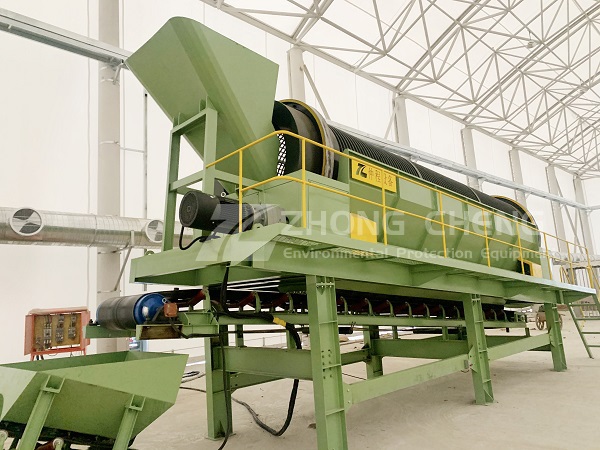
Against the backdrop of accelerated urbanization, the generation of urban solid waste continues to rise, making the reduction, harmless treatment, and resource utilization of waste crucial to solving environmental governance challenges. Screening, as a core preliminary step in the waste treatment process, directly determines the effectiveness of subsequent treatment processes. The shaftless waste screening trommel screen, as an upgraded and improved version of the traditional shafted trommel screen, has been widely used in the waste treatment industry due to its unique structural design and performance advantages. This article will systematically analyze the core advantages of the shaftless waste screening trommel screen from six dimensions: structural design, screening efficiency, operation and maintenance, applicable scenarios, safety and environmental protection, and economic benefits, demonstrating its application value in the field of waste treatment.
Optimized Structural Design: Breaking Through Traditional Limitations, Adapting to Complex Materials
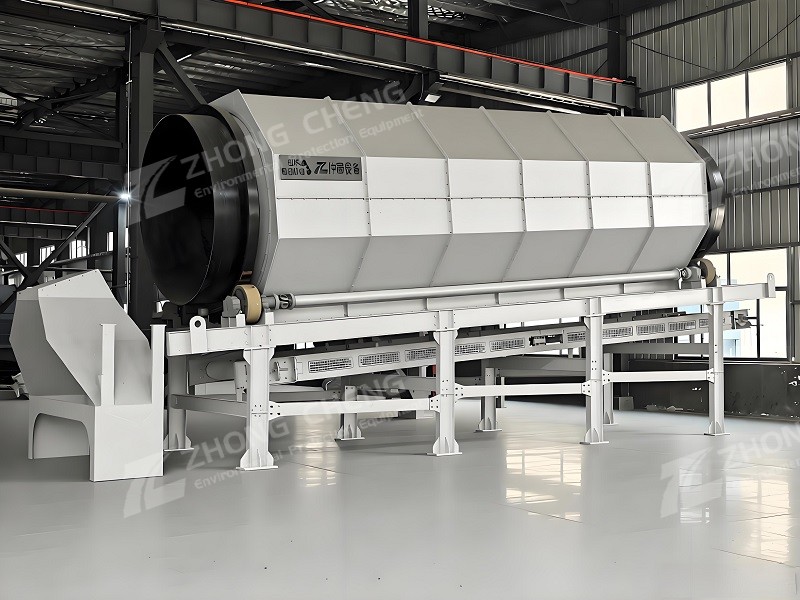
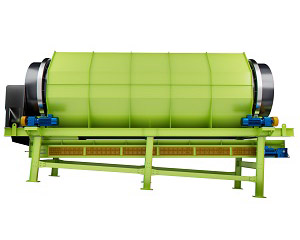
The most significant advantage of the shaftless waste screening trommel screen lies in its "shaftless" core structural design. Compared to traditional shafted trommel screens, it completely eliminates the central drive shaft that runs through the drum, instead driving the drum's rotation through gears or support rollers on the outside of the drum. This structural innovation fundamentally solves many of the problems encountered by traditional equipment when processing complex waste materials, laying the foundation for its stable operation.
Firstly, it effectively avoids entanglement and blockage problems. Urban solid waste has a complex composition, containing a large amount of fibrous materials (such as plastic bags, woven bags, branches and vines), flexible materials (such as discarded clothing, plastic film), and blocky materials (such as bricks, stones, and fragments of discarded furniture). The central drive shaft of traditional shafted trommel screens is easily entangled by fibrous and flexible materials during operation, and blocky materials may also get stuck in the connection between the drive shaft and the drum, leading to equipment downtime for cleaning and seriously affecting screening efficiency. Because the shaftless waste screening trommel screen has no central drive shaft, the internal space of the drum is unobstructed, allowing materials to roll and be transported freely within the drum, fundamentally eliminating the risk of material entanglement and blockage, ensuring continuous and stable operation of the equipment.
Secondly, it improves the drum's load-bearing capacity and service life. Traditional shaft-driven trommel screens require the drive shaft to bear the weight of the drum itself and the material, leading to problems such as shaft fatigue and bending deformation under long-term operation, which in turn affects the rotational accuracy of the drum and reduces the screening efficiency. The shaftless structure transfers the load-bearing center to the support rollers and gears outside the drum. The support rollers are made of high-strength, wear-resistant materials, which can evenly distribute the weight of the drum and materials, reducing local stress loads. At the same time, the drum ends do not need to be connected to a drive shaft, reducing wear on vulnerable parts such as end seals and bearings, significantly improving the equipment's load capacity and service life, especially suitable for high-throughput, heavy-duty waste screening scenarios.
Finally, the simplified structural design facilitates equipment installation and commissioning. The shaftless waste screening trommel screen eliminates the central drive shaft and related connecting parts, resulting in a more compact overall structure and a weight reduction of 15%-30% compared to traditional shaft-driven equipment. This advantage not only reduces equipment transportation costs but also simplifies the on-site installation process, eliminating the need for complex alignment and commissioning work, allowing for quick equipment placement and fixation. For scenarios with limited space, such as waste treatment plants, the compact structural design makes it easier to integrate with other processing equipment (such as crushers and sorting machines), improving the overall space utilization of the production line.
2. Upgraded Screening Performance: Higher Efficiency, More Precise Classification
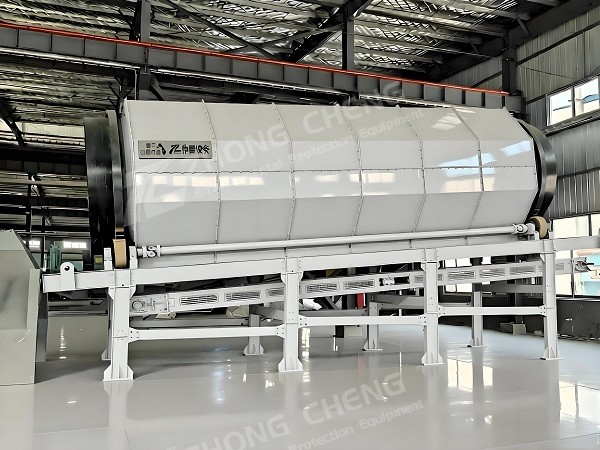
Screening efficiency and classification accuracy are core indicators for measuring the performance of waste screening equipment. The shaftless waste screening trommel screen achieves significant improvements in these two dimensions through structural optimization and flexible adjustment of operating parameters, better meeting the refined material classification needs of waste resource utilization.
On the one hand, it improves screening efficiency and increases the processing capacity per unit time. The through-flow structure of the shaftless drum allows for a smoother movement of materials inside the drum, eliminating material retention problems caused by drive shaft obstruction. At the same time, during drum rotation, the materials, under the combined action of centrifugal force and gravity, can fully contact the drum screen mesh. Materials smaller than the screen holes can quickly pass through the screen to complete the screening process, while materials larger than the screen holes are uniformly transported to the discharge port along the inclined direction of the drum. Compared to traditional shaft-driven trommel screens, shaftless equipment increases material throughput by 20%-40%, with a processing capacity of 50-500 tons per hour, meeting the needs of different-sized waste treatment plants. Taking a large urban waste incineration plant as an example, the shaftless waste screening trommel screen can quickly complete the pre-treatment screening of raw waste, providing uniform and qualified feed for subsequent incineration processes, avoiding problems such as incomplete combustion or grate blockage caused by uneven material particle size.
On the other hand, it optimizes sorting accuracy to meet the needs of fine sorting. The screen mesh of the shaftless waste screening trommel screen adopts a modular design, allowing for flexible replacement of screen meshes with different apertures (such as 10mm, 20mm, 50mm, etc.) according to the waste treatment process requirements, achieving multi-stage classification of waste materials. At the same time, the rotation speed and inclination angle of the drum can be precisely adjusted through a variable frequency speed control system, optimizing operating parameters based on material characteristics (such as humidity, particle size, and specific gravity), ensuring precise control of the material's residence time in the drum. For waste materials with high moisture content (such as raw waste with a high proportion of food waste), the rotation speed of the drum can be reduced and the inclination angle increased to reduce material adhesion to the screen surface and improve screening accuracy; for materials with large particle size differences, the rotation speed can be adjusted to ensure sufficient tumbling of the material, ensuring accurate classification of materials of different particle sizes. In addition, the shaftless drum rotates more smoothly, reducing screen displacement caused by transmission shaft vibration, further ensuring the stability of sorting accuracy.
3. Convenient Operation and Maintenance: Reducing Operating Costs and Improving Equipment Availability
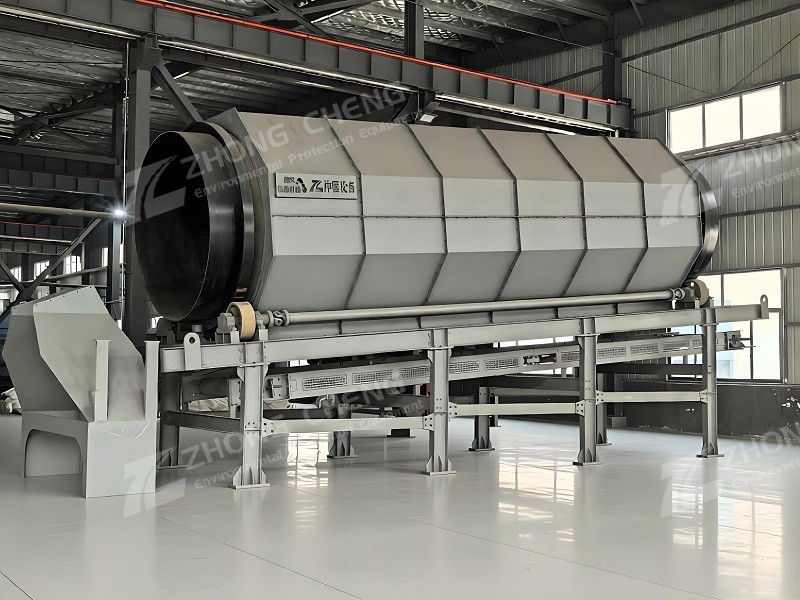
The operating and maintenance costs and downtime of waste treatment equipment directly affect the economic efficiency of the entire processing line. The shaftless waste screening trommel screen fully considers ease of maintenance in its structural design, significantly reducing the difficulty and cost of equipment operation and maintenance.
Firstly, it reduces wear parts, lowering maintenance costs. The transmission shaft, bearings, and seals of traditional shaft-driven trommel screens are high-frequency wear parts that require regular inspection and replacement, and the repair process is complex and time-consuming. The core moving parts of the shaftless waste screening trommel screen are the support rollers and gears. These components are made of high-strength, wear-resistant materials and are subjected to even stress, resulting in a wear rate significantly lower than the drive shafts and bearings of traditional shafted equipment. At the same time, the equipment eliminates the sealing structures associated with the central drive shaft, avoiding material leakage and component corrosion caused by seal failure, further reducing the number of wear parts and maintenance frequency. Statistics show that the annual maintenance cost of shaftless equipment is 30%-50% lower than that of traditional shafted equipment, significantly improving the economic efficiency of the equipment.
Secondly, it simplifies cleaning and maintenance procedures, shortening downtime. The through-type structure of the shaftless trommel makes internal cleaning more convenient. When a small amount of material adheres to the screen surface, it can be directly flushed from both ends of the drum with a high-pressure water gun, without the need to disassemble complex components; if the screen needs to be replaced, the modular screen design allows for quick disassembly and assembly, reducing the replacement time for a single screen by more than 60% compared to traditional shafted equipment. In addition, the core components such as the support rollers and gears are all located outside the drum, facilitating daily inspection and maintenance by personnel without the need to enter the equipment interior, reducing maintenance difficulty and safety risks. These advantages reduce the annual downtime for maintenance of shaftless equipment by more than 40% compared to traditional shafted equipment, significantly improving the availability of the equipment and the operating efficiency of the entire production line.
4. Wide range of applications: Compatible with diverse materials and flexible in handling complex working conditions
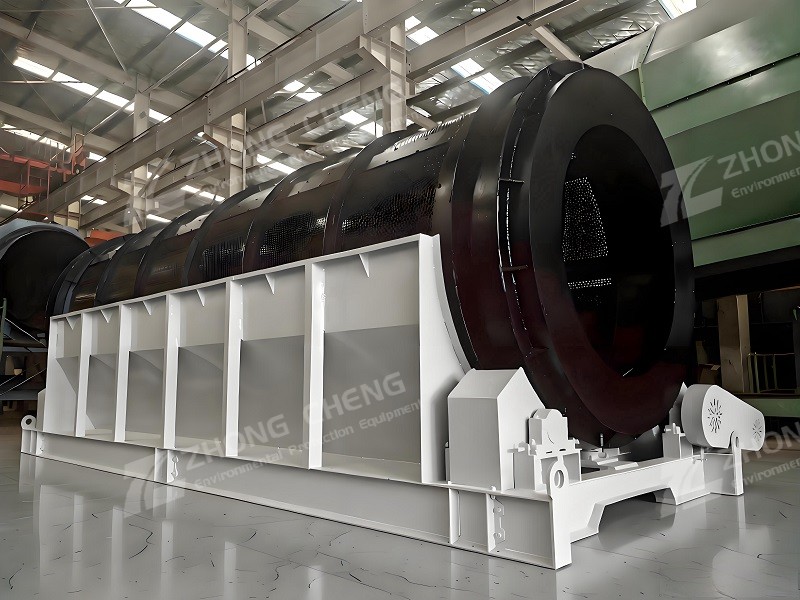
The composition of urban solid waste is significantly complex and variable. The composition of waste varies considerably in different regions and seasons, which places high demands on the adaptability of screening equipment. The shaftless waste screening trommel screen, with its unique structural advantages, can handle diverse materials and flexibly adapt to different working conditions, making its application range far wider than traditional shafted trommel screens.
In terms of material compatibility, the shaftless equipment can not only process conventional municipal solid waste but also adapt to special waste materials such as food waste, construction and demolition waste, and garden waste. For materials with high moisture content and viscosity, such as food waste, the through-flow structure of the shaftless trommel screen prevents material adhesion and blockage. By optimizing the screen mesh size and rotation speed, it effectively separates food waste from impurities (such as bones and plastic containers). For high-strength materials like bricks and concrete blocks in construction and demolition waste, the high load-bearing capacity of the shaftless equipment ensures stable operation and prevents component damage caused by material impact. For fibrous materials such as branches and leaves in garden waste, the shaftless structure effectively avoids entanglement problems, enabling rapid screening and classification of materials.
In terms of operational adaptability, the shaftless waste screening trommel screen can be flexibly adapted to different installation environments and operating requirements. Whether for outdoor or indoor installation, fixed or mobile operation (such as mobile screening equipment in waste transfer stations), the shaftless equipment can meet the needs through reasonable structural adjustments. The equipment can also adapt to different feeding methods (such as belt conveyor feeding and hopper feeding) and can be seamlessly integrated with crushers, air separators, magnetic separators, and other equipment to form a complete waste treatment production line. Furthermore, the operating parameters of the shaftless equipment can be adjusted in real time through a variable frequency control system, allowing for quick response to fluctuations in waste composition and ensuring the stability of the screening effect. This advantage makes it particularly valuable in scenarios with significant fluctuations in waste processing volume (such as large waste transfer stations and waste incineration plants).
5. Safety and Environmental Protection Upgrades: Reducing Safety Risks and Environmental Impact
In the waste treatment process, equipment safety and environmental protection are indispensable considerations. The shaftless waste screening trommel screen demonstrates outstanding advantages in safety protection and environmental protection through structural optimization and technological upgrades, meeting the green development needs of the modern waste treatment industry.
In terms of safety performance, the shaftless structure fundamentally eliminates safety hazards such as equipment overload and motor burnout caused by material entanglement on the drive shaft of traditional shafted equipment. At the same time, the equipment's transmission components (gears, support rollers) adopt a fully enclosed protective design, preventing direct contact between personnel and moving parts and reducing the risk of mechanical injury. Furthermore, the shaftless equipment operates more smoothly, with significantly less vibration than traditional shafted equipment. This reduces structural vibrations and noise generated during operation, minimizing the impact of vibrations on surrounding buildings and personnel. The equipment is also equipped with a comprehensive safety monitoring system that can monitor parameters such as drum speed, bearing temperature, and equipment load in real time. In case of any abnormalities, the system can automatically issue an alarm signal and shut down, further enhancing the operational safety of the equipment.
In terms of environmental performance, the shaftless waste screening trommel effectively reduces dust and odor leakage during waste processing by optimizing the sealing structure and operating method. The equipment's inlet and outlet are both designed with sealed covers, effectively preventing the diffusion of dust generated during the screening process; for waste materials that easily produce odors, the sealed cover can also be connected to a deodorization system for centralized odor treatment. At the same time, the shaftless equipment has low operating noise. Actual measurements show that the noise level during operation is below 75 decibels, meeting the requirements of the "Environmental Noise Emission Standard for Industrial Enterprises," reducing noise pollution to the surrounding environment.
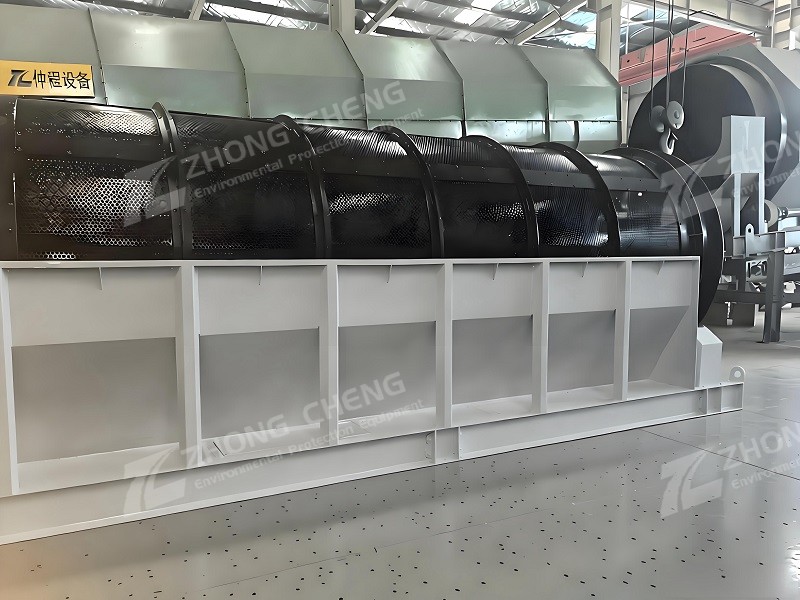
6. Significant Economic Benefits: Lowering Overall Costs and Enhancing Resource Recovery Value
The advantages of the shaftless waste screening trommel ultimately translate into significant economic benefits. By improving screening efficiency, reducing operating and maintenance costs, and optimizing resource recovery, the equipment can bring substantial overall economic benefits to waste treatment companies.
On the one hand, it reduces direct operating costs. The shaftless equipment has a compact structure and lighter weight, reducing energy consumption by 15%-25% compared to traditional shafted equipment. At the same time, the equipment has fewer wear parts and requires less frequent maintenance, reducing annual maintenance and parts replacement costs by 30%-50%. Taking a waste screening production line with a processing capacity of 200 tons/day as an example, the shaftless waste screening trommel can save approximately 100,000-150,000 RMB in energy and maintenance costs annually compared to traditional shafted equipment. In addition, the continuous and stable operation of the equipment reduces downtime, improving the overall processing efficiency of the production line and indirectly lowering the processing cost per unit of waste.
On the other hand, it enhances the value of resource recovery. The high screening accuracy of the shaftless equipment enables precise classification of waste materials, providing high-quality raw materials for subsequent resource recovery. For example, fine-grained organic materials (such as food waste) separated by screening can be used for anaerobic fermentation to produce biogas or for composting to produce bio-natural gas or organic fertilizer; the separated recyclable materials such as plastics and paper have higher purity, facilitating subsequent recycling and reuse; and the separated large inert materials (such as bricks and concrete blocks) can be used for brick making or road sub-base, achieving resource recycling. Precise screening and grading can improve the recovery rate and utilization value of recyclable resources, reduce landfill volume, lower the final disposal costs of waste treatment, and bring additional resource utilization benefits to enterprises. It is estimated that a waste treatment production line using a shaftless waste screening trommel screen can increase the overall value of recyclable resources by 20%-30% compared to traditional production lines.
The shaftless waste screening trommel screen, with its optimized structural design, upgraded screening efficiency, convenient operation and maintenance, wide range of applications, enhanced safety and environmental protection, and significant economic benefits, effectively solves the problems of entanglement and blockage, low efficiency, and high operating and maintenance costs of traditional waste screening equipment when processing complex waste materials, making it a preferred equipment in the modern waste treatment industry. As the waste treatment industry's requirements for reduction, harmlessness, and resource utilization continue to increase, the application prospects of the shaftless waste screening trommel screen will become even broader. In the future, with continuous technological iteration and upgrading, the shaftless waste screening trommel screen will achieve breakthroughs in intelligent control, material lightweighting, and further energy consumption reduction, providing stronger support for promoting the green and high-quality development of the waste treatment industry.


Company: Zhengzhou ZhongCheng environmental protection equipment co., LTD

Company address: 36 xueyuan road, Zhengzhou City, Henan Province, China.

Whatsapp:+86-18738194110


Our Email

Our phone
 86-18738194110
 86-18738194110

Save Time! Get A Detailed Quotation Quickly.


 2024-11-01