Consulting
Service
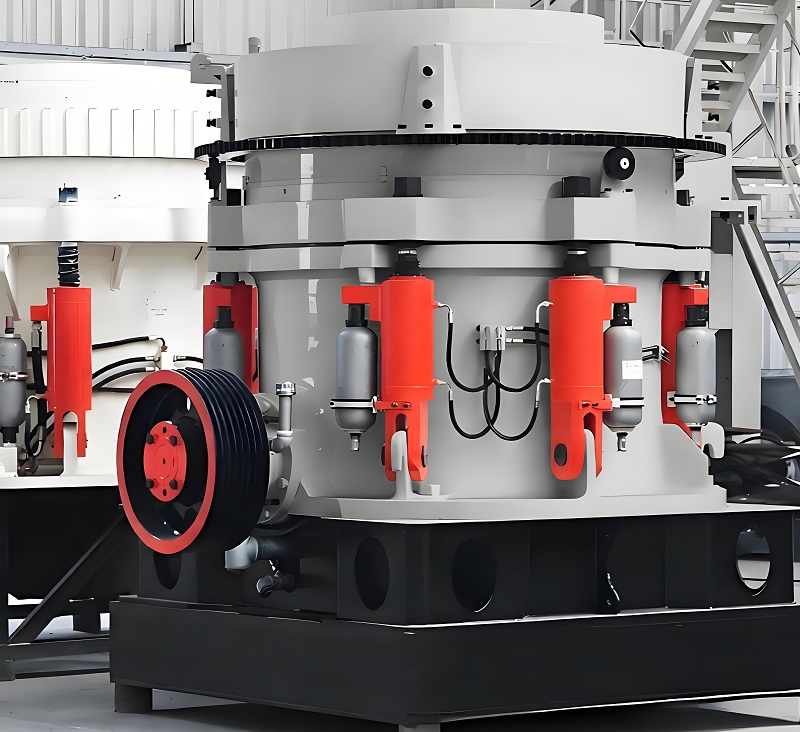
As a core crushing and fine crushing equipment in fields such as mining and construction aggregate processing, the installation and commissioning quality of cone crushers directly determines the equipment's operational stability, crushing efficiency, and service life. Compared to coarse crushing equipment, cone crushers have a more complex structure and require higher installation precision and stricter commissioning procedures. Improper installation procedures and unreasonable commissioning parameters can easily lead to problems such as excessive equipment vibration, accelerated component wear, and substandard product particle size, seriously affecting the efficiency of the production line. This article, combining industry practical standards, systematically outlines the key points of the entire installation and commissioning process of cone crushers from four dimensions: pre-installation preparation, core installation procedures, key commissioning steps, and installation and commissioning precautions, providing technical reference for on-site construction and operation and maintenance.
1. Pre-installation Preparation: Laying a Solid Foundation and Avoiding Early Risks
Thorough preparation before the installation of the cone crusher is a prerequisite for ensuring installation quality and efficiency. This requires a comprehensive assessment of potential risks, starting with three core aspects: site planning, equipment inspection, and tool preparation.
Site planning and foundation construction are the primary tasks. Based on the cone crusher's model parameters (such as weight, size, and processing capacity) and the overall layout of the production line, the installation location must be determined, ensuring that the site has sufficient load-bearing capacity and operating space. Foundation construction must strictly follow the equipment installation drawings, using high-strength concrete. The foundation depth and dimensions must match the equipment base, and anchor bolt holes, drainage holes, and cable trenches must be reserved. After pouring, sufficient curing is required for at least 28 days to ensure that the foundation strength meets the standards and to prevent foundation settlement during subsequent equipment operation. In addition, the site needs to have a proper drainage design to prevent rainwater and material washing water from accumulating, which could lead to equipment corrosion or foundation damage; at the same time, material conveying channels and maintenance space should be planned, with a maintenance channel width of no less than 1.5 meters, to facilitate subsequent equipment maintenance and component replacement.
Equipment and accessories inspection must be meticulous and comprehensive. After the equipment arrives, professional personnel should be organized to verify the quantity and model of the main equipment (fixed cone, moving cone, eccentric sleeve, transmission device, etc.) and accessories (anchor bolts, liners, lubricating oil, seals, etc.) to ensure consistency with the supply list. Simultaneously, check the equipment components for any damage during transportation, such as casing deformation, bearing corrosion, or liner cracks. If any problems are found, communicate with the manufacturer promptly for resolution. For core components (such as the eccentric sleeve and main shaft), check their surface accuracy and dimensional tolerances to ensure they meet installation requirements. In addition, clean the anti-rust oil, dust, and debris from the component surfaces in advance, and apply grease to the parts requiring lubrication to prepare for subsequent installation.
Tools and personnel preparation must be completed in advance. Before installation, prepare the necessary construction tools, including lifting equipment (cranes, jacks), measuring tools (leveling instruments, theodolites, tape measures), fastening tools (torque wrenches, spanners), welding equipment, and cutting equipment. The measuring tools must be calibrated in advance to ensure measurement accuracy; the lifting equipment must meet the equipment weight requirements to avoid equipment damage or safety accidents due to insufficient lifting capacity. At the same time, assemble a professional installation team. Team members should be familiar with the structure and installation specifications of the cone crusher and possess extensive on-site installation experience. If necessary, invite manufacturer technicians for on-site guidance.
2. Core Installation Process: Precise Operation to Ensure Assembly Accuracy
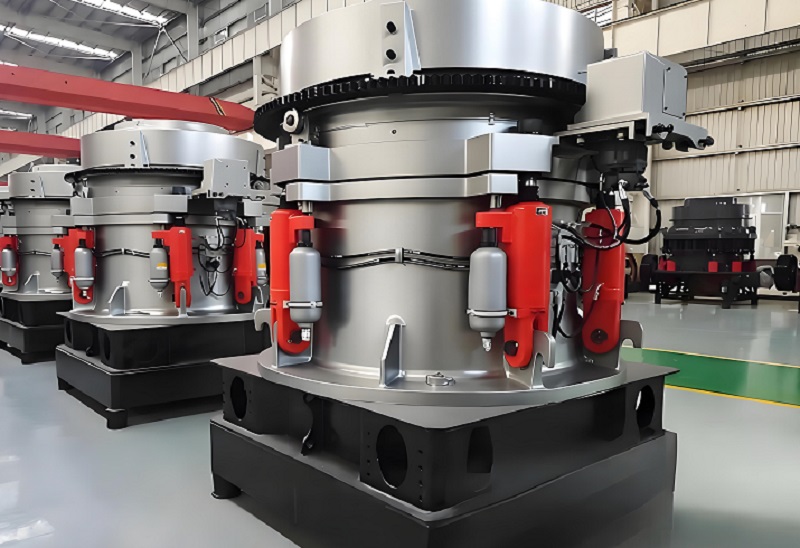
The installation of the cone crusher must follow the process of "foundation fixing first, then main body assembly, and then auxiliary system installation." The focus is on controlling four key aspects: foundation alignment, main component assembly, transmission system installation, and auxiliary system installation, ensuring that the assembly accuracy of each component meets the standards.
Foundation alignment and base fixing are the core foundation of the installation. First, place the equipment base on the concrete foundation, adjust the base's levelness and verticality. Use a leveling instrument to check the base's upper surface; the levelness error should be controlled within 0.2 mm/m; use a theodolite to check the base's verticality; the verticality error should not exceed 0.1 mm/m. After adjustment, insert the anchor bolts through the pre-reserved holes in the base, and pour the secondary grouting material. After the grouting material reaches more than 75% of the design strength, use a torque wrench to tighten the anchor bolts to the specified torque, ensuring that the base is firmly fixed without loosening. Note that during the secondary grouting process, compaction is necessary to avoid voids, which could affect the base's load-bearing stability.
The assembly of the main components requires strict control of accuracy. First, install the eccentric sleeve and main shaft assembly. Carefully lift the eccentric sleeve and place it into the base bearing seat. Check the clearance between the eccentric sleeve and the bearing seat to ensure it meets the design requirements (generally 0.05-0.15mm). Then install the main shaft, inserting it into the eccentric sleeve, ensuring precise fit between the main shaft and the eccentric sleeve to avoid jamming or excessive clearance. Next, install the moving cone and stationary cone. When installing the moving cone, ensure it is securely connected to the main shaft, and tighten the connecting bolts to the specified torque. When installing the stationary cone, adjust the clearance between it and the moving cone to ensure uniform clearance in the crushing chamber. Finally, install the liner plates. Epoxy resin mortar should be filled between the liner plates and the moving and stationary cone shells to ensure a tight fit and prevent loosening or vibration during operation. Spring washers should be added to the liner plate fixing bolts to further enhance the tightening effect.
The transmission system installation must ensure smooth transmission. The transmission system of a cone crusher mainly includes the motor, pulleys, transmission shaft, and gears. During installation, first fix the motor to the motor base, adjust the motor position to ensure that the centerlines of the motor pulley and the equipment transmission shaft pulley are aligned, with a centerline deviation of no more than 0.5mm, and ensure that the distance between the two pulleys meets the requirements. Then install the V-belts. The tension of the V-belts should be adjusted appropriately; excessive tension can lead to increased belt wear and excessive motor load, while insufficient tension can cause belt slippage, affecting transmission efficiency. For gear-driven cone crushers, a gearbox needs to be installed, and the gear meshing clearance adjusted to ensure uniform meshing without jamming. Gear oil should be added to the gearbox as specified to ensure sufficient lubrication.
The auxiliary system installation must consider both functionality and safety. The auxiliary system includes the lubrication system, hydraulic system, dust removal system, and electrical system. During the installation of the lubrication system, the lubrication oil tank, oil pump, oil pipes, and cooler must be connected, ensuring that the oil pipe connections are well-sealed and free from leaks. The lubrication system's filtration device should also be checked to ensure adequate filtration and prevent impurities from entering the lubrication system and causing component wear. During the installation of the hydraulic system, the hydraulic pump, hydraulic cylinder, hydraulic valve, and hydraulic pipelines must be connected. Before connecting the pipelines, impurities inside the pipes must be cleaned. After installation, a pressure test must be performed to ensure that the hydraulic system is leak-free and the pressure is stable. During the installation of the dust removal system, the dust collector must be connected to the equipment's feed and discharge ports, ensuring a good seal to reduce dust leakage. During the installation of the electrical system, the motor, control cabinet, sensors, and other electrical components must be connected, ensuring correct wiring and good insulation. After installation, electrical debugging should be performed to check that all electrical components are functioning correctly.
3. Key Debugging Steps: Step-by-Step Approach, Optimizing Operating Parameters
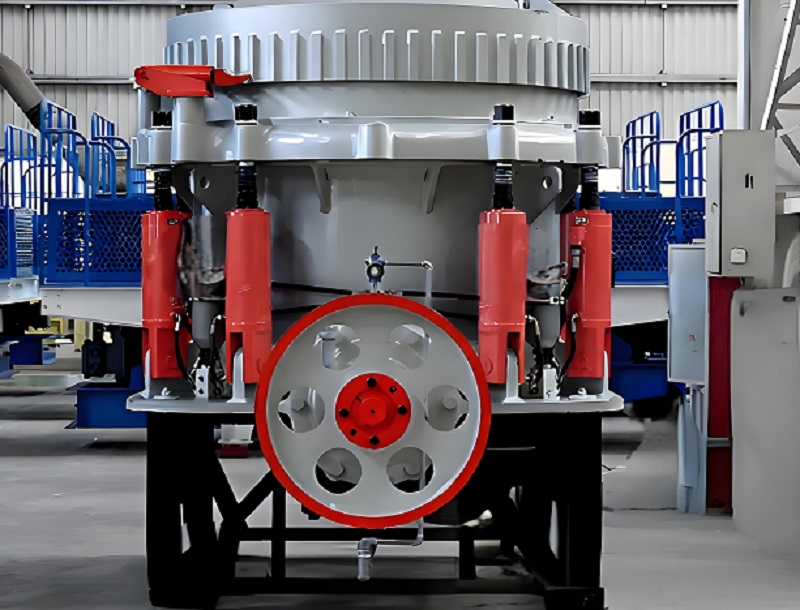
After the cone crusher is installed, a systematic debugging process is required to ensure that all components of the equipment operate in coordination and that the crushing parameters are optimized. Debugging should follow the principle of "no-load debugging first, then load debugging," carried out in stages, focusing on no-load debugging, load debugging, and parameter optimization.
No-load debugging is crucial for ensuring the basic operation of the equipment. First, check the tightness of all components, re-tightening the foundation bolts, liner fixing bolts, and transmission component connection bolts to ensure there is no looseness. Then, start the lubrication system, checking the lubrication oil pressure, flow rate, and temperature to ensure that the lubrication system is operating normally and that all lubrication points are adequately lubricated. Next, start the motor to run the equipment under no-load conditions for at least 2 hours. During this time, check the vibration, noise, and operating status of each component: the vibration amplitude should be controlled within 0.1 mm, with no abnormal vibration; the operating noise should not exceed 85 decibels, with no abnormal noises such as metal impact or friction; the bearing temperature should be controlled below 65℃; if the temperature exceeds 70℃, the machine must be stopped immediately for inspection. At the same time, check whether the pressure of the hydraulic system is stable, whether there are leaks in the sealing parts, and whether the various protection functions of the electrical system are working properly.
Load debugging requires gradually increasing the load to ensure that the equipment adapts to the crushing conditions. After successful no-load debugging, the load debugging phase begins. First, perform low-load testing by feeding a small amount of material into the crushing chamber (30%-50% of the rated load), and run the equipment for 1-2 hours. Check the crushing effect, material conveying situation, and the operating status of each component. Pay particular attention to checking for material blockage in the crushing chamber; if blockage occurs, stop the machine immediately and clear the blockage. Check if the product particle size is uniform; if the particle size is not up to standard, adjust the crushing chamber gap. Then, gradually increase the load to the rated load and run for 4-8 hours, monitoring parameters such as the equipment's processing capacity, motor current, bearing temperature, and vibration amplitude: the motor current should remain stable within the rated current range without overload; the bearing temperature should not exceed 70℃; and there should be no significant increase in vibration amplitude. Simultaneously check the wear of the liner plates to ensure even wear and no abnormal wear.
Parameter optimization should be adjusted in conjunction with production requirements. During load testing, the crushing chamber gap needs to be adjusted according to the target product particle size requirements: precisely adjust the gap between the movable cone and the fixed cone using a hydraulic system or mechanical adjustment device. After adjusting the gap, the adjustment device must be locked to prevent changes in the gap during operation. Also, adjust the material feeding speed to ensure uniform feeding and prevent equipment overload or material blockage due to excessive feeding speed. The feeding speed should match the rated processing capacity of the equipment. In addition, optimize the lubrication system parameters based on the equipment's operating status, adjusting the lubricating oil temperature and flow rate to ensure optimal lubrication; optimize the hydraulic system pressure to ensure that the equipment can effectively compensate for liner plate wear during the crushing process and maintain a stable crushing chamber gap.
4. Installation and Commissioning Precautions: Risk Avoidance and Ensuring Long-Term Stable Operation
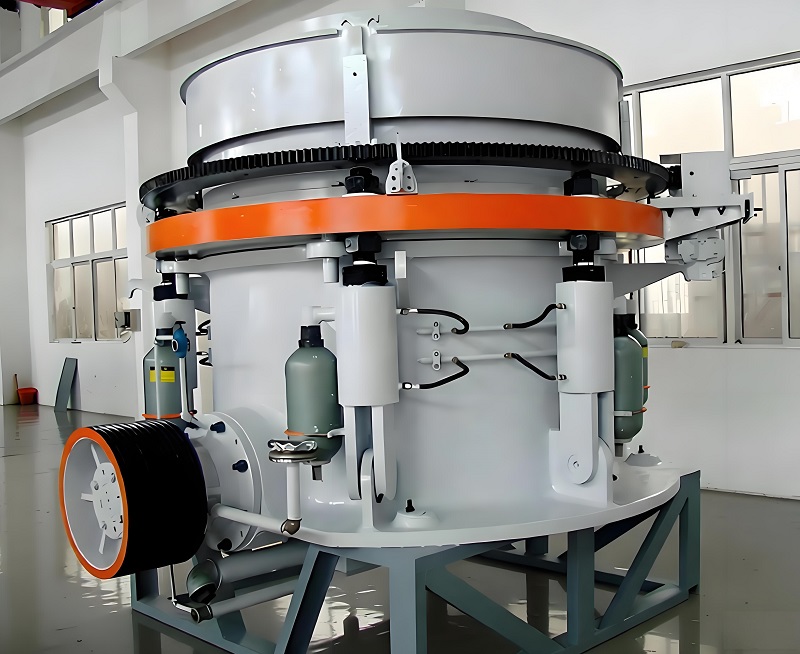
During the installation and commissioning of the cone crusher, attention must be paid to key points such as safety regulations, precision control, and detail handling to avoid construction risks and ensure the long-term stable operation of the equipment.
Safety regulations must be strictly followed to prevent accidents. During installation and commissioning, safety warning signs must be set up, and unauthorized personnel are strictly prohibited from entering the construction area. During lifting operations, ensure that the lifting equipment is in good working condition and that the lifting ropes are securely fastened to prevent equipment from falling; lifting operations must be directed and coordinated by a designated person. When the equipment is running and being commissioned, personnel must maintain a safe distance from the equipment and are strictly prohibited from touching rotating parts, high-temperature parts, and high-pressure pipelines. If a shutdown for inspection is required, the power supply must be cut off, and the lubrication and hydraulic systems must be shut down. Operations should only be performed after the equipment has completely stopped running to prevent accidental startup.
Precision control must be maintained throughout the entire process to avoid installation deviations. During foundation leveling, main component assembly, and transmission system installation, various precision indicators such as horizontality, verticality, fit clearance, and centerline alignment must be strictly controlled. Failure to meet precision standards can lead to excessive vibration during equipment operation, increased component wear, and a shortened equipment lifespan. Accurate measuring tools should be used during measurement, and multiple measurements should be taken to ensure data accuracy. The assembly of critical components should be performed by professional technicians, and laser positioning equipment should be used to assist in positioning when necessary to improve assembly accuracy.
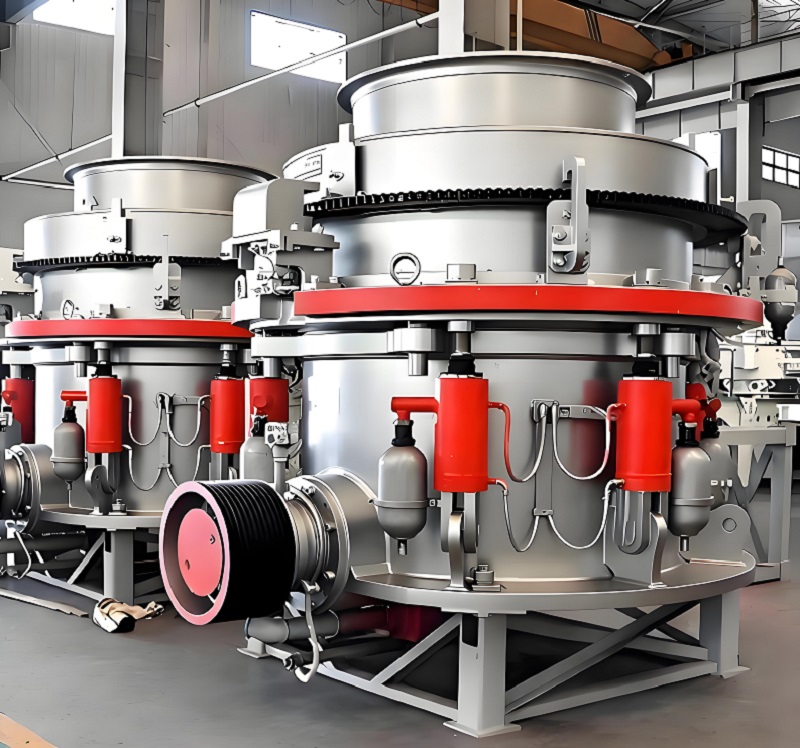
Attention to detail is crucial to ensure equipment operating stability. During installation, special attention should be paid to sealing areas, such as oil pipe joints, hydraulic pipe joints, and equipment casing sealing surfaces. High-quality sealing components should be used to ensure good sealing and prevent leakage of lubricating oil or hydraulic oil, or the entry of dust into the equipment. During commissioning, residual materials and debris inside and around the equipment should be promptly cleaned to avoid affecting equipment operation. At the same time, detailed installation and commissioning records should be kept, documenting the parameters, problems encountered, and corrective measures taken at each stage, providing a basis for subsequent equipment maintenance.
The installation and commissioning of a cone crusher is a systematic and meticulous process that requires strict adherence to construction specifications and control of quality and precision at every stage. From pre-installation preparation of the site, equipment, and personnel, to the installation process including foundation leveling, main assembly, and auxiliary system installation, and then to the commissioning stage including no-load testing, load testing, and parameter optimization, every step directly affects the equipment's operating performance and economic benefits. In actual construction, the installation and commissioning plan should be flexibly adjusted based on the equipment model, production requirements, and site conditions, while also paying attention to safety regulations and details. Only by ensuring that the installation and commissioning quality meets the standards can the crushing efficiency of the cone crusher be fully realized, improving the stability and overall efficiency of the production line, and providing strong support for efficient production in industries such as mining and construction aggregate processing.


Company: Zhengzhou ZhongCheng environmental protection equipment co., LTD

Company address: 36 xueyuan road, Zhengzhou City, Henan Province, China.

Whatsapp:+86-18738194110


Our Email

Our phone
 86-18738194110
 86-18738194110

Save Time! Get A Detailed Quotation Quickly.


 2024-11-01