Consulting
Service
In various industries such as solid waste treatment, recycled resource recovery, textiles, and papermaking, material compression and baling are crucial steps in achieving volume reduction, standardized storage, and transportation. Horizontal balers, as efficient compression and baling equipment, effectively solve the problems of large volume, high transportation costs, and difficult storage of loose materials, thanks to their unique horizontal structure design and stable operating performance. They have become core equipment in industrial production and resource recycling. Compared with vertical balers, horizontal balers demonstrate significant advantages in terms of processing capacity, automation level, and applicable material range. This article will systematically explain the structural composition and characteristics of horizontal balers and deeply analyze their core advantages in practical applications, providing comprehensive reference for equipment selection and efficient operation for relevant enterprises.
A. Structural Composition and Characteristics of Horizontal Balers
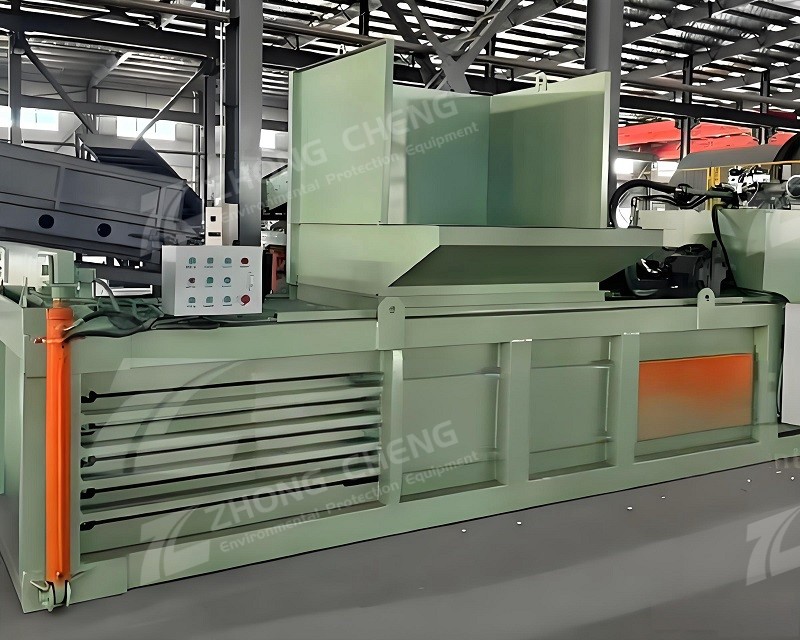
The structural design of horizontal balers revolves around three core objectives: "efficient compression, stable operation, and convenient operation." It mainly consists of six core parts: the main frame, compression system, feeding system, strapping system, hydraulic system, and electrical control system. These parts work together to achieve automated processing of loose materials from feeding and compression to baling and forming. Their structural characteristics directly determine the operating efficiency and baling quality of the equipment.
1. Main Frame: A Stable and Reliable Load-Bearing Foundation
The main frame is the basic load-bearing component of the horizontal baler, directly determining the stability and service life of the equipment during high-pressure compression. This part is usually welded from Q345B high-strength alloy steel. After welding, it undergoes annealing treatment to eliminate welding stress and prevent frame deformation or cracking during long-term high-pressure operation. The frame structure is designed as a closed or semi-closed type, with multiple reinforcing ribs inside. The spacing and thickness of the reinforcing ribs are precisely calculated according to the rated pressure of the equipment, ensuring that the frame can withstand the enormous pressure generated by the compression cylinder (usually 10-30 MPa). For example, a horizontal baler with a processing capacity of 10-15 tons/hour has a main frame load-bearing strength of over 500 kN, sufficient to meet the high-pressure compression needs of various loose materials. In addition, the frame surface adopts sandblasting and electrostatic spraying processes, providing excellent rust and corrosion resistance, enabling it to adapt to humid and dusty working environments and extending the service life of the equipment. 2. Compression System: The Core Power for High-Efficiency Compression
The compression system is the core component of the horizontal baler for material volume reduction. It mainly consists of a compression cylinder, a push plate, and a guiding device. Its structural characteristics are characterized by "high thrust, high stability, and low energy consumption." The compression cylinder adopts a double-acting hydraulic cylinder design. The cylinder body is made of high-strength seamless steel pipe, and the inner wall is precisely honed, with a surface roughness of less than Ra0.4μm. Combined with imported sealing rings, this ensures no leakage during high-pressure operation, improving the efficiency of the hydraulic system. The push plate is rigidly connected to the piston rod of the compression cylinder. The surface of the push plate is made of wear-resistant steel plate, and guiding sliders are installed on the edges, precisely matching the guiding rails inside the frame. This ensures that the push plate does-not deviate during reciprocating motion, and the compression force is evenly applied to the material, avoiding uneven density after baling. Depending on the material being processed, the compression system can achieve different compression ratios. For example, for waste paper and cardboard, the compression ratio can reach 10:1-15:1, compressing loose materials into solid bales with a density of 300-500 kg/m³; for plastic bottles and plastic films, the compression ratio can reach 20:1-30:1, and the bale density can reach 400-600 kg/m³, significantly reducing the volume of the material.
3. Feeding System: Ensuring Continuous and Efficient Material Conveying
The function of the feeding system is to continuously and evenly feed loose materials into the compression chamber. Its structural design directly affects the processing efficiency of the equipment. The feeding system of a horizontal baler usually adopts a "conveyor belt + feeding cylinder" combination structure. Some large-scale equipment is equipped with double conveyor belts or vibrating feeding devices to meet the conveying needs of different materials. The conveyor belt uses a high-strength polyester canvas belt with anti-slip patterns on the surface, which effectively prevents material slippage during conveying. The speed of the conveyor belt can be adjusted through a variable frequency motor, achieving precise matching of feeding speed and compression speed. The feeding cylinder is installed between the end of the conveyor belt and the compression chamber. It uses hydraulic power to push the material into the compression chamber. The stroke and thrust of the feeding cylinder are designed according to the size of the compression chamber, ensuring that the material completely enters the compression area and preventing material accumulation at the feeding port. For highly viscous materials (such as wet straw and waste plastics), the feeding system can also be equipped with a scraping device to prevent material from sticking to the conveyor belt, ensuring a continuous and stable feeding process. In addition, a protective grid is usually installed at the feeding port to prevent accidental contact by operators and improve the safety of the equipment.
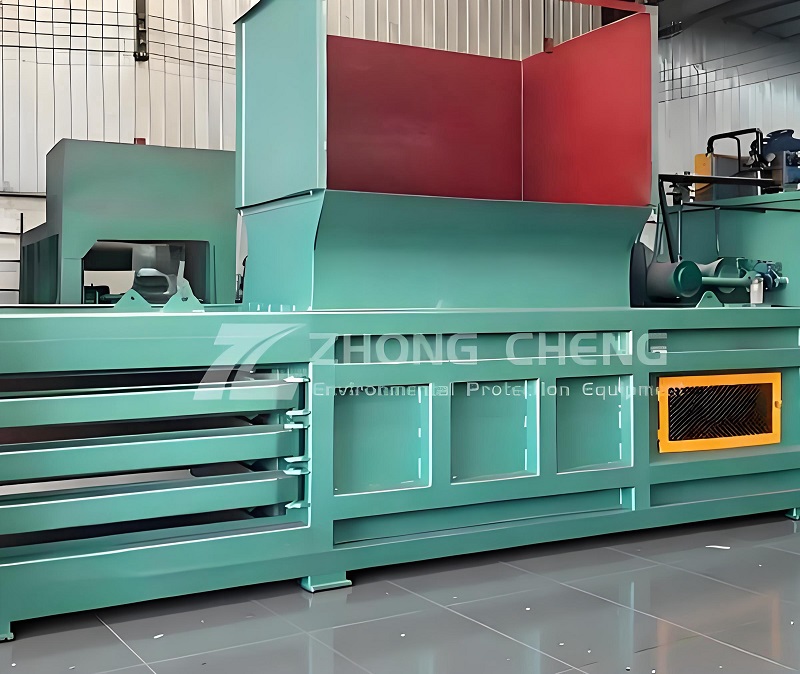
4. Bundling System: Convenient and Reliable Bale Fixing Device
The bundling system is used to bundle and fix the compressed and formed material bales, preventing them from loosening during storage and transportation. Its structural characteristics are "high degree of automation, secure bundling, and convenient operation." The bundling system of the horizontal baler mainly consists of bundling tracks, a bundling machine, and a threading mechanism. The number of bundling tracks is designed according to the size of the bale, usually 2-4 tracks, ensuring that all parts of the bale are securely bundled. The bundling machine uses fully automatic hot-melt bundling technology and can use PP or PET straps as bundling materials. The tension of the bundling strap can be adjusted according to the hardness of the bale, with a tension range of typically 500-2000N, ensuring that the bundling strap securely fixes the bale without causing damage due to excessive tension. The threading mechanism uses mechanical or pneumatic transmission to automatically thread, tighten, and hot-melt cut the bundling strap. The entire bundling process takes only 3-5 seconds, greatly improving packaging efficiency. Some high-end equipment is also equipped with an automatic bundling strap detection device. When the bundling strap breaks or runs out, the equipment will automatically stop and send an alarm signal, reminding the operator to handle the situation promptly and ensuring the continuity of the packaging process.
5. Hydraulic System: Stable and Efficient Power Source
The hydraulic system is the power core of the horizontal baler, providing power to the compression cylinder, feeding cylinder, bundling mechanism, and other moving parts. Its structural characteristics are "powerful, stable operation, and low energy consumption." The hydraulic system mainly consists of a hydraulic pump, relief valve, directional control valve, and hydraulic oil cooler. The hydraulic pump uses a variable displacement piston pump, which can automatically adjust the output flow according to the equipment's workload, avoiding energy waste during no-load or light-load operation. Compared with a fixed displacement pump, energy consumption can be reduced by 15%-20%. The relief valve works in conjunction with a pressure sensor to achieve closed-loop pressure control of the hydraulic system. When the system pressure exceeds the rated value, the relief valve automatically releases pressure, protecting the hydraulic components from damage. The directional control valve uses an electro-hydraulic proportional valve, which can precisely control the flow and direction of the hydraulic oil, enabling smooth starting, stopping, and speed adjustment of the compression cylinder and feeding cylinder, preventing shocks and vibrations during equipment operation. The hydraulic oil cooler uses air cooling or water cooling to ensure that the working temperature of the hydraulic oil is controlled within the range of 30-55℃, preventing deterioration and viscosity reduction of the hydraulic oil due to high oil temperature, thus extending the service life of the hydraulic system.
6. Electrical Control System: Intelligent and Precise Operation Center
The electrical control system is the core of operation and control for the horizontal baling machine, enabling coordinated work and automated operation of all parts of the equipment. Its structural features are "high degree of intelligence, convenient operation, and accurate fault diagnosis." The control system uses a PLC (Programmable Logic Controller) as the core control unit, coupled with a touchscreen interface. Operators can set parameters such as baling pressure, feeding speed, and number of strapping cycles through the touchscreen, enabling one-button start and automatic operation of the equipment. The touchscreen displays the real-time operating status of the equipment, such as compression pressure, material throughput, hydraulic oil temperature, and fault information, allowing operators to monitor the equipment's operation in real time. In addition, the control system is equipped with comprehensive fault diagnosis functions. Sensors (such as pressure sensors, position sensors, and temperature sensors) distributed throughout the equipment collect real-time operating data. When faults such as high hydraulic oil temperature, abnormal pressure, or motor overload occur, the system will automatically shut down and display the cause of the fault and suggested solutions on the touchscreen, greatly reducing the difficulty of equipment maintenance. Some high-end equipment also supports remote monitoring and control functions. Through IoT technology, equipment operating data is uploaded to a cloud platform, allowing managers to view the equipment's operating status in real time from a remote terminal, enabling remote diagnosis and maintenance of the equipment. B. Core Advantages of Horizontal Balers: Practical Value for Multiple Scenarios
The advantages of horizontal balers stem from their scientific structural design and advanced control technology. They demonstrate significant advantages over traditional baling equipment in terms of processing capacity, automation level, application range, and operating costs, meeting the material baling needs of various industries and providing strong support for enterprises to improve production efficiency and reduce operating costs.
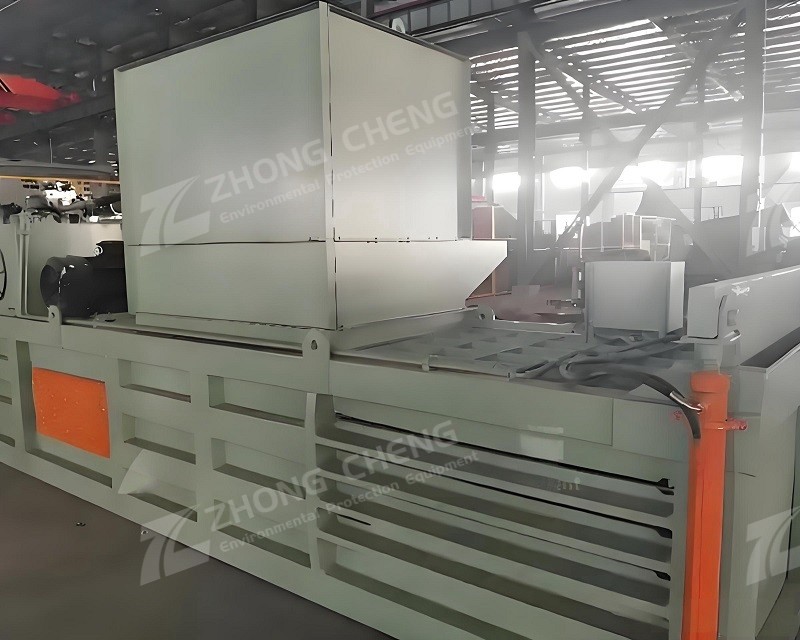
1. High Processing Capacity, Suitable for Large-Scale Production Needs
Compared with vertical balers, the biggest advantage of horizontal balers is their high processing capacity, making them suitable for large-scale production scenarios. The horizontal structure design allows for a larger compression chamber volume, typically 1-5 m³, with a single compression capacity of 0.5-2 tons, while vertical balers only have a single compression capacity of 0.1-0.3 tons. At the same time, the feeding and compression systems of horizontal balers can operate continuously, with seamless衔接 between feeding, compression, and bundling processes. The hourly processing capacity of the equipment can reach 5-30 tons, which is 3-5 times that of vertical balers. For example, in a large waste paper recycling plant, a horizontal baler with a processing capacity of 20 tons/hour can process 160 tons of waste paper per day (based on an 8-hour workday), compressing it into bales with a density of 400 kg/m³, greatly improving the efficiency of waste paper recycling and processing; in a textile factory, horizontal balers can compress and bale large quantities of waste fabrics and yarns, with an hourly processing capacity of over 10 tons, effectively solving the problem of textile waste accumulation and space occupation. This advantage of high processing capacity makes horizontal balers the preferred equipment for large-scale production enterprises.
2. High Degree of Automation, Reducing Labor Costs
Horizontal balers adopt a fully automated control process, from material feeding and compression molding to bundling and discharge, requiring no manual intervention throughout the entire process. Only 1-2 operators are needed for equipment monitoring and parameter setting, significantly reducing labor costs. Compared with traditional manual or semi-automatic baling equipment, labor costs can be reduced by 60%-80%. For example, a recycling company previously used semi-automatic baling equipment, requiring four operators working in shifts to process 50 tons of waste plastic per day, with labor costs of 800 yuan/day. After introducing a horizontal baling machine, only one operator is needed, and the daily processing capacity increased to 120 tons, reducing labor costs to 200 yuan/day. This not only improved processing efficiency but also significantly reduced labor costs. In addition, automated operation avoids inconsistencies in baling quality caused by human factors, ensuring consistent density and size of each bale, and improving the standardization of material transportation and storage.
3. Wide Range of Applications, Adaptable to Various Material Types
Thanks to its flexible parameter adjustment capabilities and powerful compression performance, the horizontal baling machine can adapt to various types of loose materials, including waste paper, cardboard boxes, waste plastics, scrap metal, textile waste, straw, and forage, meeting the baling needs of different industries. By adjusting parameters such as compression pressure, feeding speed, and strapping tension, precise baling of different materials can be achieved. For example, for softer materials like waste paper and textile waste, the compression pressure can be appropriately reduced to avoid excessive material crushing; for harder materials like scrap metal and plastic bottles, the compression pressure can be increased to improve bale density; for easily damp materials like straw and forage, drying devices and moisture-proof strapping can be equipped to ensure that the bales do not mold during storage. This wide applicability allows the horizontal baling machine to be widely used in multiple industries, reducing equipment investment costs for enterprises and improving equipment utilization.
4. High-Quality Baling, Improving Material Transportation and Storage Efficiency
Through precise pressure control and a stable compression process, the horizontal baling machine ensures that the baled material has uniform density, standardized size, and secure strapping, effectively improving the efficiency of material transportation and storage. Standardized bale sizes facilitate loading and unloading operations using forklifts or cranes, reducing loading and unloading time; higher bale density can significantly reduce the transportation volume of materials, reducing the number of transport vehicles and lowering transportation costs. For example, when a logistics company transports loose waste paper, each truck can only carry 5 tons, and the transportation cost is 800 yuan per truck. By using a horizontal baler to compress the waste paper into bales with a density of 450 kg/m³, the loading capacity of each truck increases to 20 tons, and the transportation cost is reduced to 200 yuan per ton, a 75% reduction in transportation costs. In addition, the secure bundling prevents the bales from loosening during transportation, avoiding material loss and environmental pollution, and improving the recycling rate of the materials.
5. Stable and reliable operation, reducing maintenance costs
Horizontal balers adopt a high-strength structural design and high-quality components, resulting in stable and reliable operation, low failure rate, and significantly lower maintenance costs compared to traditional baling equipment. The service life of core components such as the main frame and compression cylinder can reach 8-10 years, and the service life of the hydraulic system can reach 5-6 years, while the service life of the core components of vertical balers is only 3-5 years. Equipment maintenance mainly includes simple tasks such as regularly changing hydraulic oil, cleaning filters, and checking seals, with long maintenance cycles and low maintenance costs. For example, the annual maintenance cost of a horizontal baler is approximately 5000-8000 yuan, while the annual maintenance cost of a vertical baler with the same processing capacity can reach 15000-20000 yuan. In addition, the equipment is equipped with a comprehensive fault diagnosis system, which can quickly locate the cause of the fault, shorten the fault handling time, and reduce production losses caused by equipment downtime.
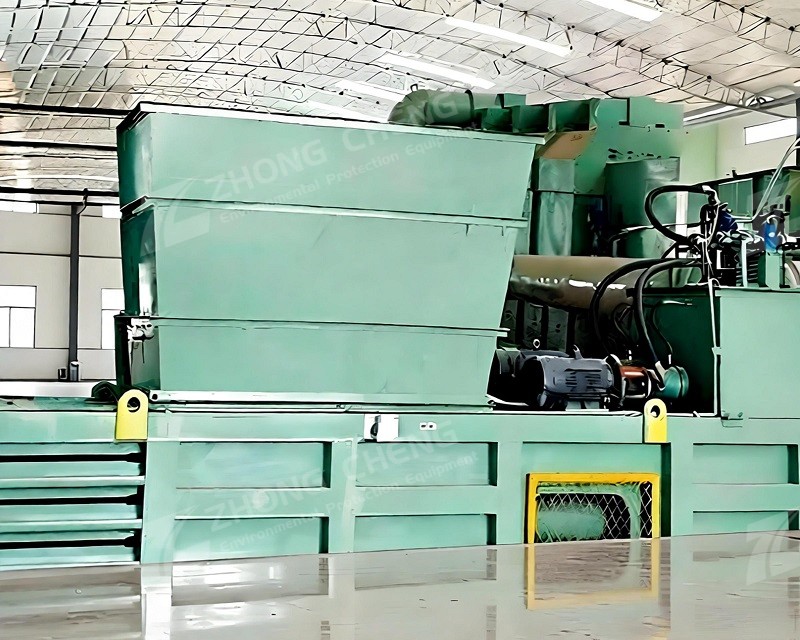
6. Energy saving and environmentally friendly, conforming to the concept of green production
In today's increasingly stringent environmental protection requirements, the energy-saving and environmentally friendly advantages of horizontal balers are becoming more prominent. The equipment uses variable displacement hydraulic pumps and variable frequency motors, which can automatically adjust energy consumption according to the workload, avoiding energy waste. Compared with traditional baling equipment, energy consumption can be reduced by 15%-25%. For example, a horizontal baler with a processing capacity of 15 tons/hour consumes approximately 30 kWh per hour, while a traditional baling equipment with the same processing capacity consumes approximately 40 kWh per hour, saving 80 kWh per day, and saving approximately 20,000 yuan in electricity costs annually (calculated at 1 yuan/kWh for industrial electricity). Furthermore, horizontal balers reduce the storage space required for loose materials by compressing and baling them, preventing environmental pollution caused by haphazard material stacking. For recyclable materials, baling improves resource recovery and utilization rates, promoting the development of a circular economy and aligning with the concept of green production.
Thanks to its scientific structural design (stable main frame, efficient compression system, continuous feeding system, etc.) and significant core advantages (large processing capacity, high automation, wide applicability, etc.), the horizontal baler has become a core piece of equipment for material compression and baling in many industries, providing strong support for enterprises to improve production efficiency, reduce operating costs, and achieve green production. With the continuous advancement of industrial technology, horizontal balers will develop towards greater intelligence, larger scale, and increased energy efficiency and environmental protection in the future: In terms of intelligence, AI technology will be introduced to achieve adaptive adjustment of the equipment, automatically optimizing baling parameters based on material characteristics; in terms of scale, larger capacity equipment will be developed to adapt to ultra-large-scale production scenarios; in terms of energy efficiency and environmental protection, more efficient hydraulic systems and motors will be used to further reduce energy consumption, and biodegradable strapping materials will be adopted to reduce environmental pollution. For enterprises, it is crucial to select a horizontal baler that is appropriate for their specific material type and processing capacity requirements.
Packaging machines will lay a solid foundation for the efficient operation and sustainable development of businesses.


Company: Zhengzhou ZhongCheng environmental protection equipment co., LTD

Company address: 36 xueyuan road, Zhengzhou City, Henan Province, China.

Whatsapp:+86-18738194110


Our Email

Our phone
 86-18738194110
 86-18738194110

Save Time! Get A Detailed Quotation Quickly.


 2024-11-01