Consulting
Service
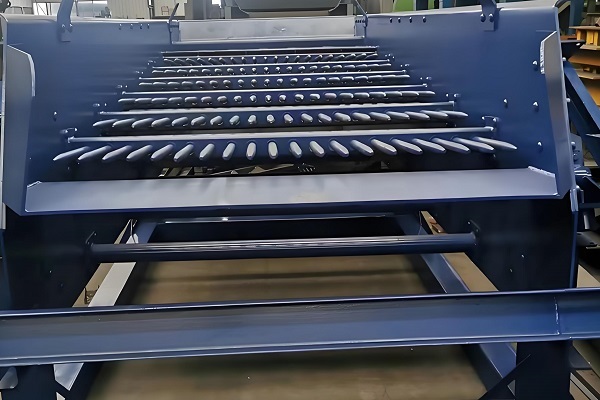
In the entire process of construction waste resource utilization, screening is the core hub connecting the crushing process and downstream recycling, and a key link in achieving the goals of "reduction, resource recovery, and harmlessness" of construction waste. Crushed construction waste still contains materials of different particle sizes, impurities, and harmful substances. Direct utilization or disposal not only affects the quality of recycled products but may also cause secondary pollution. Screening, through precise grading and efficient impurity removal, transforms the crushed mixture into standardized recycled raw materials, broadening its application scenarios while reducing disposal costs and mitigating environmental risks. This article, based on the actual situation in the construction waste disposal industry, elaborates on the core role and diverse uses of screening, illustrating its application value with engineering case studies. It provides a reference for the industry to standardize the disposal and efficient utilization of construction waste, contributing to the high-quality development of the construction waste resource utilization industry and promoting the construction of green and low-carbon cities.
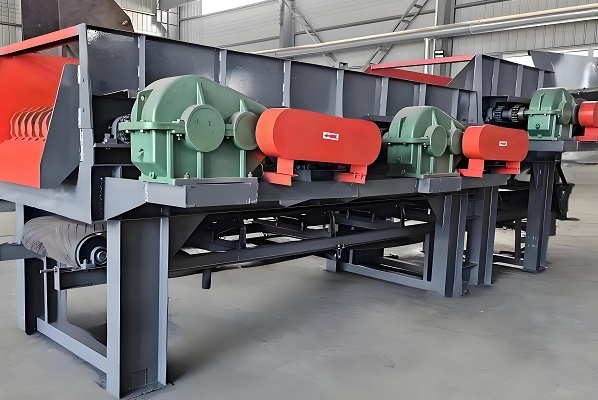
The core role of construction waste screening is essentially "quality improvement, classification, pollution control, and efficiency enhancement." These four functions are interconnected and work synergistically to address the core pain points of construction waste recycling, compensate for the shortcomings of traditional disposal models, and lay a solid foundation for subsequent resource utilization. Unlike simple screening and separation, construction waste screening requires consideration of material characteristics and recycling needs. Through specialized equipment and scientific processes, it achieves precise grading and deep impurity removal, ensuring the standardization of recycled raw materials and promoting environmentally friendly and efficient disposal processes. Its core functions can be divided into four main aspects, covering all dimensions of disposal, utilization, environmental protection, and economic benefits.
Grading and quality improvement is the most basic and core function of screening, directly determining the quality and utilization value of recycled aggregates. Construction waste has a complex composition, still containing concrete particles, brick fragments, and sand particles of varying sizes even after crushing, with particle size differences ranging from 0-300mm. Without screening and grading, the strength, density, and abrasion resistance of the mixture vary significantly, making it unsuitable for direct use as building materials. Screening uses equipment with different screen aperture specifications to precisely grade the mixture according to particle size, typically into standard sizes such as 0-5mm, 5-10mm, 10-20mm, and 20-40mm. Different particle sizes of recycled aggregate correspond to different application scenarios, and uniformly sized recycled aggregate can significantly improve the performance of recycled products. For example, fine-grained (0-5mm) recycled aggregate can be used to make recycled mortar and plastering materials; medium-grained (5-20mm) aggregate can be used for concrete mixing and road subbase; and coarse-grained (20-40mm) aggregate can be used for foundation backfilling and roadbed filling, achieving "graded and utilized as needed."
Simultaneously, screening and grading can remove materials that do not fully meet standards or lack sufficient hardness after crushing, returning them to the crushing equipment for re-crushing, forming a closed-loop process of "crushing-screening-recycled crushing," ensuring uniform particle size and stable quality of recycled aggregate, and improving the qualification rate of recycled raw materials. Data from the Cixi Construction Waste Resource Utilization Center in Zhejiang Province shows that after screening and grading, the qualification rate of recycled aggregate increased from 68% to over 95%, and the strength compliance rate of recycled products increased by 30%, completely solving the industry pain point of inconsistent recycled aggregate quality and providing a guarantee for large-scale and standardized utilization in the downstream sector.
Deep impurity removal is an important function of screening, effectively avoiding the impact of impurities on recycling and reducing environmental and safety risks. In addition to the main materials, crushed construction waste contains a large amount of impurities, primarily including lightweight materials (plastics, wood, foam, fabrics), metallic impurities (scrap steel bars, wire, sheet metal), soil dust, and small amounts of harmful substances (paint residue, waste adhesives). If these impurities are not removed promptly, they will not only reduce the strength and durability of the recycled aggregate but may also pose safety hazards during subsequent use. For example, metallic impurities can corrode steel bars and affect the safety of concrete structures, lightweight materials can reduce the density of recycled aggregates, and soil dust can cause cracking and spalling of recycled mortar.
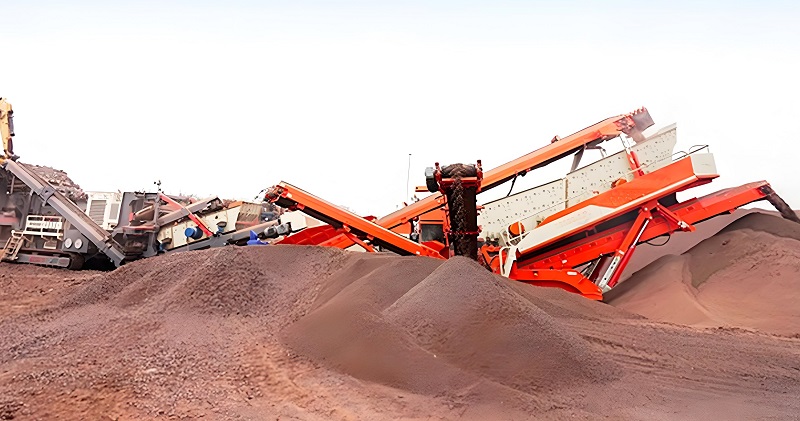
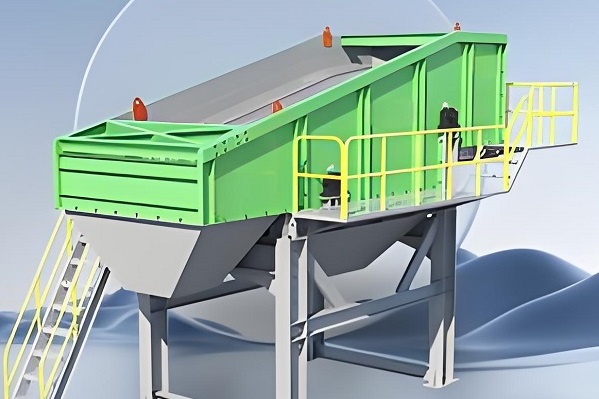
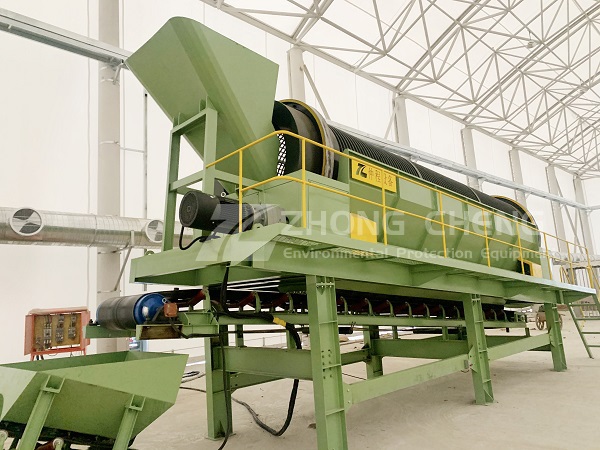
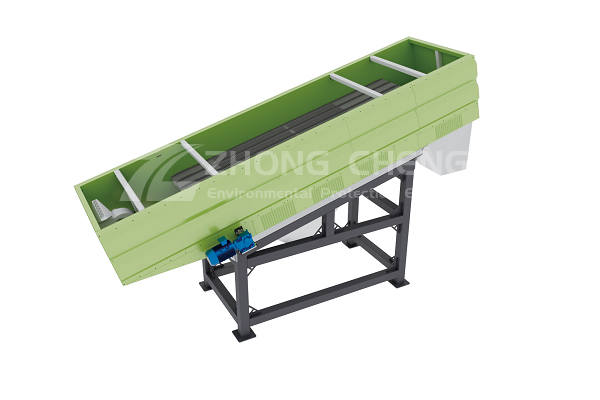
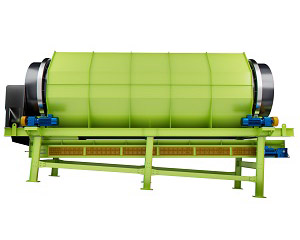
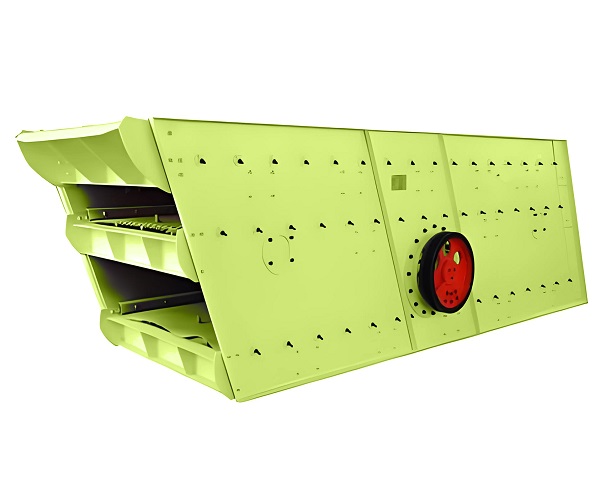
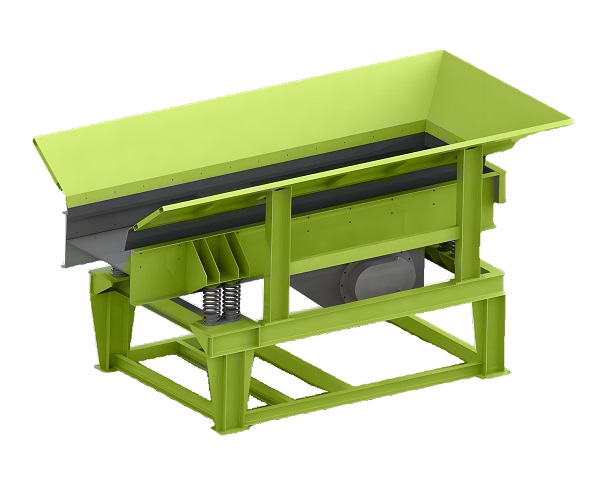
Screening treatment, through a combination of layered screening, air separation, and magnetic separation, can efficiently separate various impurities. The separation rate of lightweight materials can reach over 98%, the separation rate of metallic impurities is close to 100%, and the removal rate of soil dust can reach over 90%. For example, drum screening can separate larger plastics and wood; vibrating screening combined with air separation can remove soil dust and fine light materials from the mixture; and magnetic separation combined with screening can accurately separate metallic impurities such as scrap steel bars, achieving the classification, recycling, and harmless disposal of impurities. This deep impurity removal not only improves the purity of recycled aggregates but also reduces equipment wear during subsequent processing, lowers the quality risks of recycled products, and enables the resource recovery of impurities. For example, separated scrap steel bars can be recycled and reused, further improving disposal efficiency.
Pollution control and harm reduction are the environmental benefits of screening treatment, effectively reducing secondary pollution during construction waste disposal and aligning with green environmental protection development requirements. In traditional construction waste disposal methods, the crushed mixture is directly transported, landfilled, or stockpiled, easily generating dust pollution, soil pollution, and groundwater pollution—materials scatter during transportation, generating dust; soil dust seeps into the soil, polluting groundwater; and unseparated harmful substances, if stockpiled for a long time, will damage the soil structure. Screening can be carried out in a closed environment, combined with a spray dust suppression and dust collection system, effectively controlling dust diffusion during the operation. Simultaneously, it removes harmful substances through impurity removal, reducing pollution to soil and groundwater.
Furthermore, screening enables "on-site grading and on-site utilization" of construction waste, significantly reducing the amount of mixed materials transported and lowering dust, noise pollution, and carbon emissions during transportation. The fully enclosed screening production line of Deqing Difengda Building Materials Co., Ltd., through enclosed operation + spray dust suppression + dust collection, achieves a dust emission concentration of less than 10mg/m³ during screening, far below national environmental standards. It also reduces material transportation volume, lowering carbon emissions by approximately 800 tons annually, achieving synergistic progress in environmental protection and disposal, highlighting the significant value of screening in pollution control and harm reduction.
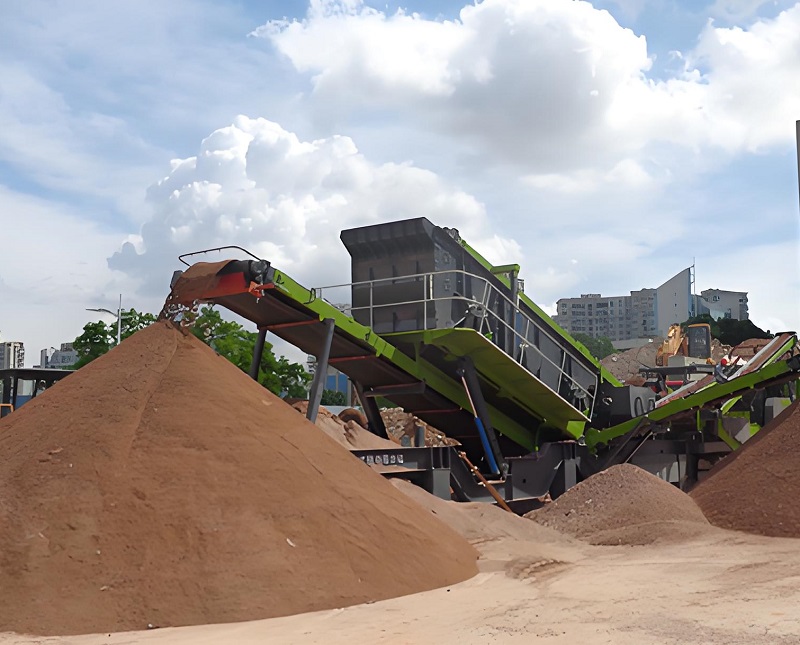
Increasing efficiency and reducing costs is the economic benefit of screening, which optimizes the disposal process, improves resource utilization, and achieves a win-win situation for both environmental and economic benefits. Traditional construction waste disposal primarily relies on landfill and incineration, which not only consumes significant land resources but also incurs high landfill, transportation, and environmental treatment fees. Furthermore, it fails to achieve resource recovery, resulting in persistently high disposal costs. Screening, through precise grading and deep impurity removal, improves the utilization rate of recycled aggregates, reduces landfill volume, and lowers landfill costs. Simultaneously, recycled aggregates can replace natural sand and gravel, which are increasingly scarce and experiencing rising prices. The widespread use of recycled aggregates can significantly reduce raw material costs for construction and road projects.
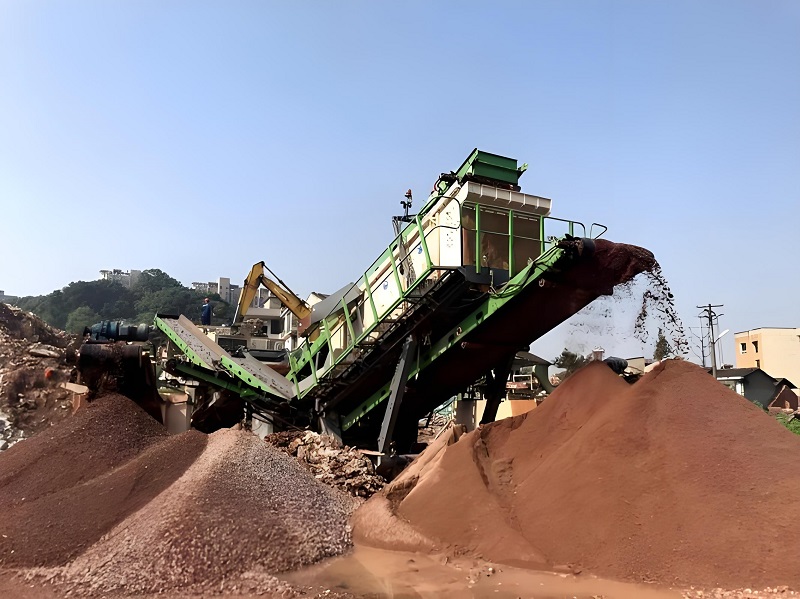
Furthermore, screening optimizes the disposal process, reducing inefficient transportation and repeated crushing, thus improving overall disposal efficiency. For example, mobile screening equipment can move with demolition sites and construction sites, enabling "on-site crushing, on-site screening, and on-site utilization," eliminating the need to transport mixed materials to centralized disposal centers and significantly reducing transportation costs. This can reduce transportation costs by approximately 150,000 yuan per 10,000 tons of construction waste. Simultaneously, the separated impurities can be recycled, and waste steel bars and plastics can generate additional economic benefits, further reducing disposal costs, improving enterprise profitability, and driving the transformation of the construction waste disposal industry from "passive disposal" to "active profit-making."
Based on these core functions, the applications of construction waste screening and processing are diversified, covering multiple fields such as building construction, road construction, municipal engineering, and ecological restoration. Different application scenarios have been formed according to the specifications and quality of recycled aggregates, realizing the "turning waste into treasure" of construction waste. Its uses can be divided into five major categories, each tailored to the actual needs of the industry, possessing broad application prospects and practical value.
The building construction field is the core application scenario for recycled aggregates after screening and processing, and also the field with the highest recycling value. Medium- and fine-grained recycled aggregates, after fine screening and deep impurity removal, can replace natural sand and gravel for concrete mixing, mortar production, wall construction, floor leveling, and precast component production. Of these, 5-20mm recycled aggregate can be used to make recycled concrete for floors, walls, and foundations in low-rise buildings, achieving a compressive strength of over 30MPa, meeting building structural design standards. 0-5mm recycled fine aggregate can be used to make recycled mortar for wall plastering, tile adhesion, and masonry grouting, with performance essentially identical to natural sand mortar, but at a 20%-30% lower cost.
In urban old residential area renovation projects, screened recycled aggregate is widely used in wall construction and floor leveling, solving the problem of construction waste disposal and reducing project costs. In precast component production, recycled aggregate can be used to make precast floor tiles and precast manhole covers, meeting strength and durability requirements and achieving resource recycling. Simultaneously, the intact brick and stone fragments separated during screening can be further processed and used for ancient building restoration and landscape wall construction, preserving the original material characteristics and enhancing the cultural connotation of the landscape and architecture.
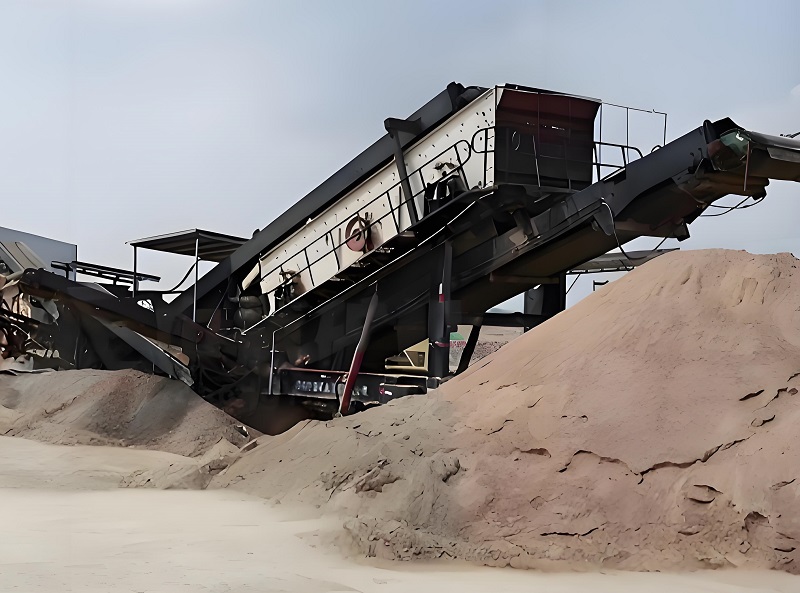
Road engineering is the primary application area for screened recycled aggregates. Suitable for coarse, medium, and fine particle sizes, recycled aggregates are used in various applications including roadbeds, pavements, and sidewalks. The technology is mature and widely applied. Coarse-grained recycled aggregates (20-40mm) offer high strength and good stability, making them ideal for roadbed filling and subbase layers. They can replace natural crushed stone, reducing raw material costs in roadbed engineering while improving the load-bearing capacity and stability of the roadbed. This makes them suitable for various road projects, including urban roads, rural roads, and highways. For example, Shandong Road & Bridge used screened coarse-grained recycled aggregates as the roadbed subbase in its road renovation projects, saving approximately 2,000 tons of natural crushed stone per kilometer, reducing project costs by about 300,000 yuan, while maintaining the roadbed's load-bearing capacity and service life essentially the same as natural crushed stone roadbeds.
Medium-sized (5-20mm) recycled aggregates can be used in road base and subbase layers, combined with asphalt, cement, and other materials to create recycled asphalt mixtures and recycled cement-stabilized base layers for road paving and repair. Fine-sized (0-5mm) recycled aggregates can be used in road leveling layers and sidewalk paving to improve road surface smoothness and wear resistance. Furthermore, screened recycled aggregates can be used for backfilling road drainage systems, possessing good permeability to improve drainage efficiency and reduce the risk of road flooding, further expanding their applications in road engineering.
Applications in municipal engineering highlight the practicality and environmental friendliness of screening, covering scenarios such as park construction, plaza paving, municipal pipeline networks, and landfill construction. In park and plaza construction, screened recycled aggregate can be used for paving landscape roads, building flower beds, and constructing artificial hills, which is both environmentally friendly and aesthetically pleasing while reducing project costs. In municipal pipeline construction, coarse-grained recycled aggregate can be used for backfilling pipeline trenches, replacing natural sand and gravel, improving trench stability, preventing pipeline settlement, reducing material transportation volume, and minimizing the impact of construction on the surrounding environment.
In landfill construction, screened recycled aggregate can be used for laying landfill impermeable layers and cover layers. Its stability and impermeability meet the requirements of landfill use, while simultaneously realizing the resource utilization of construction waste and reducing the amount of waste generated by the landfill itself. Furthermore, screened recycled aggregate can also be used in municipal greening projects to improve planting soil, enhancing soil permeability and drainage, contributing to urban ecological greening, and achieving the dual effect of "waste disposal and environmental beautification."
Ecological restoration is an emerging application area for screened recycled aggregates, aligning with the concept of green ecological development. It is primarily used in projects such as mine restoration, river management, and soil improvement. In mine restoration, screened recycled aggregates can be used for backfilling of mined-out areas and slope protection, improving slope stability, preventing soil erosion, and covering exposed mine surfaces to create conditions for vegetation planting. In river management, coarse-grained recycled aggregates can be used for riverbank protection and riverbed paving, enhancing the river's erosion resistance, protecting the river's ecological environment, and replacing natural sand and gravel, reducing reliance on river sand mining and protecting water resources and aquatic life.
In soil improvement, screened fine-grained recycled aggregates can be mixed with planting soil and organic fertilizer to improve the soil structure of saline-alkali and barren lands, enhancing soil permeability and water retention, promoting vegetation growth, and facilitating the advancement of ecological restoration projects. For example, in a mine restoration project, screened recycled aggregate was used to backfill the mined-out area, covering 200 acres. This not only solved the problem of construction waste disposal but also restored vegetation on the mine surface, increasing vegetation coverage from 30% to 75%, achieving significant ecological benefits.
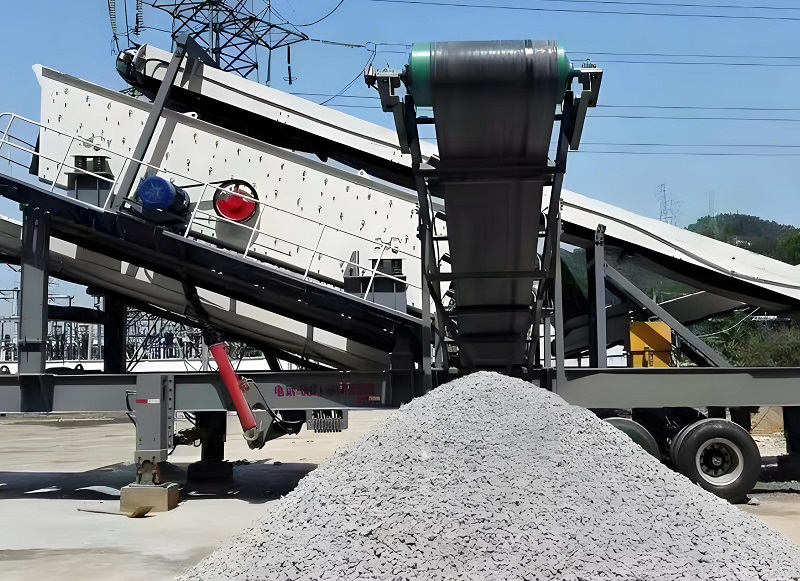
Besides the main uses mentioned above, materials after screening of construction waste can be used in multiple other scenarios, achieving comprehensive and end-to-end resource utilization. For instance, lightweight materials (plastics, wood) separated through screening can be further processed to produce recycled plastics and biomass fuel; separated waste steel bars, wires, and other metal impurities can be smelted and remelted to produce steel and steel products, achieving the recycling of metal resources; and the fine dust from screening can be used to make bricks, tiles, and other wall materials, further improving resource utilization and reducing waste generation.
Construction waste screening and treatment not only plays a core role in graded quality improvement, deep impurity removal, pollution control and harm reduction, and efficiency enhancement and cost reduction, but also has diversified applications, covering multiple fields such as construction, roads, municipal works, and ecological restoration. It is a key link in realizing the resource-based, harmless, and reduced-volume disposal of construction waste. With the continuous tightening of environmental protection policies and the iterative upgrading of recycling technologies, the screening and treatment process will become more precise, environmentally friendly, and efficient, its application scenarios will be further expanded, and its recycling value will be further enhanced. Promoting construction waste screening and treatment can not only solve the problem of construction waste disposal and reduce resource waste and environmental pollution, but also reduce engineering costs, improve economic benefits, promote the green and low-carbon transformation of the construction industry, help achieve the "dual carbon" goals, and lay a solid foundation for building green, livable, and sustainable cities.


Company: Zhengzhou ZhongCheng environmental protection equipment co., LTD

Company address: 36 xueyuan road, Zhengzhou City, Henan Province, China.

Whatsapp:+86-18738194110


Our Email

Our phone
 86-18738194110
 86-18738194110

Save Time! Get A Detailed Quotation Quickly.


 2024-11-01