Consulting
Service
In the entire process of solid waste resource utilization and environmental governance, large, hard, tangled, and irregularly shaped waste has always been a challenge. This type of waste not only occupies a lot of space and incurs high transportation costs, but it is also difficult to directly enter subsequent processes such as crushing, screening, and recycling, and may even damage downstream precision equipment. Shredders, as core equipment for solid waste pretreatment, have become key to solving various difficult-to-process wastes due to their powerful shredding capabilities, wide adaptability, and stable operation. They can break large, hard, and complex solid wastes into regular small pieces through shearing, tearing, and compression by blades, achieving volume reduction, facilitating transportation, and subsequent resource utilization. Covering the treatment of multiple categories of waste, including municipal solid waste, industrial solid waste, construction waste, and scrap materials, shredders are indispensable key equipment in the fields of environmental disposal and resource recycling.
Household Waste: Solving the Challenges of Daily Solid Waste Disposal and Assisting Sanitation Work

Household waste is the most common type of waste processed by shredders and a key target for urban sanitation. Household waste is complex, including bulky waste, kitchen waste, and other types, making it difficult for ordinary crushing equipment to handle. Shredders, with their powerful cutting capabilities, can efficiently process various types of household solid waste, reducing waste volume, facilitating subsequent sorting, recycling, and harmless disposal, significantly improving sanitation efficiency and reducing collection and disposal costs.
Bulky household waste is one of the core processing categories for shredders and a major pain point in urban household waste disposal. This type of waste includes discarded furniture (sofas, mattresses, tables, chairs, wardrobes), discarded appliance casings, discarded clothing and bedding, large cardboard boxes, and wood waste. This type of waste is bulky, loosely structured, and sometimes contains springs, fabric, and other entangled materials. Direct transportation occupies a large amount of truck space, landfills consume land resources, and recycling is extremely difficult. Shredders can easily break down waste into smaller pieces. Large furniture items and wood waste, after shredding, can be used as biomass fuel or raw materials for recycled boards. Shredded waste textiles and cardboard boxes facilitate sorting and recycling, significantly reducing volume, improving collection efficiency, and simultaneously achieving resource recycling and reuse, avoiding waste.
Other household solid waste can also be efficiently processed by shredders, including plastic bags, plastic bottles, waste rubber, fruit peels and paper scraps, and discarded daily necessities. Especially effective are highly tangled plastic bags, woven bags, and rigid plastic containers, which are prone to jamming and clogging with ordinary equipment. The specialized blades of shredders can quickly shred these, facilitating subsequent air separation, sorting, and recycling. Shredders can also pre-treat and shred large bones, hard fruit shells, and leftover food scraps from kitchen waste, making the materials easier for fermentation, composting, or anaerobic treatment, improving the resource utilization rate of kitchen waste and solving the problems of difficult disposal and easy spoilage and odor of kitchen waste.
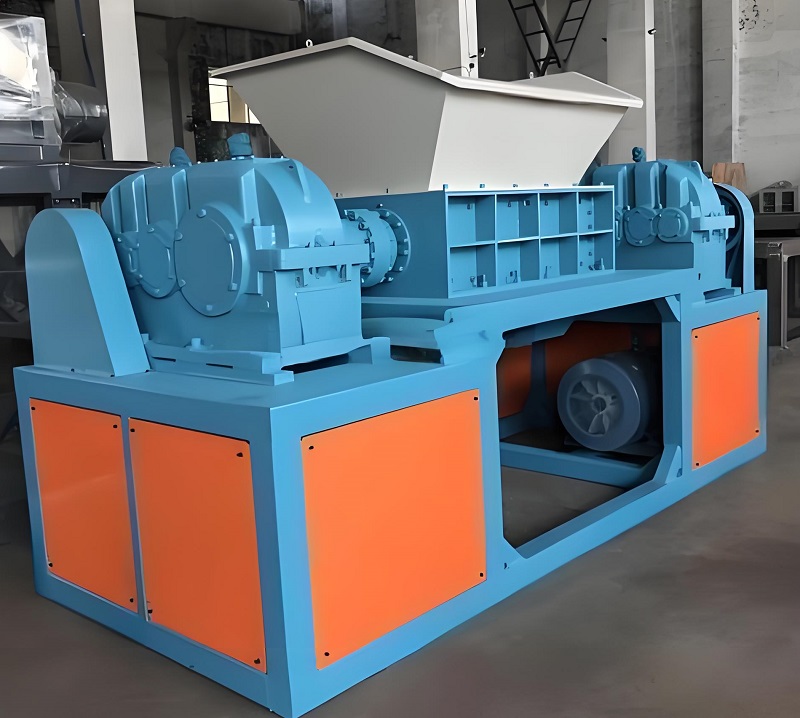
2. Construction Waste: Adaptable to Complex Solid Waste, Facilitating Resource Pre-treatment Some special materials in construction waste cannot be directly processed by conventional crushing equipment and require pre-treatment using shredders. Shredders can handle soft, tangled, and irregularly shaped materials in construction waste, removing impurities and refining the materials. This clears obstacles for subsequent crushing, screening, and recycled aggregate preparation, compensating for the shortcomings of conventional crushing equipment and improving the entire process of construction waste resource recovery.
In construction waste processing, shredders mainly handle waste wood, waste formwork, scaffolding packaging, waste insulation materials, waste plastic pipes, waterproof membranes, waste carpets, and decoration waste. These materials are often mixed with hard construction waste such as concrete blocks and bricks, and are considered light, airy impurities and soft waste. Conventional jaw crushers and impact crushers are difficult to handle and easily entangle equipment parts and damage blades. If not removed in advance, they will affect the quality of subsequent recycled aggregates. Shredders can quickly shred these impurities, separating recyclable materials from non-recyclable waste, achieving the sorting and purification of construction waste. Simultaneously, shredded insulation materials and plastic pipes can be recycled separately, while waste wood and formwork can be reprocessed and reused, improving the purity and efficiency of construction waste resource recycling and facilitating the refined treatment of construction waste.
3. Industrial Solid Waste: Adapted to Industrial Scenarios, Meeting Enterprise Disposal Needs
Industrial solid waste is diverse in type and nature, making it a key focus of environmental protection in industrial production. Shredders are adaptable to various types of industrial solid waste treatment, safely shredding and pre-treating large, hard, tangled, flammable, and explosive waste generated in industrial production. This achieves volume reduction, recycling, and harmless disposal of industrial solid waste, and is widely used in chemical, building materials, manufacturing, plastics, rubber, and other industries, solving the industrial solid waste disposal problems of enterprises.
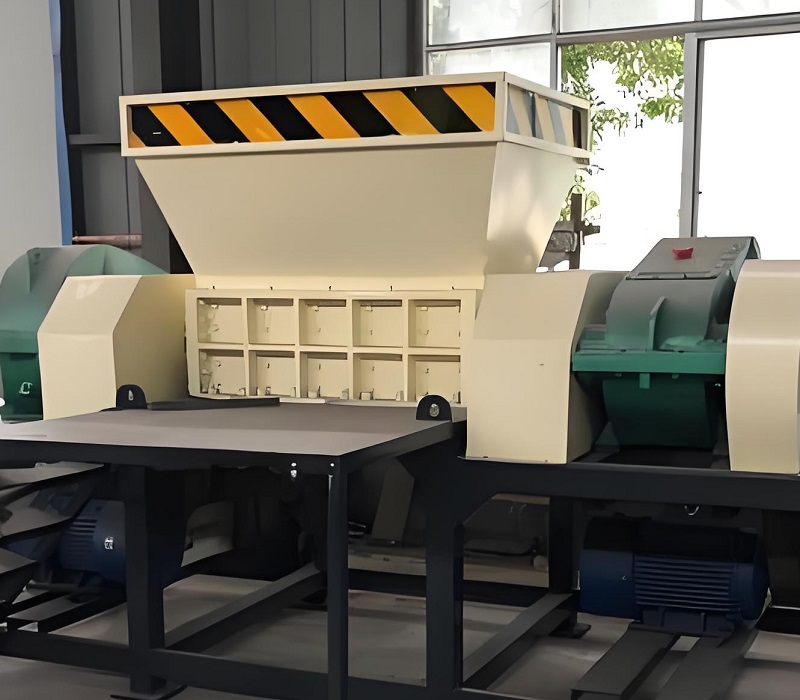
Waste plastics and rubber solid waste are the main categories for industrial shredding, including industrial waste plastics, plastic pallets, plastic buckets, plastic pipes, waste tires, rubber scraps, rubber mats, etc. These types of waste are corrosion-resistant and difficult to degrade. Direct landfilling pollutes soil and groundwater, while incineration easily produces harmful gases. Shredders can shred them into granular or flake materials, facilitating subsequent recycling, granulation, and refining processes, thus achieving the recycling of plastic and rubber resources. Especially for hard and difficult-to-process waste such as waste tires, specialized tire shredders can efficiently shred them, providing raw materials for waste tire recycling, oil refining, and rubber powder production, turning waste into treasure.
Metallic industrial solid waste can also be pre-treated using shredders, encompassing scrap iron sheets, aluminum cans, metal scraps, scrap steel, discarded metal containers, and metal casings from discarded household appliances. These metal wastes are irregular in shape, occupy a large amount of space, and have high transportation and smelting costs. Shredders can shred them into regular metal sheets or small pieces, reducing volume, facilitating packaging and transportation, and improving the efficiency of subsequent metal smelting. For lightweight metal waste, shredding also avoids the safety hazards caused by scattered waste dumping, achieving efficient recycling of industrial metal solid waste.
Waste packaging drums, chemical waste drums, industrial fiber waste, fiberglass waste, waste filter cartridges, and leather scraps from industrial production can also be processed by shredders. For chemical packaging drums with residual materials, shredding facilitates cleaning and recycling; shredding industrial fibers and fiberglass waste allows for recycling, solving industrial solid waste disposal problems, creating additional revenue for enterprises, and meeting industrial environmental protection requirements.
4. Agricultural and Forestry Solid Waste and Other Special Waste: Expanding Application Scenarios and Achieving Comprehensive Disposal In addition to domestic, construction, and industrial solid waste, shredders can also process agricultural and forestry solid waste, garden waste, medical solid waste (specialized models), waste paper and fabric, and other special waste, adapting to diverse disposal scenarios and meeting the solid waste treatment needs of different industries, achieving comprehensive and standardized solid waste disposal.
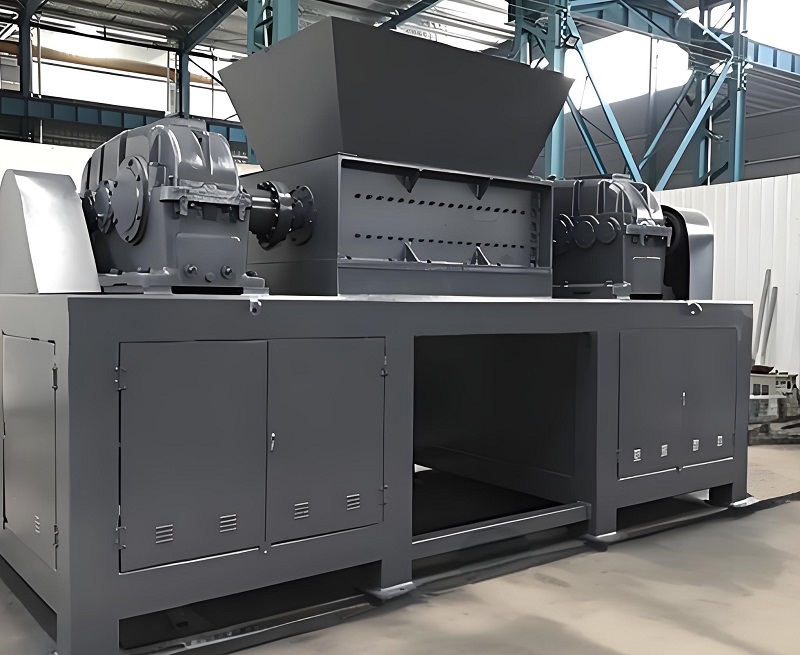
Agricultural and forestry solid waste and garden waste includes branches, trunks, straw, corn cobs, weeds, coconut shells, fruit tree branches, etc. These wastes are bulky, take up a lot of space when piled up, and easily pose a fire hazard. Shredders can shred them into wood chips and fragments, facilitating straw return to the field, biomass power generation, organic fertilizer production, and biomass fuel processing, achieving the recycling of agricultural and forestry resources and contributing to green agricultural development. For medical waste such as disposable consumables, discarded protective clothing, and medical packaging, specialized medical shredders can perform harmless shredding, preventing the spread of germs and ensuring public health safety. Waste paper, confidential documents, and waste fabrics, after shredding, can prevent information leakage and facilitate recycling, adapting to the special disposal needs of offices and enterprises.
Shredders, with their superior material adaptability, cover the treatment of various types of solid waste, including municipal solid waste, construction waste, industrial solid waste, and agricultural, forestry, and garden waste. They are core pre-processing equipment for solid waste reduction, resource recovery, and harmless disposal, solving the pain points of transportation and disposal of various difficult-to-treat solid wastes while enabling waste recycling and reuse, thus balancing environmental and economic benefits. Different types of waste require shredders with corresponding models and blades; selection should consider waste characteristics, processing capacity, and output requirements. In the future, as the demand for solid waste treatment continues to upgrade, shredders will iterate towards higher efficiency, durability, environmental friendliness, and intelligence, continuously solving various solid waste disposal problems and contributing to the high-quality development of the environmental protection industry and the resource recycling sector.


Company: Zhengzhou ZhongCheng environmental protection equipment co., LTD

Company address: 36 xueyuan road, Zhengzhou City, Henan Province, China.

Whatsapp:+86-18738194110


Our Email

Our phone
 86-18738194110
 86-18738194110

Save Time! Get A Detailed Quotation Quickly.


 2024-11-01