Consulting
Service
In the system of harmless, reduced, and resource-based waste treatment, horizontal waste balers are core supporting equipment, widely used in waste transfer stations, waste recycling stations, large communities, and various waste treatment sites. Leveraging the unique advantages of its horizontal structural design, it is suitable for compressing and baling various types of loose waste, effectively reducing waste volume, improving transfer efficiency, and lowering disposal costs. Unlike the limitations of vertical balers, it excels in processing scale, adaptability, and automation. The following section details the core features and outstanding advantages of horizontal waste balers, combining them with practical application scenarios to provide a scientific reference for waste treatment project selection and equipment application.
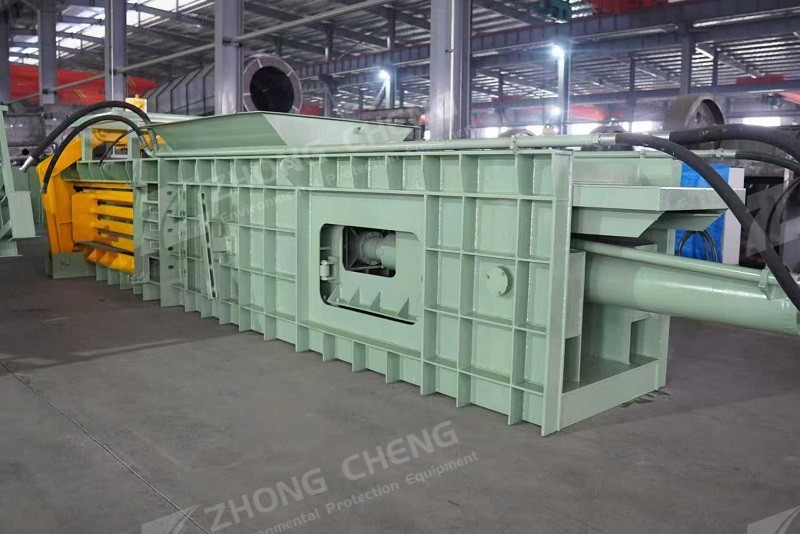
The core positioning of horizontal waste balers is "high-efficiency compression, stable durability, and wide adaptability." Using hydraulic drive as its core power source and adopting a horizontal structural layout, it overcomes the drawbacks of vertical balers, such as small processing capacity and cumbersome operation, focusing on solving the industry pain points of large volume, difficult transfer, and heavy pollution caused by loose waste. Designed to meet the needs of large-scale waste treatment, this horizontal waste baler can process various loose materials such as household waste, waste plastics, waste paper, and straw. It combines automated operation with energy conservation and environmental protection, improving waste treatment efficiency and facilitating resource recycling. It has become an indispensable key piece of equipment in modern waste treatment systems, adaptable to different scales and types of waste treatment scenarios.
The most core feature of the horizontal waste baler is its reasonable structure and wide adaptability, which is also its core advantage distinguishing it from other types of balers. The horizontal waste baler adopts a horizontal structural layout, with the inlet and outlet horizontally distributed. Combined with an adjustable compression chamber design, it can flexibly adapt to different types and particle sizes of loose waste. Whether it's fluffy waste paper, plastic film, or mixed household waste, straw, or hay, it can achieve efficient compression and baling without the need for pre-sorting, significantly reducing the initial processing threshold.
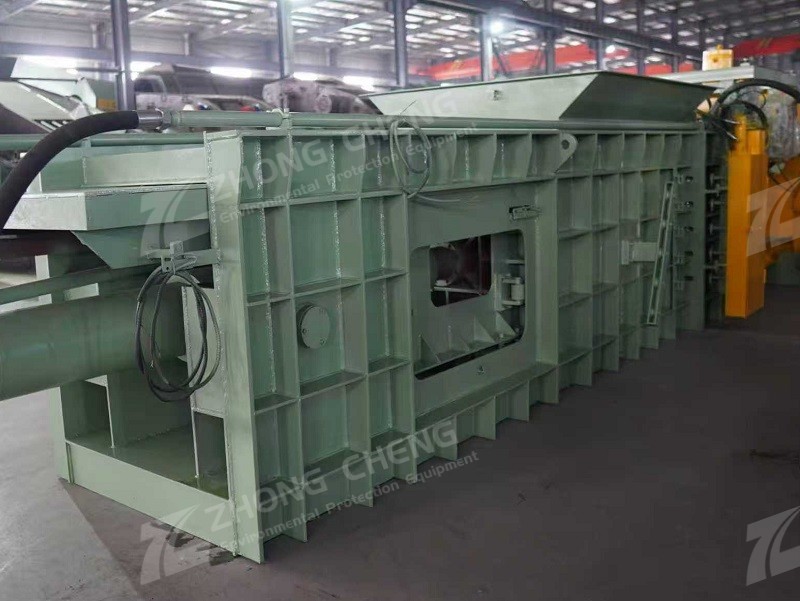
Compared to vertical balers, which are limited by height and struggle to handle large pieces of waste, horizontal waste balers have no significant height constraints. Their spacious inlet design allows for automatic feeding via conveyor belts, enabling them to handle both small, loose waste and large, loose materials without clogging the inlet channel. Furthermore, the compression chamber size and bale specifications can be customized to meet various transfer and storage needs. Installation is simple, requiring no complex foundation construction or anchor bolts; even in environments without electricity, a diesel engine can be used for power, flexibly adapting to diverse operating environments.
High automation and ease of operation significantly improve waste processing efficiency and meet the needs of large-scale operations. Utilizing a PLC intelligent control system and hydraulic drive technology, horizontal waste balers achieve semi-automated and fully automated operation of the baling process. They eliminate the cumbersome manual operation of traditional balers, requiring no professional training. Operators can complete the entire baling process simply by pressing buttons or using a touchscreen, achieving truly "foolproof" operation and effectively reducing labor input.
Its complete baling process is highly efficient and smooth: loose waste is evenly fed into the inlet via conveyor belt or manually. The equipment automatically activates the hydraulic system to complete a series of operations, including waste compression, shaping, and bundling. After baling, multiple discharge methods such as flipping and pushing the bales are used to quickly eject the compacted waste bales, eliminating the need for manual handling. The continuous baling process significantly improves processing efficiency. Simultaneously, the equipment is equipped with intelligent IoT monitoring capabilities, enabling real-time monitoring of operating status, fault warnings, and predictive maintenance, reducing downtime and further improving operational continuity. It is suitable for large-scale processing scenarios such as waste transfer stations and large recycling stations.
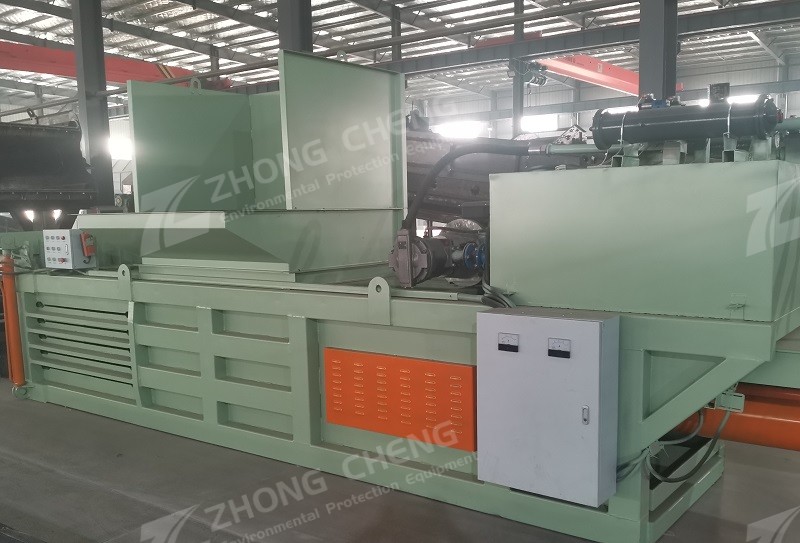
The powerful compression force and excellent shaping effect effectively address the pain points of large waste volume and difficult transportation. The horizontal waste baler uses a high-performance hydraulic system with multiple sets of clamping cylinders. The compression force can be flexibly adjusted according to needs, resulting in a high compression ratio. It can compress loose waste into compact bales with uniform density and regular shape, significantly reducing waste volume, preventing loose waste from occupying excessive storage space, and lowering transportation costs.
The compressed waste bales are compact and secure, preventing them from loosening and leaking. This effectively prevents waste from scattering and leaking during transport, reducing secondary pollution and facilitating subsequent transportation and storage while enhancing the resource recycling value of the waste. For example, loose waste paper and plastics can be reduced in volume by more than half after compression, saving transportation space and increasing the recycling rate of recyclables. Mixed household waste, after compression, reduces the volume required for landfill and incineration, lowering subsequent disposal costs. Furthermore, the spherical structure connecting the pusher cylinder and pusher head ensures high reliability, extends the lifespan of the oil seals, and guarantees stable compression results.
Energy-saving, environmentally friendly, safe, and reliable, the horizontal waste baler aligns with modern environmental policies and safe production requirements. In terms of environmental protection, the horizontal waste baler features a fully sealed structure design, with sealing devices at the inlet and compression chamber to effectively isolate waste from air and prevent odor leakage. It also incorporates a high-efficiency dust and odor removal system to reduce dust and odor pollution during operation, meeting environmental emission requirements. Some large models utilize a closed-loop water circulation cooling system, achieving zero water discharge during production and further enhancing environmental performance. In terms of energy saving, the equipment adopts a low-noise hydraulic circuit design, resulting in low energy consumption and low noise. Noise levels are kept low during operation to avoid noise pollution. The hydraulic system also allows for no-load start-up, optimizing energy utilization. Compared to traditional balers, energy consumption is significantly reduced, leading to substantial energy cost savings in the long term. Regarding safety, the equipment is equipped with a comprehensive safety protection system, including overload protection, anti-pinch protection, and phase loss protection. In case of misoperation, personnel entering dangerous areas, or equipment malfunction, the equipment will automatically shut down and alarm, effectively mitigating safety hazards and ensuring operator safety.
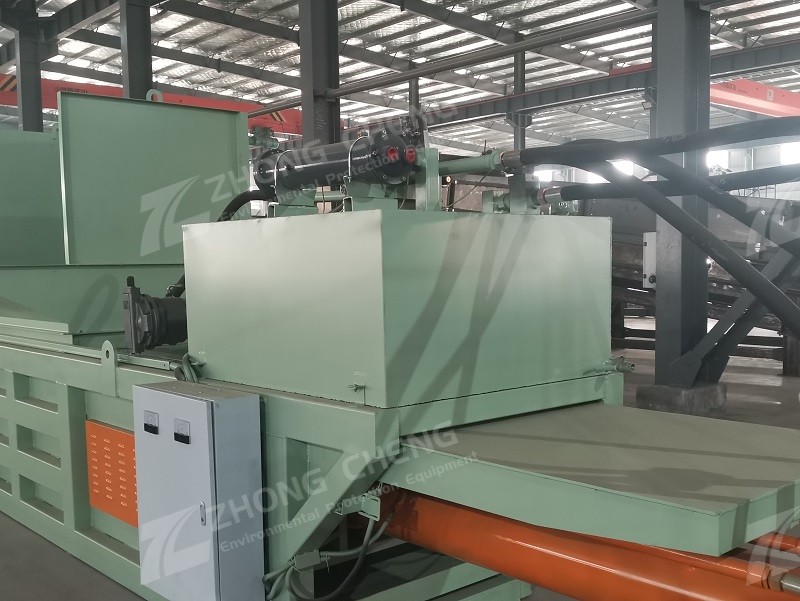
It boasts high durability, low maintenance costs, and is suitable for long-term continuous operation, offering excellent value. The horizontal garbage baler uses high-quality thickened steel plates for the body, processed with ship-grade welding technology, resulting in a robust and rigid structure capable of withstanding high-intensity compression forces without deformation or damage, making it suitable for long-term continuous operation. Its core components are made of wear-resistant and corrosion-resistant materials. The feed inlet is equipped with distributed shear blades, providing high shearing efficiency and a long service life. The smooth inner wall of the baling chamber prevents garbage adhesion, facilitating daily cleaning and maintenance. The equipment boasts a simple structural design, with few and easily replaceable vulnerable parts. These parts are highly versatile, resulting in low procurement costs and minimal need for frequent maintenance, significantly reducing long-term maintenance costs. Furthermore, the equipment has a low failure rate. Core hydraulic components and electrical components combine imported and domestically produced high-quality parts, ensuring stable performance while controlling procurement costs. Its long-term stability meets the needs of continuous operation in various locations, offering a significantly higher cost-performance ratio than traditional baling equipment.
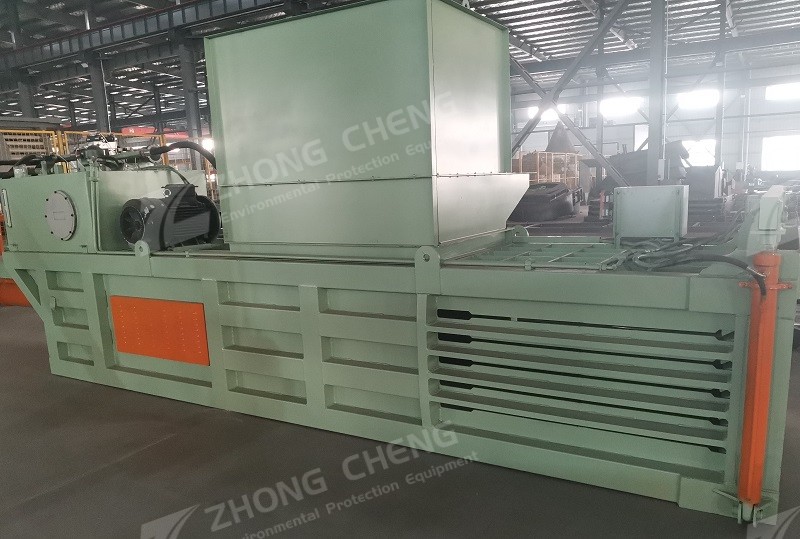
Multi-functional adaptability and strong practicality extend the equipment's application scenarios and value. Horizontal waste balers are not limited to baling; most models combine compression, baling, sorting, and resource recycling functions. Besides processing household waste, they can be widely used for compressing and baling various loose materials such as waste paper, plastics, metal scraps, fabrics, and straw. They are suitable for industries such as waste recycling, papermaking, and chemical fibers, improving equipment utilization.
Some high-end models are equipped with a detachable compression chamber and replaceable strapping devices, allowing for adjustments to the baling method based on material type. Combined with auxiliary equipment such as iron removers, they can separate metal impurities from the waste during the baling process, improving resource recycling rates. Furthermore, the equipment is compact and occupies little space, allowing for flexible placement according to the layout of the work site. It is suitable for both large-scale operations and small-scale waste transfer stations and community waste disposal points, adapting to diverse application scenarios and extending the equipment's value.
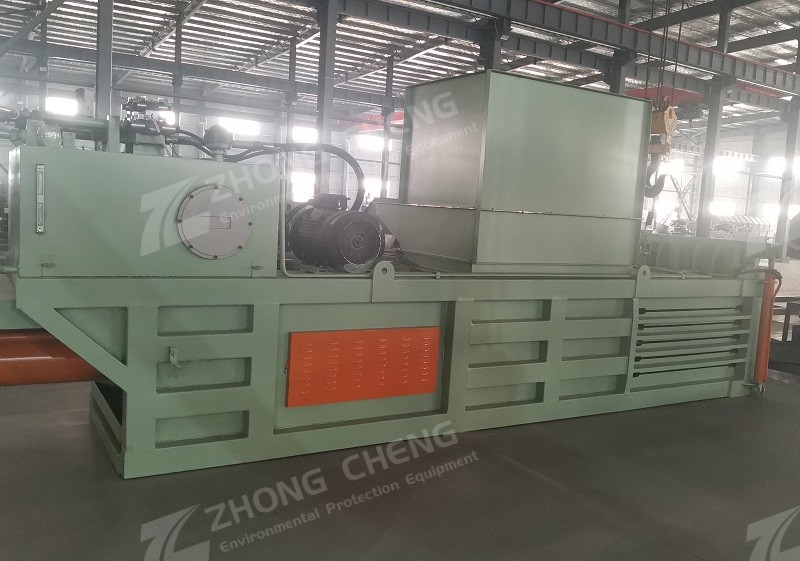
The horizontal waste baler, with its core features of reasonable structure, high automation, strong compression force, and energy efficiency, precisely addresses the industry pain points of low efficiency, large size, difficult transportation, and heavy pollution in loose waste processing, combining practicality and economy. Its wide applicability, durability, and convenient maintenance can significantly improve waste processing efficiency, reduce disposal costs, and contribute to the achievement of the goals of harmless, reduced, and resource-based waste treatment. With increasingly stringent environmental policies and continuous technological iteration, the horizontal waste baler will continue to be optimized and upgraded, further improving its automation and intelligence levels, providing strong support for the high-quality development of the global waste treatment industry.


Company: Zhengzhou ZhongCheng environmental protection equipment co., LTD

Company address: 36 xueyuan road, Zhengzhou City, Henan Province, China.

Whatsapp:+86-18738194110


Our Email

Our phone
 86-18738194110
 86-18738194110

Save Time! Get A Detailed Quotation Quickly.


 2024-11-01