Consulting
Service
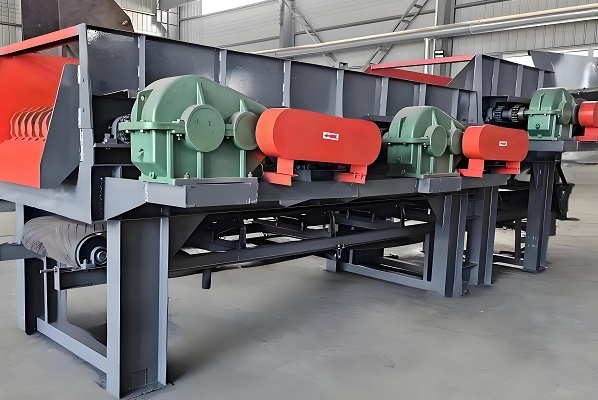
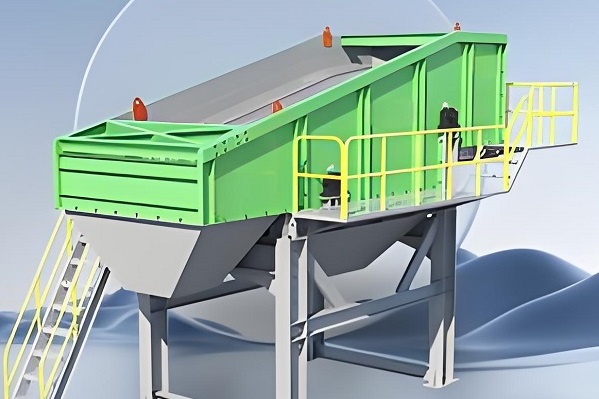
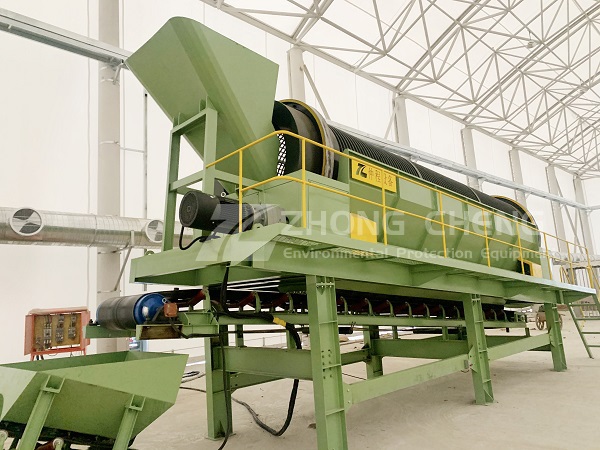
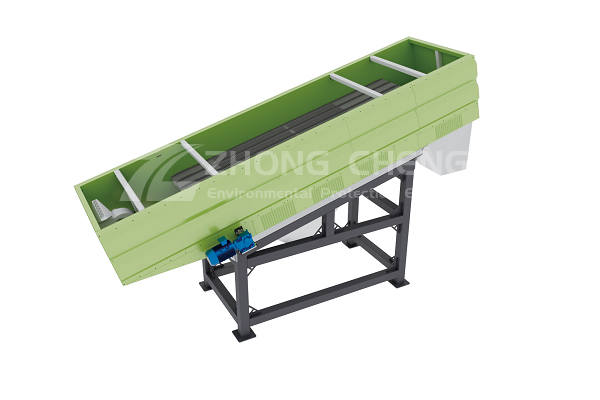
In industrial fields such as mining metallurgy, building materials processing, and solid waste treatment, screening equipment is the core equipment for achieving precise material classification. With its unique processing advantages for "difficult to screen materials" such as high humidity, high viscosity, and fine particles, the flip flow screen has grown from an upgraded product of traditional vibrating screens to a key screening solution. It achieves efficient screening through the alternating motion of "tension relaxation" on the elastic screen surface, and has shown significant development vitality in technological iteration and industrial applications in recent years. This article will systematically review the current status of flip flow screening technology, analyze the core breakthrough points, and combine industry demand to forecast its development trends.
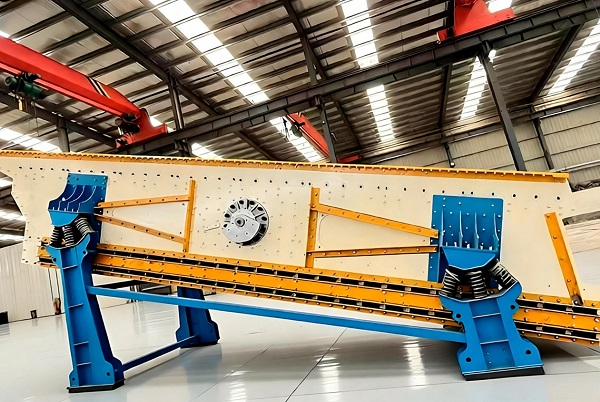
The technical core of the flip flow screen lies in the collaborative mechanism of "dual vibration+elastic deformation". Compared with traditional rigid screen equipment, it drives the screen surface to produce high-frequency and large amplitude reciprocating deformation through the relative motion between the fixed frame and the floating frame, which not only strengthens material looseness but also achieves self-cleaning of the screen holes, solving the industry pain point of wet and sticky material blocking the screen mesh. The current global flip flow screening technology has formed a diversified development pattern, achieving multiple breakthroughs in structural design, material innovation, and performance optimization.
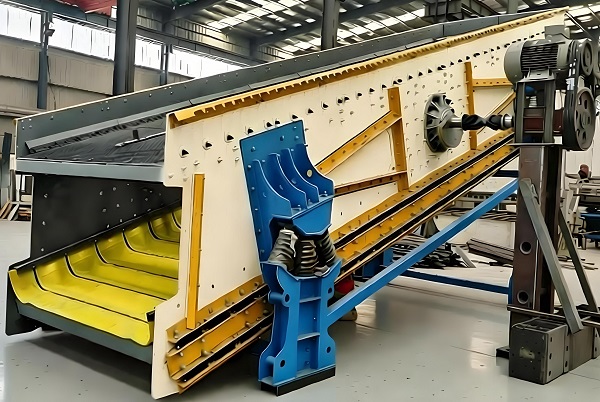
The large-scale and modular design of structures is an important direction for current technological upgrades. With the increasing demand for large-scale production in industries such as mining and coal, the processing capacity of a single equipment has become a core indicator. Domestic leading enterprises have launched large-scale flip flow screens with a processing capacity of over 1000 tons/hour. By optimizing the layout of the excitation system and upgrading the traditional single motor drive to multi motor collaborative control, the equipment width has exceeded 4 meters while ensuring amplitude uniformity. Modular design significantly improves operation and maintenance efficiency. For example, Henan Weimeng Co., Ltd.'s flip flow screen product splits the screen body into independent units such as vibration excitation module and screen surface module, reducing the time for replacing core components from 8 hours to less than 2 hours. In terms of segmented structure, the market share of multi-layer flip flow screens continues to increase. Compared with single-layer equipment, it achieves synchronous output of multi particle products through three-dimensional grading, which increases production efficiency by more than 30% in the application of building materials industry.
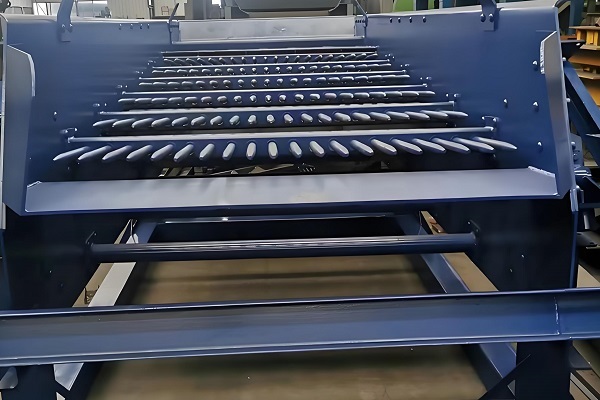
The innovation of screening materials and manufacturing processes is a key breakthrough point in improving equipment performance. The traditional polyurethane screen has the problems of weak tensile strength and low porosity, while the new composite screen technology has been fully upgraded. The composite screen mesh based on casting adopts a "flexible steel wire rope skeleton+TPU coating" structure. The warp wire is reinforced with steel wire rope to enhance its tear resistance, and the weft wire is made of high elastic TPU material. The opening rate is increased to over 40% through node hot melt welding technology, which improves the screening efficiency by 15% -20% compared to traditional screen surfaces. In terms of manufacturing process, the precise pouring technology of MDI system raw materials is becoming increasingly mature. Through process control such as 95-105 ℃ atmospheric pressure pouring, flame defoaming, and secondary curing, the service life of the screen surface is extended to more than 1.5 times. The practice of Ningtiaota Mining in Shaanxi Coal Industry shows that after using 6mm high-precision composite sieve plate, the washing rate of raw coal is increased by 5%, and the annual benefits are created by more than 10 million yuan.
The upgrading of intelligence and the expansion of application scenarios are reshaping the industry ecosystem. The current mainstream products have integrated vibration sensors, tension monitoring modules, and intelligent control systems. For example, the iSieve series from CITIC Heavy Industry collects real-time data on screen vibration frequency, material flow rate, etc., and dynamically adjusts the excitation parameters through AI algorithms to control the screening accuracy within ± 2%. The application of remote operation and maintenance technology has broken geographical limitations. German companies such as Krebs have achieved equipment failure warning and remote parameter debugging through cloud platforms, reducing equipment failure rates by 32%. In terms of application scenarios, the flip flow screen has expanded from the traditional coal field to new fields such as construction waste resource utilization and chemical raw material grading. Yixing Public Construction and Environmental Protection Company uses the flip flow screen to treat construction waste, achieving a separation rate of 95% for light materials and an increase in the qualified rate of recycled aggregates to 98%.
From the perspective of the global industrial landscape, China has become a major producer and consumer of screening products, with the market size growing from 1.86 billion yuan to 2.73 billion yuan from 2021 to 2025, with an average annual compound growth rate of 8.1%. Domestic enterprises dominate the mid to low end market, with a total market share of 45% for top enterprises. However, they still rely on imports in high-end materials, core control chips, and other fields, which lags behind developed countries such as Germany and the United States. Foreign brands seize the high-end market through localized production strategies, such as Germany's Krebs establishing an assembly base in China to enhance their response speed to high-end demands in the mining industry.
Looking ahead to the future, the flip flow screening technology will deeply evolve towards greenization, precision, and integration. In terms of greening, energy-saving vibration motors and low-noise structural design have become the focus of research and development. It is expected that the unit energy consumption of equipment will be reduced by more than 20% in the next 5 years, and the noise will be controlled within 85 decibels. Precision development will focus on fine-grained screening technology, achieving efficient grading of materials below 3mm through micro porous design of screening surfaces and precise control of vibration parameters, meeting the refined needs of new energy mineral processing. The trend of integration is manifested in the development of an integrated system of "screening sorting conveying", which reduces the material transfer process through equipment integration and reduces the production line footprint by 30%.
Policy driven and market demand will provide sustained impetus for technological development. The national "dual carbon" strategy and intelligent mining construction plan will accelerate the elimination of inefficient equipment in the industry. It is expected that the market size will grow at an average annual growth rate of 7.5% from 2026 to 2030, and exceed 3.9 billion yuan by 2030. Meanwhile, the mineral development boom in emerging markets such as Southeast Asia and Africa will drive the growth of domestic flip flow screening exports, with an expected year-on-year increase of over 20% in export value by 2025.
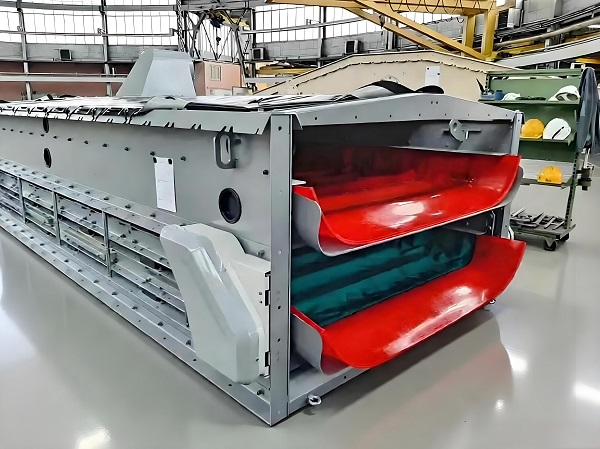
The current flip flow screening technology has entered a critical stage of "performance upgrade and ecological reconstruction", with structural optimization, material innovation, and intelligent upgrading becoming core competitiveness. In the future, only by breaking through the bottleneck of high-end materials and core control technology, strengthening the collaborative innovation of industry, academia, research and application, can we occupy a dominant position in global competition. As a core equipment in the industrial screening field, the development of the flip flow screen technology will continue to provide support for the efficient utilization of mineral resources, solid waste resource utilization, and other fields, helping the industry achieve green and low-carbon transformation.


Company: Zhengzhou ZhongCheng environmental protection equipment co., LTD

Company address: 36 xueyuan road, Zhengzhou City, Henan Province, China.

Whatsapp:+86-18738194110


Our Email

Our phone
 86-18738194110
 86-18738194110

Save Time! Get A Detailed Quotation Quickly.


 2024-11-01